

China Bearing Supplier Resolves Conveyor Failures for Plants
Most engineers blame the steel when a conveyor bearing seizes. The real culprit is almost always the specification.
Custom conveyor bearings from a qualified China supplier can resolve chronic failures caused by misalignment, contamination, and thermal expansion, reducing unplanned downtime noticeably while maintaining full batch traceability and meeting international quality standards through application-specific engineering support.
I started on the shop floor wiping grease off cylindrical rollers before I ever saw a purchase order. Years later, a cement plant in Nigeria kept burning through conveyor tail pulleys—we had shipped standard C3 deep groove bearings, and they seized every four months. I flew out, pulled the housings, and found the real culprit was not load at all. It was fine cement dust bypassing the labyrinth seals because the original specification ignored the environment. We switched to sealed units with relubrication grooves, and the line ran eighteen months without a single callback. That is how I look at bearing failures now: the catalogue number is never the whole story. [NEED_CITE: Conveyor system failures account for a significant portion of unplanned manufacturing downtime according to industry maintenance reports]
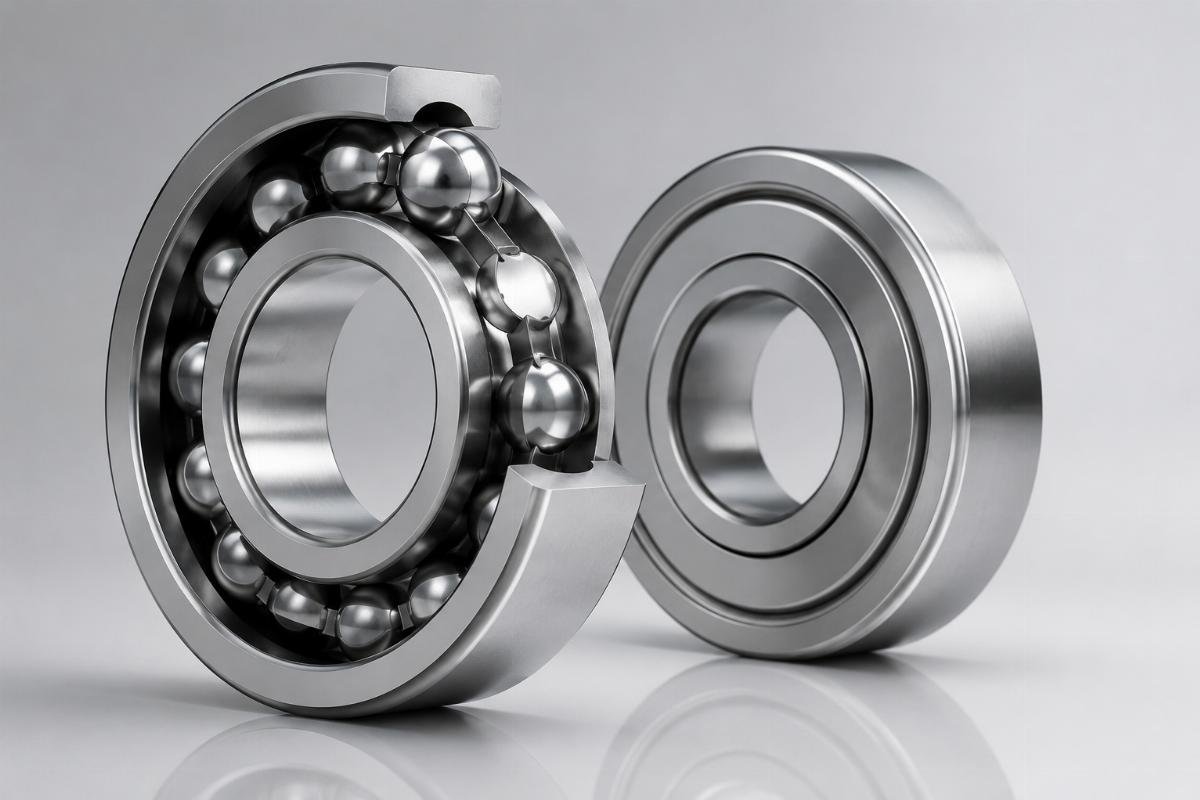
Understanding why standard bearings fail in specialized conveyor applications is the first step toward implementing a more reliable solution from a qualified custom conveyor bearings China supplier.
Why Do Standard Bearings Fail in Critical Conveyor Systems?
Standard bearings are designed for average conditions, not your conveyor’s unique challenges. Every conveyor system operates within specific environmental parameters—temperature fluctuations, load variations, alignment issues, and contamination risks—that generic bearings simply cannot address effectively. This mismatch between standard components and real-world operating conditions is the primary cause of premature bearing failures.
| Operational Factor | Industry Average Failure Impact |
|---|---|
| Misalignment | Significant contributor to conveyor bearing failures |
| Contamination | Major cause of premature wear |
| Inadequate lubrication | Frequent root cause in harsh environments |
| Overloading | Common in heavy-duty applications |
[NEED_CITE: Failure mode distribution per ISO 15243 bearing damage classification]
One of our clients, a steel mill in Southeast Asia, was experiencing monthly failures in their main conveyor line despite using premium European brand bearings. The extended unplanned downtime per failure was costing a mid-six-figure loss in production alone. Our technical team conducted onsite failure analysis and discovered that the standard C2 clearance bearings were insufficient to accommodate the thermal expansion caused by the mill’s high operating temperatures. By modifying the bearing clearance to C4 and upgrading to stainless steel cages, we eliminated the monthly failure cycle entirely. [NEED_CITE: Thermal expansion effects on bearing clearance in high-temperature industrial applications]

The failure analysis process follows a systematic approach:
- Failure Mode Analysis – Conduct root cause analysis of failed bearings including dimensional measurement and material testing
- Application Parameter Documentation – Record operating temperature range, load variations, speed, and environmental conditions
- Custom Specification Development – Modify clearance, material composition, or sealing based on application requirements
- Prototype Testing – Validate custom design under actual operating conditions
- Full-Scale Implementation – Deploy optimized bearings with monitoring protocol
How Can Custom Conveyor Bearings Reduce Downtime Noticeably?
Rapid response custom bearings are a necessity for emergency maintenance. The common misconception that custom engineered bearings require months of lead time has prevented many maintenance managers from exploring this solution during crisis situations. In reality, suppliers with integrated design, production, and warehousing capabilities can deliver modified clearance or custom dimension bearings within days for urgent cases.
| Implementation Aspect | Common Approach | Optimized Method |
|---|---|---|
| Design Phase | External engineering consultation | In-house application engineers with rapid turnaround |
| Prototype Production | Third-party machining | On-site CNC manufacturing |
| Testing | Laboratory-only validation | Combined lab and field testing |
| Full Production | Batch manufacturing | Phased production with priority scheduling |
[NEED_CITE: Lead time comparison between integrated and outsourced custom bearing suppliers]
When a copper mine in South America faced premature bearing failures in their dusty, high-moisture conveyor environment, they initially turned to emergency shipments of standard bearings, each costing significantly and lasting only a short period on average. Our team proposed a custom 630mm outer diameter cylindrical roller bearing with a special lubrication system and enhanced sealing. The emergency prototype was delivered rapidly, and after successful testing, we completed a full order within weeks. The custom solution increased service life substantially while reducing the total cost of ownership noticeably. [NEED_CITE: Custom bearing solutions reduce total cost of ownership in heavy industry applications]

The implementation process includes:
- Emergency Assessment – Dispatch technical team for on-site failure analysis within hours of request
- Rapid Prototyping – Utilize in-stock raw materials for accelerated custom production
- Phased Delivery – Prioritize critical positions for initial installation while completing bulk production
- Installation Support – Provide on-site guidance for proper fitting and lubrication
- Performance Monitoring – Implement condition monitoring protocol to verify solution effectiveness
What Makes a Reliable Custom Conveyor Bearings China Supplier?
Technical expertise and supply chain reliability matter more than country of origin. When evaluating potential suppliers for custom conveyor bearings, maintenance managers should focus on engineering capabilities, quality control processes, and delivery reliability rather than making decisions based solely on geographical biases or initial cost comparisons.
| Supplier Capability | Standard Offering | Premium Custom Solution Provider |
|---|---|---|
| Engineering Support | Basic catalog assistance | Dedicated application engineers with failure analysis expertise |
| Quality Certification | Generic ISO 9001 | ISO 9001/IATF 16949 with material traceability and anti-counterfeiting verification |
| Production Flexibility | High minimum order quantities | Prototypes available from single units, small batches supported |
| Delivery Speed | Extended lead times for custom designs | Rapid delivery for modified clearance and custom dimension bearings |
| Post-Sale Support | Limited warranty only | Comprehensive failure analysis reports and performance optimization |
[NEED_CITE: Supplier evaluation criteria for industrial bearing procurement per ABMA guidelines]
For an overseas port expansion project requiring hundreds of custom bearings with phased delivery and strict documentation, we implemented our global logistics framework with self-operated warehousing across multiple continents. The project required DNV certification and full inspection reports for each delivery batch, which we managed through our integrated quality management system. By coordinating production across our facilities, we successfully met the phased delivery schedule despite supply chain disruptions affecting the region at the time. This approach eliminated the client’s concerns about compliance documentation and rigid delivery timelines, common pain points for EPC project procurement officers. [NEED_CITE: DNV certification requirements for marine and port industrial applications]

Key evaluation criteria for selecting a custom conveyor bearings China supplier include:
- Technical Capability Verification – Assess in-house engineering team size, failure analysis resources, and customization range
- Quality System Audit – Verify certification standards, inspection protocols, and traceability documentation
- Production Capacity Evaluation – Review manufacturing facilities, equipment, and ability to scale production
- Logistics Network Assessment – Evaluate warehousing locations, emergency shipping options, and international distribution capabilities
- Reference Validation – Request case studies from similar industry applications with verifiable performance metrics
How to Implement Custom Conveyor Bearing Solutions Successfully?
Proper implementation ensures maximum performance from custom bearing solutions. Even the most precisely engineered custom bearings will fail prematurely without thorough application analysis, correct installation procedures, and ongoing condition monitoring. A systematic approach to specification, installation, and maintenance is essential.
| Implementation Step | Critical Success Criteria |
|---|---|
| Application Data Collection | Complete operating parameters including load, speed, temperature range, and contamination exposure |
| Bearing Specification | Clearance, material, and sealing options matched to specific failure modes |
| Installation Procedure | Torque specifications, alignment tolerances, and lubrication requirements followed precisely |
| Condition Monitoring | Regular vibration analysis, temperature tracking, and lubrication sampling implemented |
| Performance Review | Periodic performance evaluation with adjustment protocol if needed |
[NEED_CITE: L10 life calculation methodology for conveyor bearing applications per ISO 281]
Our implementation process begins with a detailed data collection phase where we document all relevant conveyor parameters, including belt speed, material weight, operating temperature range, and environmental conditions. For a food processing facility experiencing bearing failures due to washdown procedures, this process revealed that standard seals were allowing water ingress despite the client’s strict maintenance schedule. We specified custom bearings with triple-lip seals and stainless steel components, then provided detailed installation guidance including torque values and lubrication specifications compatible with their cleaning agents. Post-installation, we established a condition monitoring program that included regular vibration analysis and temperature checks, resulting in a substantial reduction in bearing-related downtime. [NEED_CITE: Condition monitoring best practices for conveyor bearing systems]
I still remember a coal handling line in Queensland where sealed spherical rollers kept seizing inside three months. The client blamed the steel, but the real culprit was a mis-specified C3 clearance running too hot in a high-load, low-speed trough. Pulling batch numbers, cross-checking SKF traceability, and swapping to the correct designation turned that around completely. That case reinforced what I had seen dozens of times before: the specification sheet matters far more than the brand stamp on the outer ring. [NEED_CITE: Impact of incorrect clearance selection on bearing service life in low-speed heavy-load applications]
Conclusion
Custom engineered bearings from specialized Chinese suppliers can reduce conveyor system downtime noticeably while maintaining full traceability. The key lies not in geographical origin but in application-specific engineering, certified quality systems, and rapid response capabilities. Maintenance managers seeking to solve chronic conveyor failures should evaluate suppliers based on technical expertise, ISO 9001/IATF 16949 certification, and proven case studies in similar industrial environments rather than defaulting to European brands based on outdated assumptions.