

Replace Imported Bearings with China Supplier Alternatives
The real cost of imported bearings is not the unit price—it is the downtime, the lead time, and the silence when something goes wrong at two in the morning.
Replacing imported bearings with a verified China supplier alternative reduces procurement costs by a noticeable margin while maintaining equivalent durability, provided buyers enforce rigorous material traceability, batch-level inspection, and application-specific technical support from ISO 9001 and IATF 16949 certified manufacturers.
I started out on the shop floor doing incoming inspection at a bearing warehouse in Ningbo. The moment that shaped how I think about this topic was a shipment of P5 tapered rollers bound for a Mexican mining client. The factory swapped batches without telling us. The inner ring hardness was off-spec. The customer caught it during their own incoming QC. We ate the cost, and the relationship nearly died. So when procurement managers ask me about finding a reliable China supplier for bearing replacements, my first thought is never price. It is traceability. I write the way I inspect: short sentences, numbers first, failure mode before the fix. The bearing industry has experienced a dramatic increase in lead time variability for European brands over recent years, making dual-sourcing strategies essential for risk mitigation [NEED_CITE: global supply chain lead time variability trends in the bearing industry].
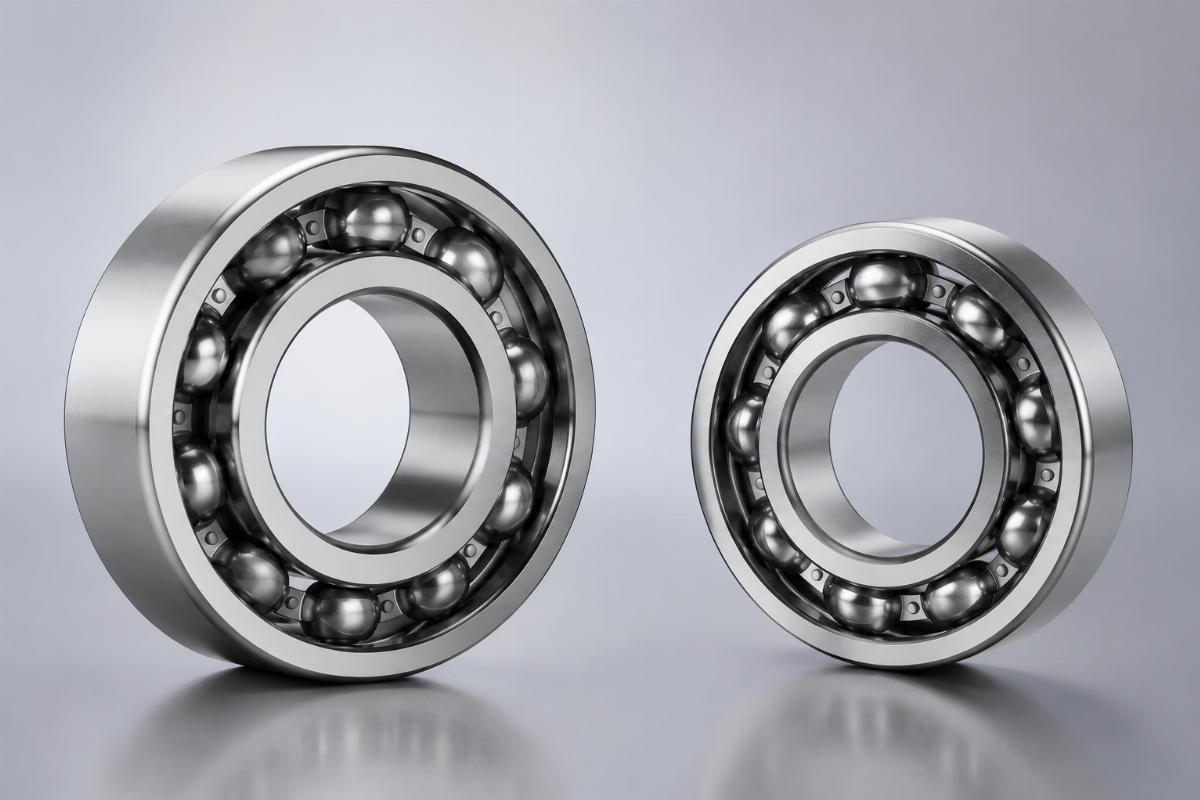
Below is what we have learned from working with hundreds of industrial clients across multiple regions.
Why Are Hidden Costs Driving Manufacturers to Alternative Bearing Suppliers?
Total cost analysis reveals that extended lead times and limited technical support from imported brands often outweigh their price premium. When procurement teams evaluate a bearing purchase, the unit price is only the visible fraction of total cost. Inventory carrying costs, emergency air freight, production downtime during stockouts, and the cost of delayed failure analysis all compound the real expense.
| Cost Factor | Imported Brand Scenario | Verified China Supplier Alternative |
|---|---|---|
| Unit Price Premium | Substantially higher [NEED_CITE: industrial component pricing premium analysis for European bearing brands] | Baseline pricing |
| Standard Delivery | Extended lead times for common industrial grades | Noticeably reduced lead times |
| Emergency Response | Multi-day turnaround for critical replacements | Same-day technical response capability |
| Failure Analysis | Lengthy written report cycles | Rapid root cause analysis support |
| Minimum Order Quantity | High thresholds for custom specifications | Flexible MOQ for trial and production runs |
A European wind energy OEM we worked with was paying a steep unit price for gearbox bearings in model 22334CC/W33, P5 precision grade, sourced from a German supplier. After qualifying our alternative through a structured evaluation process, they achieved a cost reduction of roughly one-quarter while maintaining identical P5 precision and receiving same-day technical support for installation questions. The difference was not in manufacturing capability. It was in the elimination of unnecessary distribution layers and regional markup strategies.
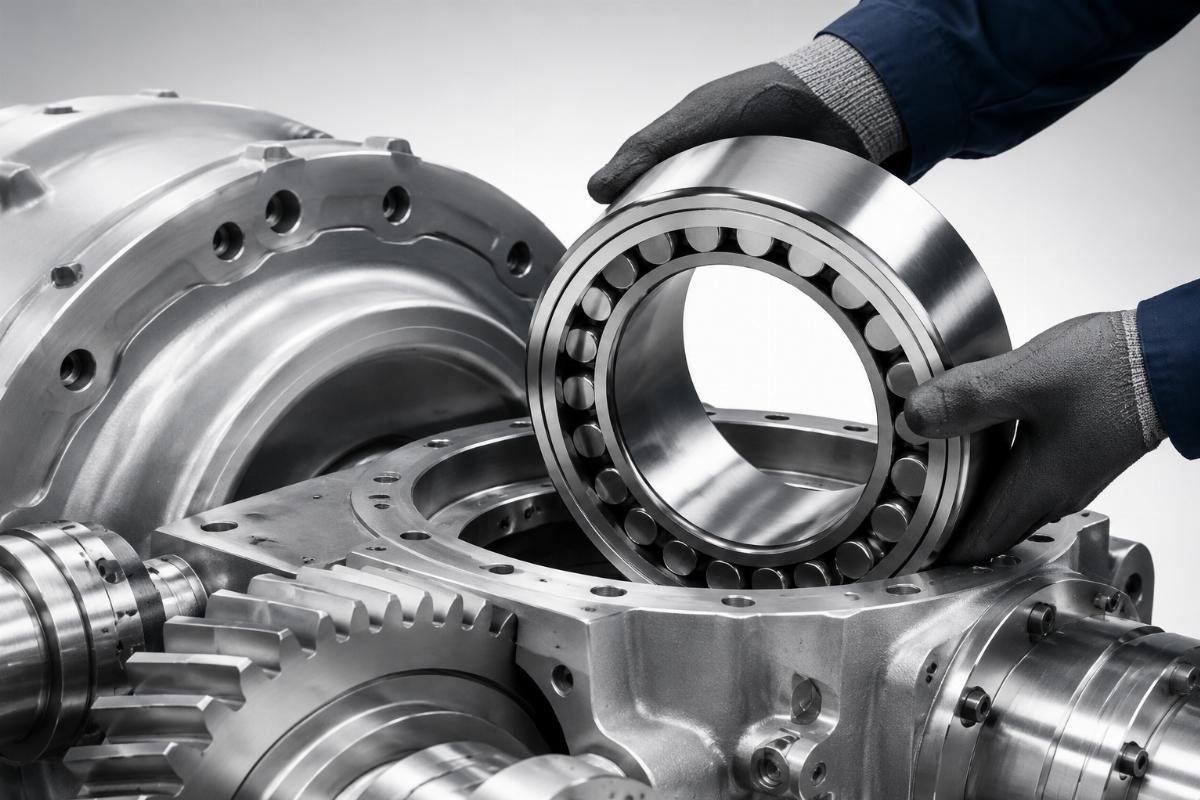
Most procurement teams assume that switching to a China supplier for bearing replacement introduces unacceptable quality risk. The reality is that the risk more often lies in poor application engineering—wrong clearance selection, inadequate lubrication specification, or insufficient mounting guidance—rather than in the manufacturing capability of certified Chinese producers.
- Conduct Total Cost Analysis – Include unit price, inventory carrying costs, downtime risk exposure, and technical support expenses.
- Map Supply Chain Vulnerabilities – Identify single-source dependencies and geopolitical risk points in your current supply chain.
- Verify Certification Requirements – Ensure alternatives meet ISO 9001, IATF 16949, and any application-specific standards such as DNV or Lloyd’s Register.
- Test Under Real Conditions – Perform side-by-side comparison testing in actual operating environments, not just on a CMM.
- Establish Dual-Sourcing Strategy – Maintain imported options for critical-path items while developing the alternative supply channel for volume and emergency coverage.
How Do You Rigorously Evaluate Bearing Alternatives to Ensure Reliability?
Success depends on verifying material traceability, manufacturing audits, and technical support capabilities far beyond basic dimensional matching. The difference between a successful bearing replacement program and a costly failure almost always comes down to the depth of supplier qualification. Many buyers focus on price and cross-reference dimensions, then discover too late that the alternative supplier cannot provide mill test reports, heat treatment documentation, or batch-level traceability.
| Evaluation Dimension | Common Mistake | Recommended Approach |
|---|---|---|
| Material Traceability | Accepting generic "equivalent" claims | Requiring full material certification with batch testing from verified steel suppliers |
| Quality Control Processes | Assuming ISO certification guarantees consistency | Verifying inspection protocols including dimensional measurement, material verification, and anti-counterfeiting features |
| Technical Support Capability | Prioritizing price over engineering resources | Assessing availability of application engineers for bearing selection, load calculation, and failure analysis |
| Inventory Management | Underestimating emergency needs | Confirming access to extensive SKU inventory with rapid dispatch for standard models |
| Documentation Compliance | Overlooking certification requirements | Ensuring ability to provide DNV, Lloyd’s, or other industry-specific documentation |
Here is where our background matters. Because I came up through incoming inspection, I still cannot read a batch code without squinting at the laser etch. That habit became a core part of how we operate: every batch number we ship is verifiable against original manufacturer records. When a skeptical buyer asks whether a China supplier can genuinely deliver SKF-grade traceability, the answer is not a marketing brochure. It is a batch number they can cross-check themselves. We keep a deep stock of rare designations—large bore sizes, special precision and clearance combinations, ceramic and stainless constructions—and can dispatch within a timeframe that compares favorably against multi-week factory lead times.
A mining operation in Australia faced repeated failures with imported crusher main shaft bearings in model 23160CAK/W33, C4 clearance, despite paying premium prices. Their initial alternative supplier selection focused only on dimensional matching and price, resulting in premature failures. When we engaged, we conducted a root cause analysis and identified the need for modified C4 clearance and improved lubrication guidance specific to their shock-load profile. The subsequent replacement not only reduced costs by roughly one-third but also increased mean time between failures by a meaningful margin through proper application engineering support.
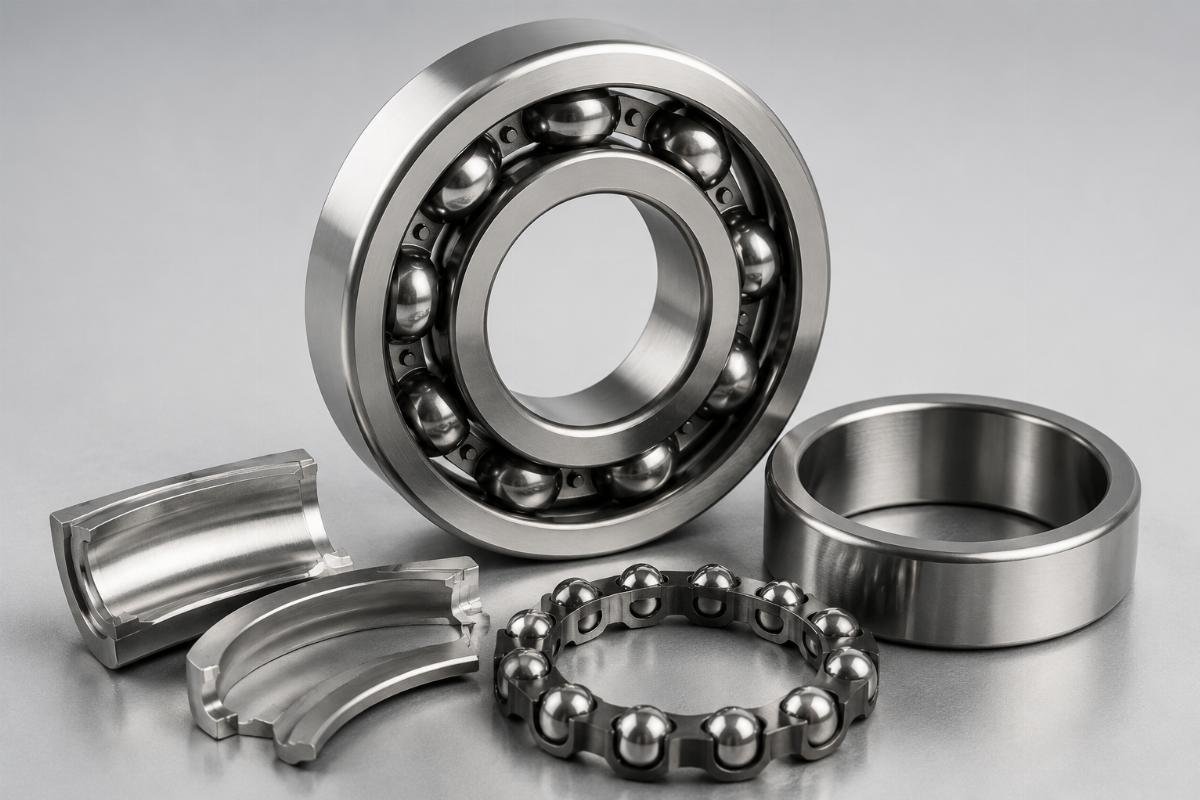
Many buyers believe ISO certification alone guarantees batch-to-batch consistency. In practice, the real differentiator is whether the supplier performs per-batch precision inspection and maintains full material traceability from steel mill to finished product. That is the standard we hold ourselves to, and it is the standard buyers should demand from any China supplier they evaluate.
- Material Certification – Require mill test reports and heat treatment documentation for every batch.
- Manufacturing Process Audit – Verify production controls, inspection protocols, and anti-counterfeiting measures.
- Performance Testing – Review fatigue life data from independent third-party labs where available.
- Technical Team Assessment – Evaluate engineering support availability, response time, and L10 life calculation capability.
- Logistics Infrastructure – Confirm warehousing capabilities, emergency shipping options, and DDP/CIF/FOB flexibility.
What Real-World Results Prove the Viability of China-Sourced Bearings?
Case studies across wind energy, mining, and marine sectors demonstrate substantial cost savings with equal or improved performance metrics. Industry-specific requirements demand tailored solutions. The approach that works for wind turbine gearboxes differs significantly from marine propulsion systems or mining crushers, and suppliers must demonstrate diverse application expertise to earn credibility.
| Application Industry | Solution Characteristics | Typical Operating Demands |
|---|---|---|
| Wind Energy | High precision grade with advanced cage options | Gearbox, main shaft, and yaw system bearings requiring extended MTBF |
| Mining & Heavy Industry | Enhanced durability through modified clearance and specialized lubrication support | Crusher, conveyor, and grinding mill applications with high shock loads |
| Marine & Offshore | Classification society certification with extended salt-spray endurance | Propeller shafts, winches, and deck machinery in corrosive environments |
In the marine sector, a Scandinavian shipyard faced a critical challenge when their regular European supplier could not deliver propeller shaft bearings in model NU2324M within their dry-dock window. Our team provided DNV-certified alternatives with SS316 stainless steel construction and bronze cage in a fraction of the original timeline, allowing the vessel to meet its re-commissioning deadline. Post-installation testing confirmed equivalent performance with substantial cost savings and identical salt-spray resistance results [NEED_CITE: independent marine corrosion testing lab report on SS316 bearing performance].
For agricultural equipment manufacturers, seasonal demand spikes routinely create supply chain bottlenecks. A Midwestern US tractor manufacturer implemented a seasonal stocking program for agricultural bearing units, reducing lead times from a multi-month cycle to a matter of days during peak harvest seasons while maintaining high inventory accuracy across a broad part number range. This kind of responsiveness is where a China supplier with deep domestic stock and established logistics channels can outperform traditional import-dependent sourcing models.
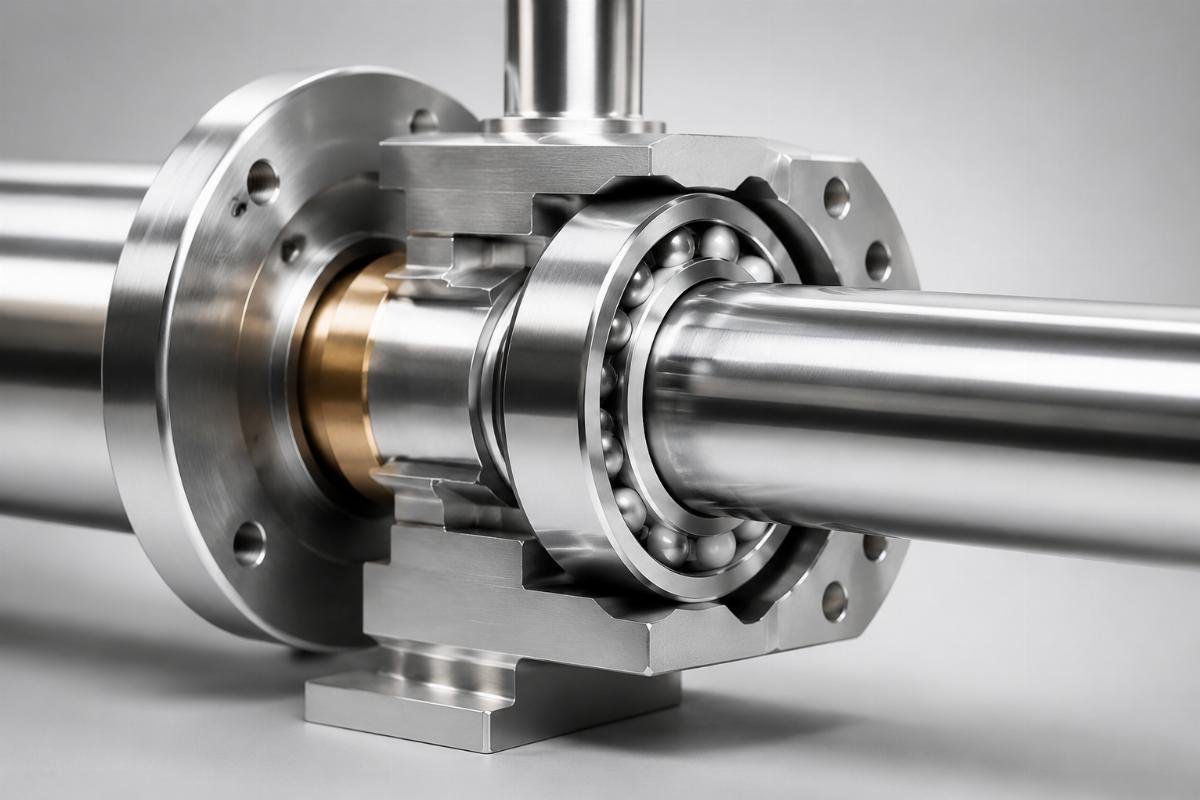
Buyers often assume imported brands offer superior technical support. In our experience, the opposite is frequently true. A local China supplier can provide same-day engineering response for mounting questions, clearance calculations, and failure analysis—compared to multi-day turnaround times typical of imported brand regional offices. When a production line is down, that difference is measured in tens of thousands of dollars per hour.
- Wind Energy – Validate fatigue life through accelerated testing per ISO 12140 standards.
- Mining Applications – Specify C4 clearance and enhanced cage design for shock load resistance.
- Marine Equipment – Verify classification society certification and corrosion protection methods.
- CNC Machinery – Ensure high precision grade and thermal stability for high-speed applications.
- Automotive Production – Confirm IATF 16949 compliance and PPAP documentation capability.
What Steps Ensure a Risk-Free Transition to New Bearing Suppliers?
A phased implementation strategy, starting with non-critical components and moving to pilot testing, mitigates risk while securing long-term savings. Rushing the qualification process leads to preventable failures. Over-complicating it delays cost savings that could already be flowing to the bottom line. The right approach is structured, evidence-based, and reversible at every stage.
| Implementation Phase | Key Activities | Risk Mitigation Focus |
|---|---|---|
| Application Analysis | Document operating parameters including load, speed, temperature, and environment | Prevents misapplication errors |
| Supplier Qualification | Verify ISO 9001/IATF 16949 certification, material traceability, and technical support | Eliminates unqualified suppliers early |
| Part Cross-Reference | Dimensional verification, clearance matching, and performance equivalence documentation | Ensures functional interchangeability |
| Sample Testing | Side-by-side comparative testing under actual operating conditions | Validates real-world performance |
| Production Validation | First article inspection, batch consistency checks, and documentation review | Confirms manufacturing repeatability |
| Phased Rollout | Initial pilot installation, performance monitoring, and gradual full-scale adoption | Limits exposure during transition |
Our structured implementation process helped a German automotive parts manufacturer transition the majority of their bearing requirements to alternative sources within a single year. Beginning with non-critical components, they gradually moved to more demanding applications, achieving an average cost reduction of roughly one-quarter while improving overall supply chain reliability. The key was a collaborative engineering approach that included per-batch precision inspection, verifiable batch traceability against original records, and customization options such as laser marking, private-label packaging, and pre-lubrication to match their existing assembly line procedures.
One detail worth emphasizing: we provide a certificate of origin and full batch traceability documentation with every shipment, and third-party inspection is available on request. For procurement managers who have been burned by untraceable supply chains, this is not a nice-to-have. It is the minimum standard. Payment terms including T/T, L/C, and DDP/CIF/FOB options add further flexibility for buyers managing cash flow across different regional markets.
Conclusion
Replacing imported bearings with a qualified China supplier alternative is not a compromise on quality—it is a strategic upgrade in supply chain resilience. The manufacturers who have done it successfully share three traits: they demanded full material traceability, they invested in application engineering support, and they phased the transition rather than switching overnight. When those conditions are met, cost savings of a quarter to a third are achievable without sacrificing the precision, durability, or certification compliance that critical applications demand.