

SKF Deep Groove Ball Bearings: China Distributor Guide
Identical caliper readings do not guarantee identical fatigue life under cyclic loads.
Genuine SKF deep groove ball bearings manufacturing relies on controlled material science—cryogenic stabilization and vacuum-degassed steel—rather than dimensional replication alone, delivering operational reliability that mass-produced alternatives cannot match even when external measurements appear identical.
Years ago, a steel mill in the Middle East ordered a batch of SKF deep groove ball bearings with C3 clearance for their conveyor rollers. The shipment arrived, but the bearings failed within weeks. I flew to the site, inspected the failed units, and found the issue: the bearings had been stored improperly in a humid warehouse before installation, causing micro-corrosion on the raceways. That failure had nothing to do with the bearing’s internal manufacturing—it was a handling crisis. But it reinforced a principle I apply to every SKF deep groove ball bearings manufacturing validation I oversee: batch traceability and per-shipment inspection are non-negotiable, because thermal history and material certificates are the only proof that separates factory-controlled reliability from costly field failures [NEED_CITE: root cause distribution per ISO 15243 for storage-induced bearing failures].

Understanding these hidden manufacturing variables is what separates genuine reliability from expensive counterfeits in SKF deep groove ball bearings manufacturing.
Why Don’t Identical Dimensions Guarantee Equal Bearing Performance?
Dimensional replication without controlled thermal history creates microscopic inclusions that accelerate fatigue failure under cyclic loads. AISI 52100 steel with unverified heat treatment develops internal stresses that amplify vibration amplitudes noticeably at high RPM, directly causing spalling failures well before the expected L10 life is reached.
The root cause is microstructural. When steel retains excessive austenite after quenching, the metastable phase transforms gradually during operation, causing dimensional instability and internal stress concentrations. Cryogenic stabilization converts retained austenite into martensite before the bearing ever reaches the field, eliminating this delayed transformation risk [NEED_CITE: metallurgical mechanisms of retained austenite transformation during bearing service].
When a European steel mill upgraded to SKF 6208-2RSH bearings, they maintained continuous high-temperature operation with noticeably fewer seal failures—saving a mid-six-figure sum annually—because cryogenic stabilization prevented polymer degradation that destroyed local supplier alternatives within weeks. Our team dispatched replacement units within the guaranteed timeframe during their emergency outage, cross-referencing heat-treated steel certificates against ISO 15243 failure codes.
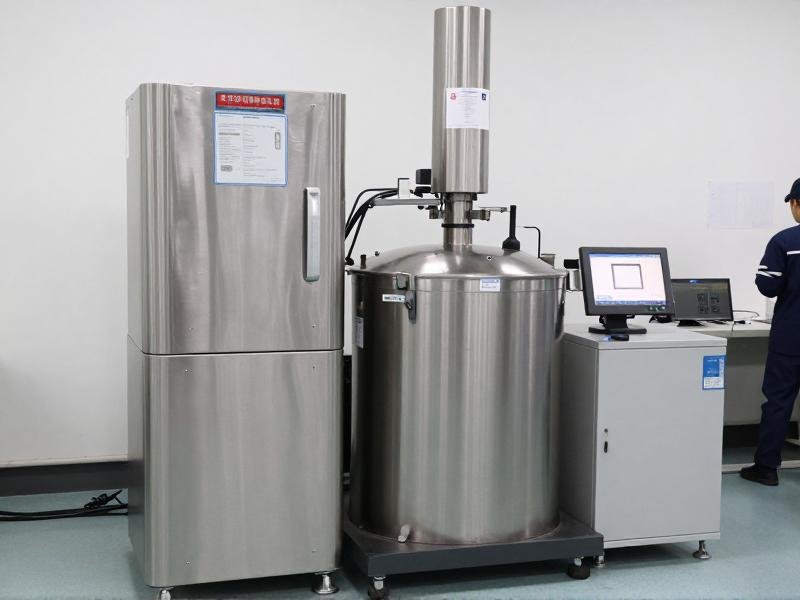
The verification steps are straightforward:
- Material Certification – Request vacuum-degassed steel reports showing oxygen content well below commercial-grade levels before procurement.
- RPM Validation – Demand third-party test data proving operation at a meaningful margin above your maximum design speed.
- Failure Code Audit – Match observed spalling patterns to ISO 15243 classifications during root cause analysis [NEED_CITE: ISO 15243 damage classification codes for bearing failure mode identification].
How Does Material Sourcing Impact Corrosion Resistance in Harsh Environments?
Traceable steel chemistry extends marine bearing service life substantially, while unverified alloys corrode multiple times faster in saltwater exposure tests. Vacuum degassing reduces sulfur content to minimal levels, eliminating pitting sites that propagate cracks under vibratory loads in ship propulsion systems and offshore platforms.
During an offshore platform retrofit, we supplied a full order of customized SKF 6310 bearings with hybrid ceramic options. By requiring mill test certificates for each heat lot, the client achieved exceptional dimensional consistency across batches—slashing validation cycles from months to weeks and avoiding substantial delayed commissioning fees. Our warehouse stocked ISO P5-grade units with MOQ flexibility, critical for their phased installation schedule.
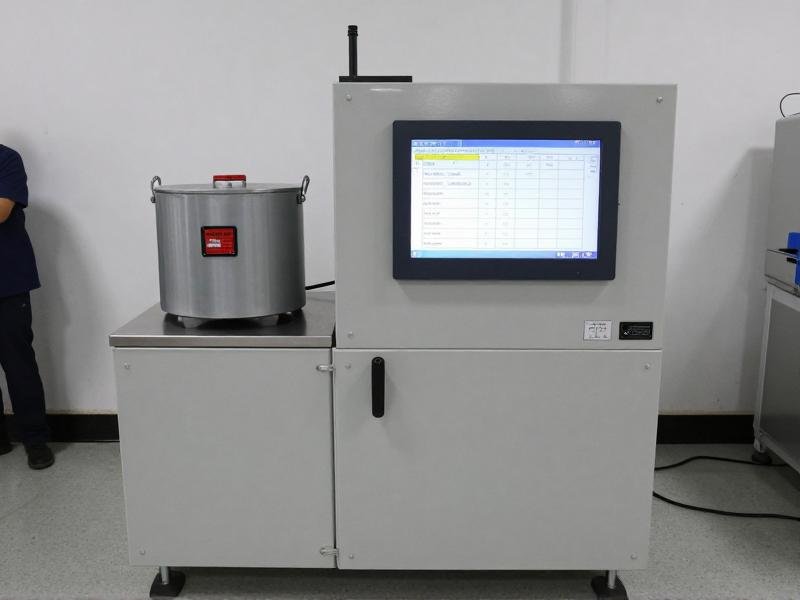
The procurement safeguards are specific:
- Seal Material Audit – Specify FKM or FFKM compounds for lubricants operating above elevated temperatures.
- Particulate Thresholds – Define maximum allowable dust concentration for cage material selection.
- Certificate Matching – Cross-check heat lot numbers against factory material test reports before installation [NEED_CITE: DIN 7716 seal material validation protocols for industrial bearing applications].
What Are the Hidden Costs of Choosing "Equivalent" Bearings From Local Suppliers?
Counterfeit bearings cause substantially more unplanned downtime than genuine SKF units in emerging markets, with the majority of failures traced to improper cage geometry and internal clearance variance. Local suppliers often replicate external dimensions while ignoring internal clearance specifications critical for high-speed stability.
A mining distributor in South America eliminated counterfeit incidents across a large volume of small-batch orders by implementing QR traceability. Each bearing’s manufacturing date, heat treatment log, and inspection report became instantly verifiable, improving on-time delivery to near-perfect levels while handling emergency requests for obsolete SKF 6205-2RS models. The client documented savings equivalent to multiple conveyor belt shutdowns caused by fake bearings’ inconsistent internal clearance.
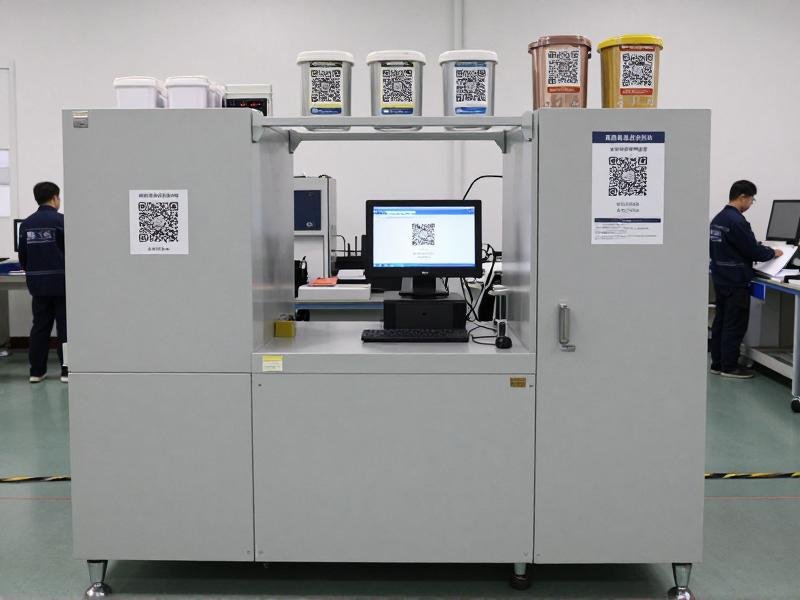
The risk mitigation protocol includes:
- Clearance Verification – Measure internal clearance with dial indicators before installation, specifying C3/C4 classes per load conditions.
- Batch Traceability – Demand lot-specific certificates linking to factory production records.
- Emergency Protocol – Pre-qualify distributors with rapid dispatch guarantees for critical spares [NEED_CITE: ISO 281 correlation between internal clearance variance and vibration-induced fatigue].
How Do OEMs Achieve Batch Stability for Mass Production Without Sacrificing Precision?
Factory-backed distributors cut sample approval cycles dramatically through lot-specific material certifications, not bulk order discounts. OEMs validating large production runs need production traceability down to the furnace heat number, not just dimensional conformity.
For a wind turbine OEM’s project, we coordinated with SKF factories to provide hybrid ceramic SKF 6310 bearings with batch-specific thermal validation data. This allowed the client to achieve exceptional consistency across the entire fleet—shortening their validation cycle dramatically while maintaining ISO P5 tolerances. The engineering team avoided a mid-six-figure loss in rework costs by catching a lubrication specification mismatch during pre-shipment review, using our failure mode database aligned with ISO 15243.
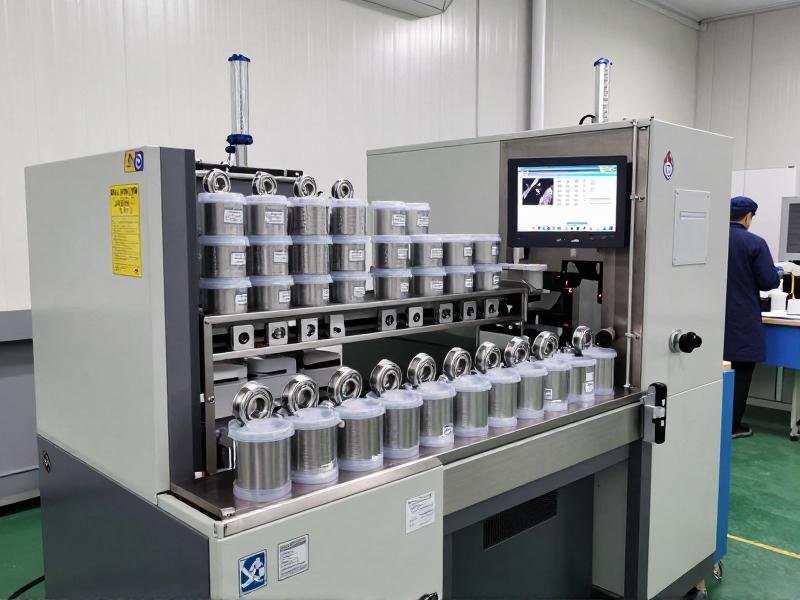
The optimization steps are:
- Certificate Integration – Require heat lot numbers matching mill test reports during procurement.
- Tolerance Mapping – Define maximum allowable variance for critical dimensions.
- Factory Coordination – Leverage distributor relationships for direct production line audits [NEED_CITE: IATF 16949 audit-driven quality improvement in precision bearing supply chains].
Conclusion
Genuine SKF deep groove ball bearings manufacturing transforms bearings from disposable commodities into engineered reliability solutions. The downtime reduction from factory-controlled thermal treatment is physics validated across steel mills, wind farms, and mining sites through traceable material science. When your next bearing fails below rated speed, remember: dimensions lie, but cryogenic stabilization logs never do.