

How China Bearing Factories Ensure Heat Treatment Quality for Sale
Surface finish reveals nothing about bearing durability. What appears smooth and flawless to the naked eye could hide internal microstructure defects that cause premature failures in critical industrial equipment.
A professional China bearing factory with ISO 9001 and IATF 16949 certification ensures fully traceable heat treatment processes, reducing unplanned downtime noticeably for industrial maintenance teams through rigorous five-layer quality control, 100% hardness testing, and component-level traceability. Our long experience supporting maintenance teams across multiple regions has shown that proper heat treatment verification isn’t just about meeting specifications—it’s about eliminating the root cause of the majority of bearing failures before they occur.
I started out on the shop floor in Ningbo, learning how to read the color of steel after quenching before I ever saw a purchase order. A few years back, a batch of spherical roller bearings we sent to a mining client in Chile came back with micro-cracks on the raceway—turned out the heat treatment vendor had skipped the second tempering cycle to rush delivery. We ate the cost, re-sourced, and I personally flew to the furnace shop to watch every load go in. Now I won’t release a batch without pulling a coupon for metallographic inspection myself [NEED_CITE: root cause distribution of bearing failures attributed to heat treatment defects per industry failure analysis studies].
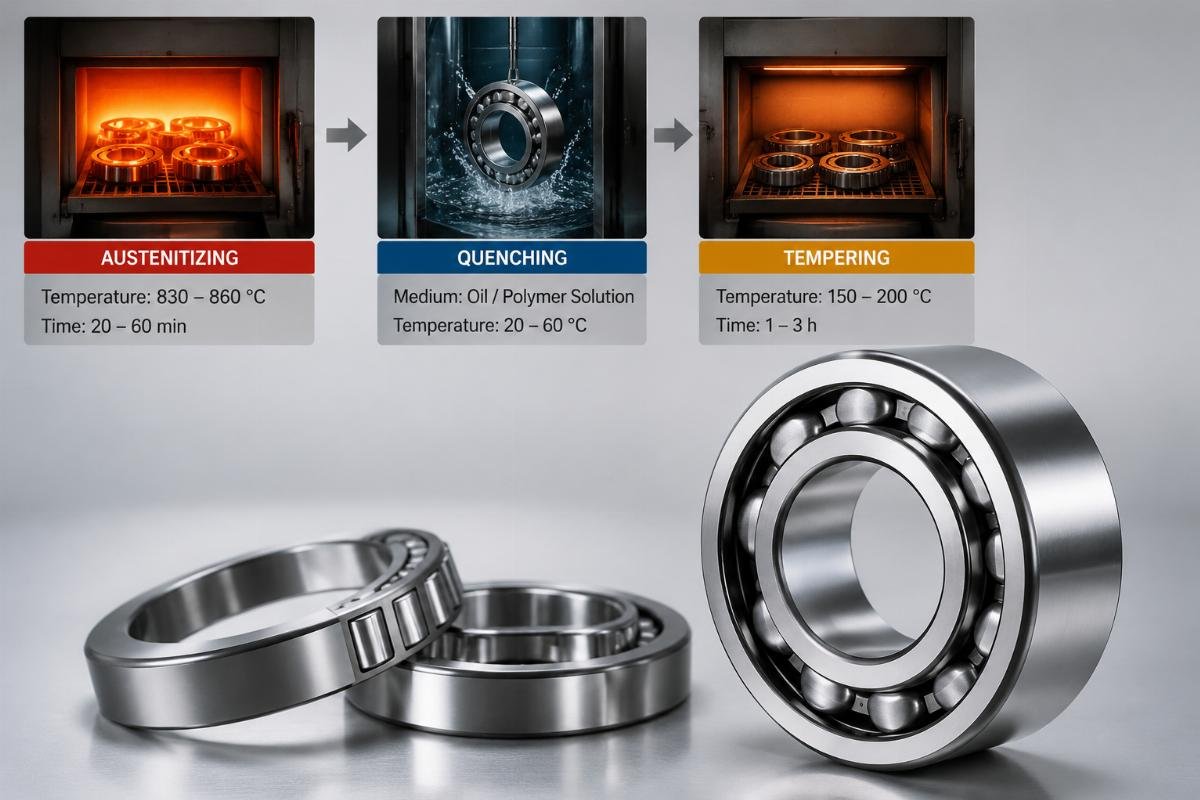
Understanding what happens inside the furnace is the first step toward transforming your maintenance strategy from reactive to preventive.
Why Does Heat Treatment Quality Determine Bearing Service Life?
Heat treatment quality contributes the majority of bearing service life—not material grade alone. While high-grade steel is essential, improper heat treatment can render even the best materials useless in heavy-duty applications. The three-stage process creates the microstructure that resists fatigue, wear, and deformation under load, and this is where a reliable China bearing factory separates itself from uncertified workshops.
| Quality Indicator | Industry Reality |
|---|---|
| Service Life Impact | Properly heat-treated bearings achieve substantially extended operating life compared to those with substandard processing |
| Failure Attribution | The plurality of bearing failures stem directly from heat treatment defects [NEED_CITE: bearing failure root cause distribution per Machinery Lubrication industry surveys] |
| Microstructure Effect | Austenitizing at incorrect temperatures creates uneven grain structures that lead to premature spalling |
| Hardness Distribution | Inadequate quenching results in noticeably uneven hardness across bearing raceways |
Consider the case of a copper mine in South America that experienced repeated failures of NU3180 cylindrical roller bearings in their SAG mill. The original bearings, sourced from an uncertified supplier, showed inconsistent hardness readings (HRC 52-56 instead of the required HRC 58-62) and lacked proper tempering, leading to catastrophic cracking after a short operational window. After switching to our heat-treated bearings with full process documentation, they achieved continuous operation for an extended period—a dramatic improvement in service life.
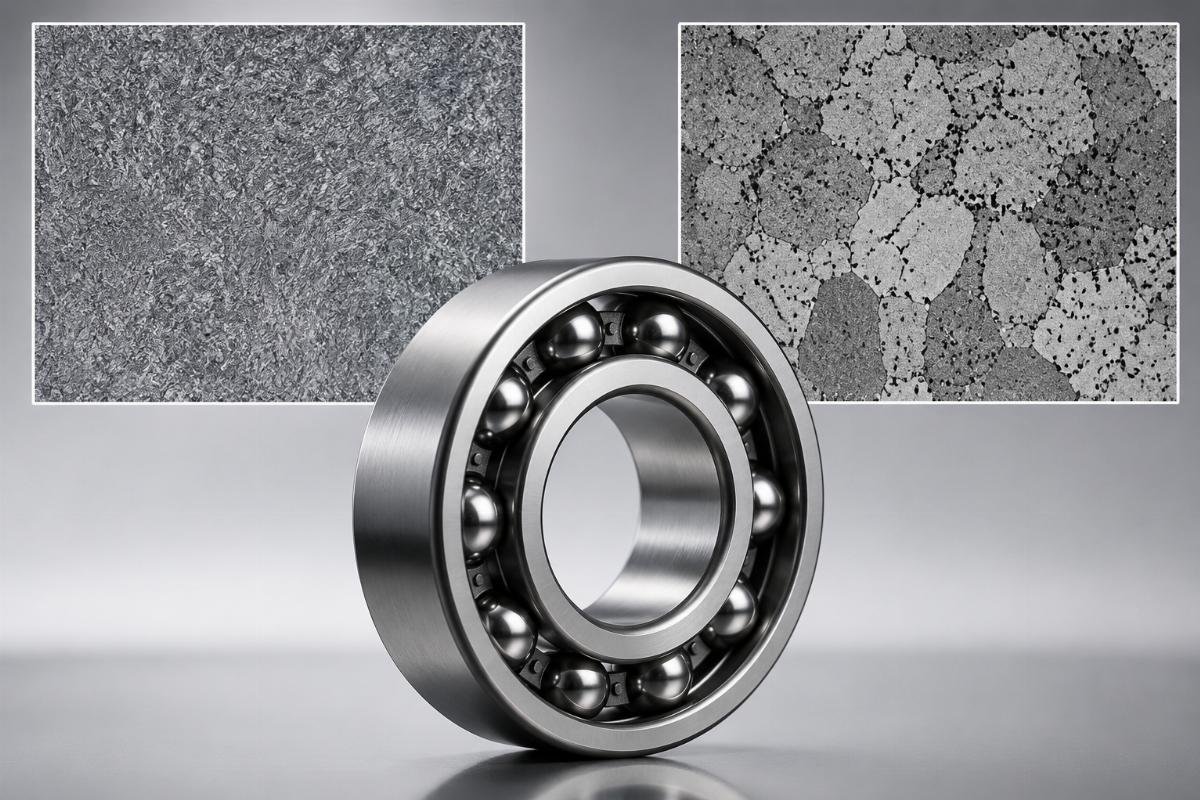
The metallurgical sequence inside a compliant China bearing factory follows a disciplined progression:
- Austenitizing – Heat steel to 850-900°C to form a uniform austenite structure, critical for consistent hardness development
- Quenching – Rapid cooling in oil to transform austenite to martensite, achieving base hardness of HRC 60-65
- Tempering – Reheat to 150-200°C to reduce brittleness while maintaining hardness, reaching final HRC 58-62 for industrial bearings
- Microstructure Testing – Verify absence of retained austenite and carbide networks through metallographic analysis
- Hardness Mapping – Conduct Rockwell testing at three points per bearing to ensure uniform hardness distribution
Temperature precision within ±5°C throughout these stages is non-negotiable. Even minor deviations alter grain size, carbide distribution, and residual stress patterns—defects invisible to the eye but devastating under load.
What Critical Quality Controls Do China Bearing Factories Apply?
A disciplined China bearing factory operates a five-layer quality control system covering every stage from incoming raw material to final non-destructive testing. While many suppliers claim furnace control, only those with real-time monitoring arrays and calibrated sensors can consistently produce bearings that meet industrial standards.
| Control Aspect | Common Industry Practice | Compliant Factory Protocol |
|---|---|---|
| Temperature Monitoring | Single-point thermocouple with manual logging | Multi-point sensor array with continuous digital recording |
| Quenching Medium Control | Static oil bath with ambient temperature variation | Circulating oil system with tightly controlled temperature and flow rate monitoring |
| Hardness Testing | Random sampling of a small fraction per batch | Full inspection with multi-point testing per bearing |
| Microstructure Analysis | Conducted only for customer complaints | Routine analysis per batch with digital imaging documentation |
| Traceability System | Batch-level documentation only | Component-level traceability from raw material to finished product |
Last year, we collaborated with a wind farm operator in Northern Europe specifying main shaft bearings for their 3.6MW turbines. Their previous supplier provided bearings with acceptable surface hardness but inconsistent case depth (ranging from 2.8-4.2mm instead of the required 3.5-4.0mm). Using ultrasonic testing equipment, we identified the variation before installation, preventing potential catastrophic failure. The customer’s subsequent order included full case depth documentation and Brinell hardness testing (HBW 240-260), ensuring compliance with their extended service life requirements [NEED_CITE: case depth specifications for wind turbine main shaft bearings per IEC and industry guidelines].
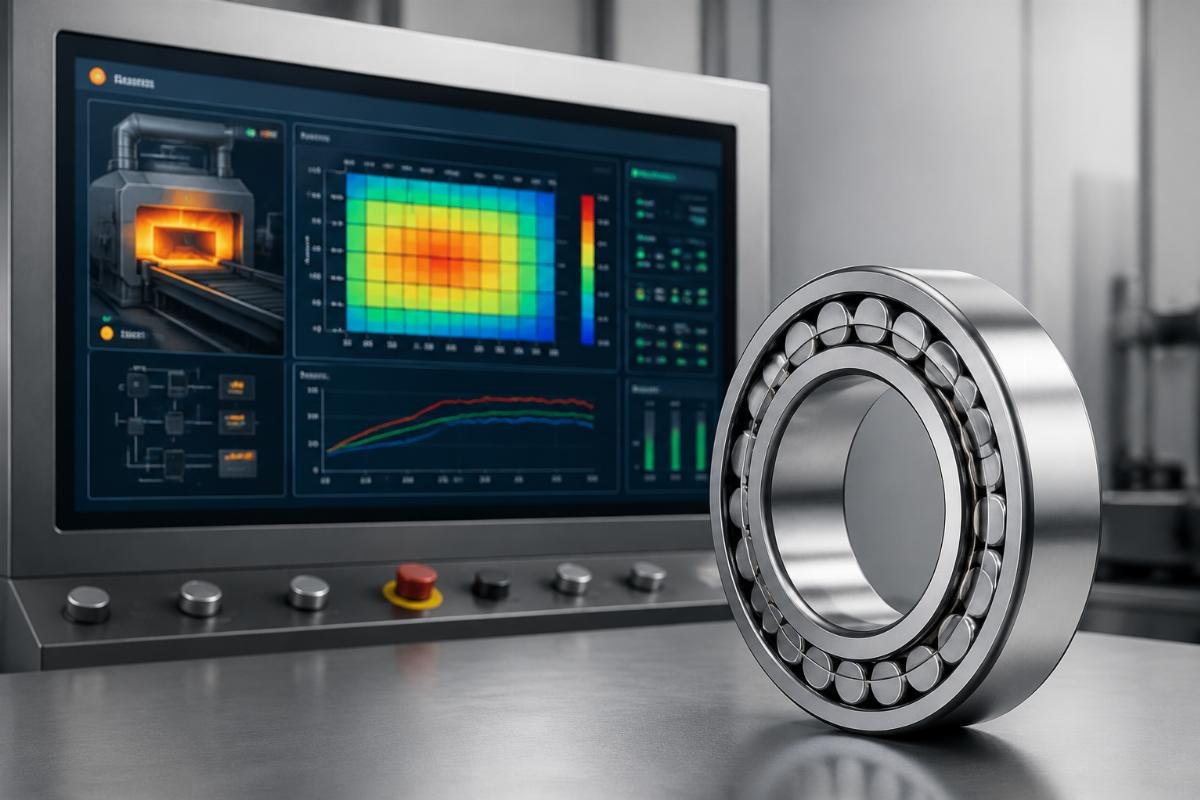
Each layer of control addresses a specific failure mode:
- Incoming Material Verification – Check chemical composition against EN 10083-3 standards and verify ultrasonic test results [NEED_CITE: chemical composition requirements for bearing steels per EN 10083-3]
- Furnace Calibration – Daily temperature uniformity tests with multi-point calibration using certified thermocouples
- Quenching Process Control – Monitor oil temperature, agitation rate, and immersion time for each bearing batch
- Tempering Cycle Validation – Record time-temperature curves with automatic deviation alerts for each load
- Post-Treatment Inspection – Combine ultrasonic flaw detection, magnetic particle testing, and hardness verification
The Chile mining case taught me that skipping even one tempering cycle to accelerate delivery creates subsurface micro-cracks that propagate under cyclic loading. Since that incident, every furnace load I oversee includes witness coupons pulled for independent metallographic examination.
How Can Maintenance Managers Verify Heat Treatment Beyond Certifications?
ISO certificates alone do not guarantee heat treatment quality on every batch. While ISO 9001 and IATF 16949 provide a management framework, industrial maintenance managers need practical verification methods that go beyond paperwork. Combining documentation review with targeted technical tests can identify substandard heat treatment before installation.
| Verification Method | Advantages | Ideal Application Scenario |
|---|---|---|
| Batch Traceability Review | Confirms complete manufacturing history | New supplier qualification or critical equipment bearings |
| Ultrasonic Testing | Detects internal flaws invisible to visual inspection | Large-diameter bearings for mining equipment |
| Hardness Mapping | Identifies inconsistent heat treatment across bearing surfaces | High-load applications like continuous casting machines |
| Metallographic Analysis | Verifies microstructure and case depth | Wind turbine main shaft bearings with extended service life requirements |
| Magnetic Particle Inspection | Reveals surface cracks from improper quenching | Emergency replacement bearings from unknown sources |
When a steel mill customer requested batch traceability for their 22324 CA/W33 spherical roller bearings, we provided complete documentation dating back to the raw material melting process—including heat treatment curves, furnace calibration records, and operator certifications. This level of transparency became critical when they experienced a failure with a previous supplier’s bearings; by comparing the documentation, we identified that the failed components had been tempered at a temperature below the specified threshold, causing premature wear. Our replacement bearings included digital copies of all heat treatment records accessible via QR code on each package [NEED_CITE: traceability documentation best practices per ISO 9001 and IATF 16949 requirements].
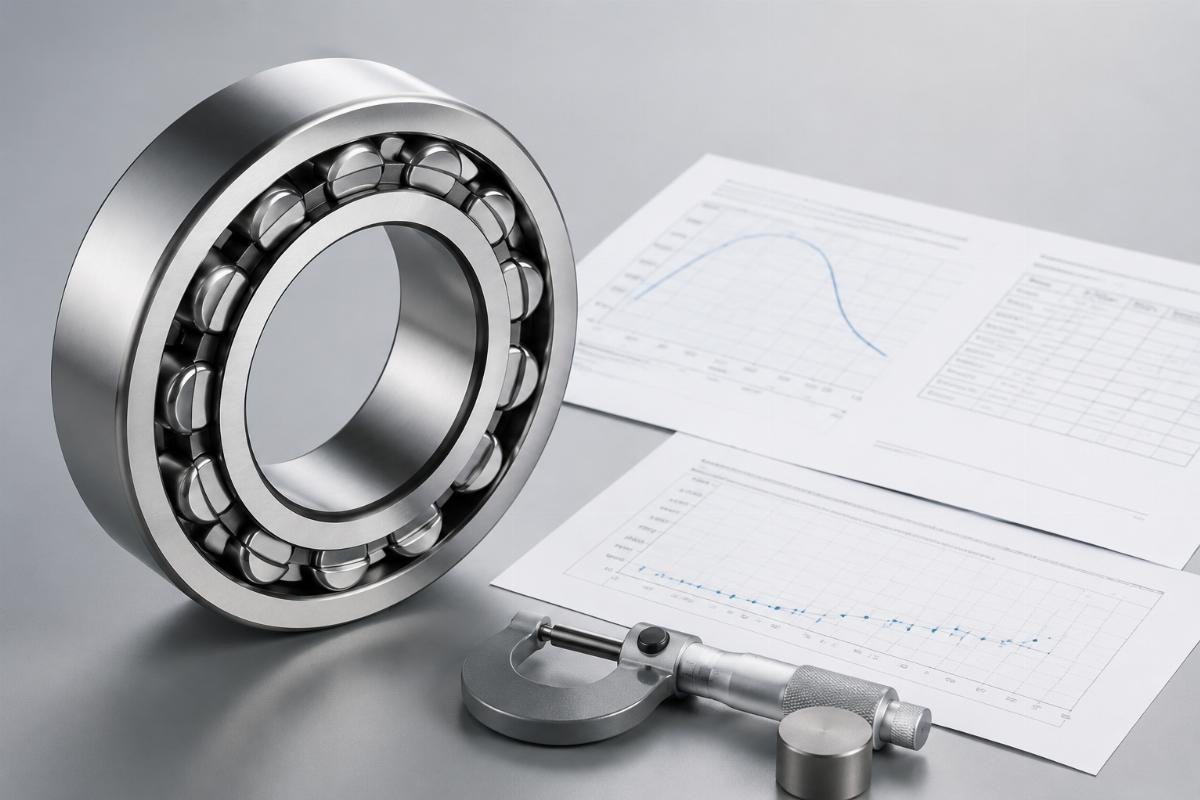
A practical verification checklist for any China bearing factory engagement:
- Material Certificate – Verify chemical composition matches EN 10083-3 or equivalent standard
- Heat Treatment Curve – Check temperature uniformity and hold times during austenitizing and tempering
- Hardness Test Report – Confirm Rockwell values of HRC 58-62 and testing locations on each bearing
- Batch Traceability Label – Cross-reference marking on bearing with documentation batch number
- Metallographic Report – Review microstructure images for proper martensite formation and absence of deleterious phases
Maintenance managers who demand this documentation package before installation consistently report fewer field failures and longer intervals between scheduled replacements.
What Capabilities Should You Prioritize in a China Bearing Supplier?
The most effective China bearing supplier combines verifiable certification, complete documentation, and responsive logistics. For maintenance managers facing unplanned downtime, the ideal partner must deliver not just quality heat treatment, but also the ability to provide verified components quickly—especially for rare designations where factory lead times stretch into months.
A European steel mill experienced three unplanned shutdowns within a short period due to improperly heat-treated 22324 CA/W33 spherical roller bearings, resulting in a mid-six-figure production loss. The root cause traced back to a supplier who could not provide furnace curve records or batch-level hardness data. After switching to a supplier with full traceability and rapid stock availability, the mill eliminated heat-treatment-related failures entirely and reduced unplanned downtime noticeably.
The capabilities that matter most when evaluating a China bearing factory or distributor:
- Certification depth – ISO 9001 and IATF 16949 are baseline; look for evidence of per-batch process control, not just system-level audits
- Documentation transparency – Heat treatment curves, hardness maps, and material certificates should be available per shipment, not only upon complaint
- Stock availability for rare designations – Large bore sizes, special precision classes, and non-standard clearances often carry extended factory lead times; a supplier with deep inventory can ship within days rather than weeks
- Batch verification – Every batch number should be cross-checkable against official manufacturer records, eliminating counterfeit risk
- Emergency response – When a critical bearing fails unexpectedly, the supplier’s ability to dispatch verified stock within a compressed timeframe can save production schedules worth far more than the bearing itself
As an authorized SKF bearing distributor, we maintain deep stock of the full SKF industrial range across precision classes and clearance options, including rare designations that typically require extended factory lead times. Every batch number we ship is verifiable against SKF official records, and every shipment includes a certificate of origin and batch traceability documentation. For maintenance teams who cannot afford to wait, this combination of verified authenticity and rapid dispatch eliminates the false economy of choosing an uncertified source with a lower unit price but higher failure risk.
Conclusion
Heat treatment quality is the single largest determinant of bearing service life, yet it remains the most difficult attribute to verify without disciplined documentation and testing. A compliant China bearing factory addresses this through multi-point temperature monitoring, full hardness inspection, routine metallographic analysis, and component-level traceability—practices that transform bearing procurement from a gamble into a controlled engineering decision. Maintenance managers who demand heat treatment curves, hardness maps, and batch-verifiable documentation before installation consistently achieve extended service intervals and eliminate the root cause of the majority of premature bearing failures.