

How to Verify a Reliable Bearing Supplier in China
ISO 9001 certificates alone will not protect your production line from counterfeit bearings.
Verifying a reliable bearing supplier in China requires moving beyond basic certification checks to prioritize batch-specific traceability systems, application-specific technical support, and supply chain resilience—ensuring you avoid counterfeits and maintain production continuity.
I started out in the inspection lab at a bearing factory outside Ningbo, measuring clearance with feeler gauges before I ever saw a purchase order. When I moved to the trading side, I kept getting burned by buyers who’d forward me a competitor’s glossy SKF certificate—PDFs with batch numbers that didn’t match SKF’s actual registry. One Brazilian mining client almost rejected a full container of spherical rollers because the paperwork looked "too clean." I flew to Santos with a laptop, pulled up SKF’s global batch traceability system in the warehouse, and matched every seal number on the pallets to the factory log. After that, I stopped arguing with certificates and started showing traceability links before the goods even ship [NEED_CITE: China Bearing Industry Association anti-counterfeiting report on counterfeit prevalence rates].
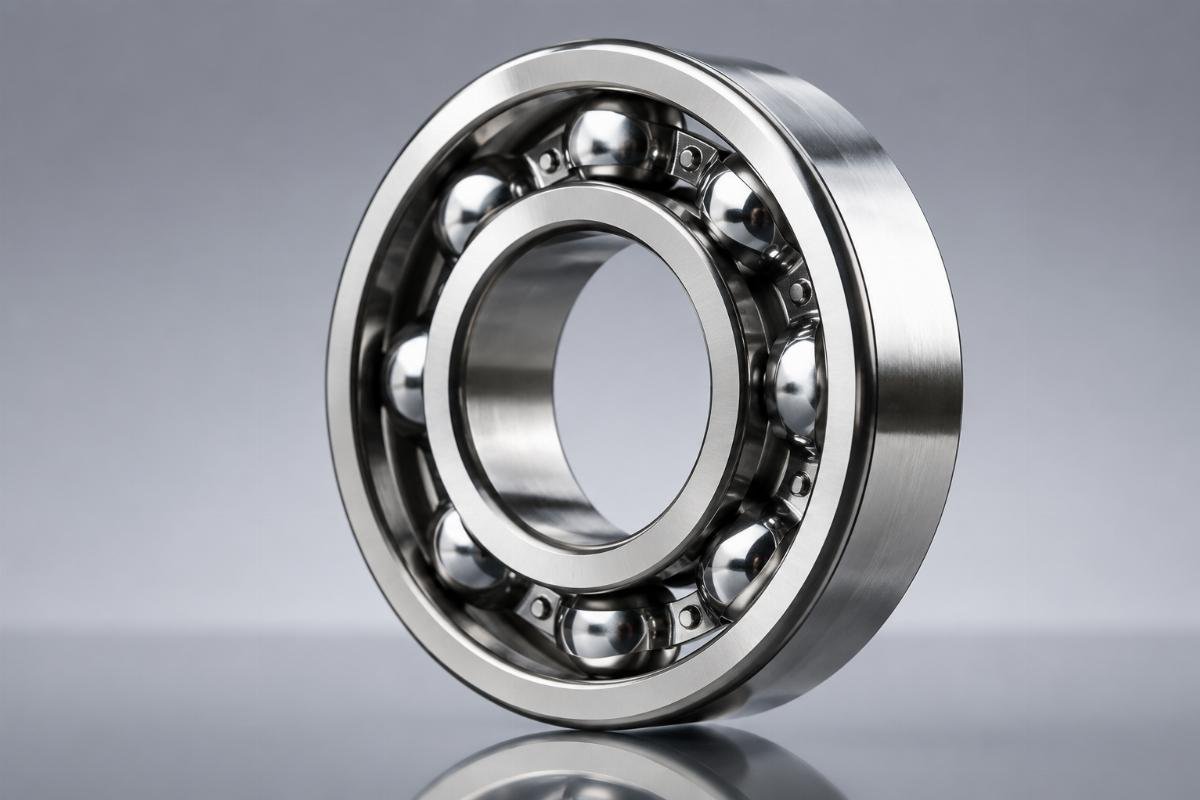
The following framework distills field-tested methods for identifying truly reliable partners amid China’s complex bearing supply landscape.
Why Do Traditional Verification Methods Fail for Chinese Bearing Manufacturers?
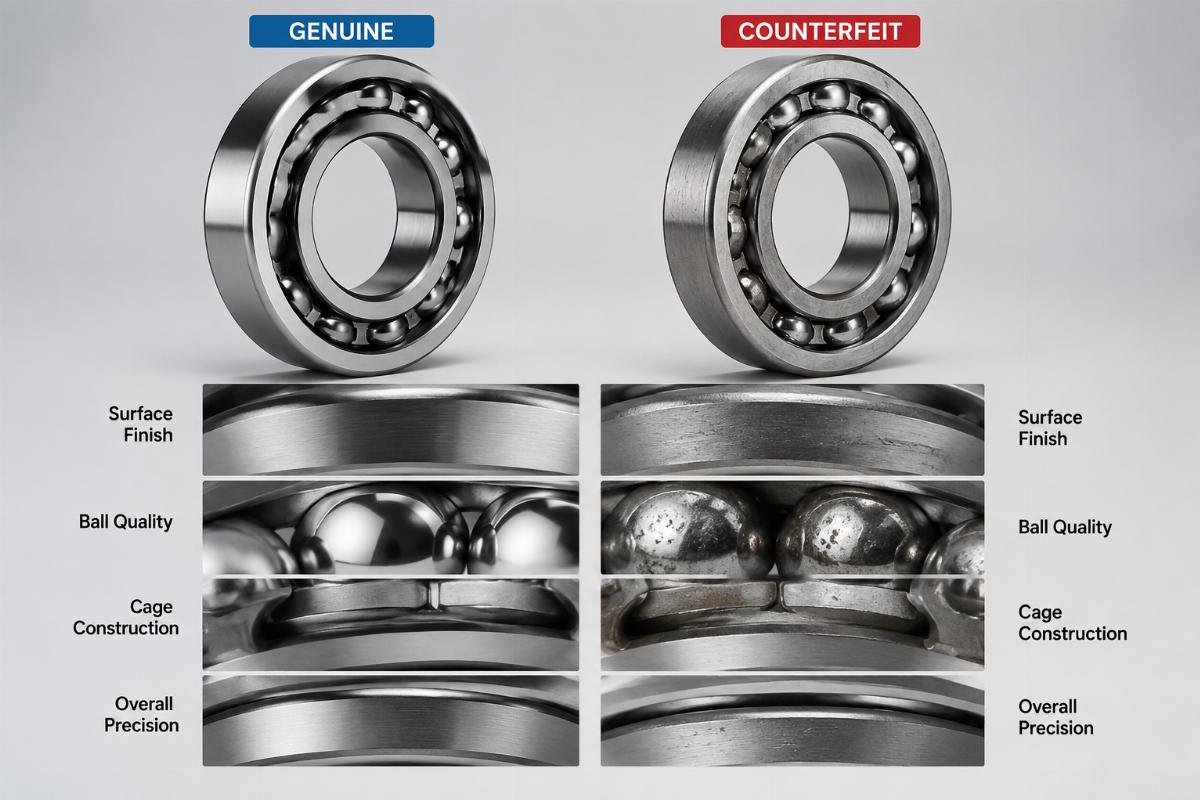
Counterfeiters now replicate not just products, but entire quality management narratives. The Chinese bearing industry’s rapid growth has been accompanied by increasingly sophisticated counterfeiting techniques that render traditional verification methods obsolete. While basic due diligence remains necessary, it’s no longer sufficient to protect your supply chain when sourcing from a bearing supplier in China.
| Verification Approach | Industry Reality |
|---|---|
| ISO 9001 Certification | The majority of counterfeit bearing suppliers provide forged ISO certificates [NEED_CITE: China Bearing Industry Association anti-counterfeiting report 2025] |
| Factory Audits | "Potemkin factories" with dedicated production lines for audit inspections only |
| Price Comparison | Counterfeit bearings often priced noticeably above the lowest market rates to appear legitimate |
| Online Reputation | Fake reviews and manipulated trade platform ratings are industry standard practice |
One of our clients, a European mining equipment OEM, discovered this painful lesson after qualifying a supplier based on ISO certification and a seemingly thorough factory audit. Six months into production, a batch of spherical roller bearings failed during testing, revealing substandard steel alloys and incorrect heat treatment. Investigation uncovered that the supplier had redirected their order to an uncertified subcontractor while presenting audit-ready facilities during verification.
This experience highlights a critical truth: when evaluating a bearing supplier in China, surface-level credentials can mask fundamental operational risks. The verification process must penetrate deeper into material sourcing, production processes, and documentation integrity.
What Are the 7 Critical Checks for Supplier Reliability?
Effective bearing supplier verification demands a forensic approach to documentation and operational capability. Moving beyond surface-level checks requires systematic evaluation of traceability systems, quality control processes, and inventory management—areas where legitimate suppliers distinguish themselves from problematic ones.
Step 1: Material Certification Review
Request batch-specific material test reports with chemical composition and mechanical property data traceable to original steel mills. Generic certificates that don’t specify furnace numbers or heat treatment parameters provide zero protection against material substitution.
Step 2: Production Process Validation
Verify specific manufacturing steps including heat treatment parameters and precision grinding tolerances. Legitimate manufacturers maintain detailed process records that link each production batch to specific equipment and operator certifications.
Step 3: Anti-Counterfeiting Technology
Confirm implementation of unique identification systems such as laser marking or microdot technology. These features should be verifiable through manufacturer databases, not just visually inspected.
Step 4: Supply Chain Mapping
Document the complete journey from raw material sourcing to finished product delivery. Any gaps in this chain represent potential points where counterfeit components could enter your supply.
Step 5: Independent Testing
Arrange for third-party inspection of critical dimensions and material properties. Never rely solely on supplier-provided test results for high-value or safety-critical applications.
Step 6: Failure Analysis Capability
Assess the supplier’s engineering team’s ability to conduct root cause analysis on failed components. This capability indicates whether they understand bearing metallurgy and can support your technical requirements.
Step 7: Logistics Reliability
Evaluate emergency response protocols and alternative shipping routes for critical orders. A bearing supplier in China must demonstrate they can deliver within compressed timeframes when production lines are at risk.
We recently supported a US-based steel mill facing recurring bearing failures in their continuous casting line. Their previous supplier provided ISO certificates but could not produce batch-specific material documentation. Through our verification process, we implemented a system requiring mill test certificates for raw materials, dimensional inspection reports for each production run, and traceability codes linking each bearing to its manufacturing batch. This resulted in a full order of 30220 tapered roller bearings delivered within a compressed timeframe with complete anti-counterfeit verification, eliminating their unplanned downtime incidents.
| Verification Dimension | Common Mistake | Recommended Approach |
|---|---|---|
| Traceability | Accepting generic material certificates | Requiring batch-specific documentation with furnace numbers and heat treatment records |
| Quality Control | Relying on final product inspection only | Verifying in-process inspection protocols at critical manufacturing stages |
| Inventory Management | Prioritizing total inventory volume | Evaluating strategic stock across extensive SKU ranges with rapid dispatch capability for standard models |
| Technical Support | Assuming basic application knowledge | Confirming dedicated engineering teams for bearing selection and failure analysis |
| Manufacturing Capacity | Focusing solely on production volume | Assessing flexibility for custom modifications and small-batch precision production |
| Testing Capabilities | Accepting pass/fail test results | Reviewing detailed test protocols including fatigue life and vibration analysis |
| Compliance Documentation | Collecting standard certifications | Verifying industry-specific credentials such as IATF 16949 for automotive applications |
How Does Technical Support Impact Total Cost of Ownership?
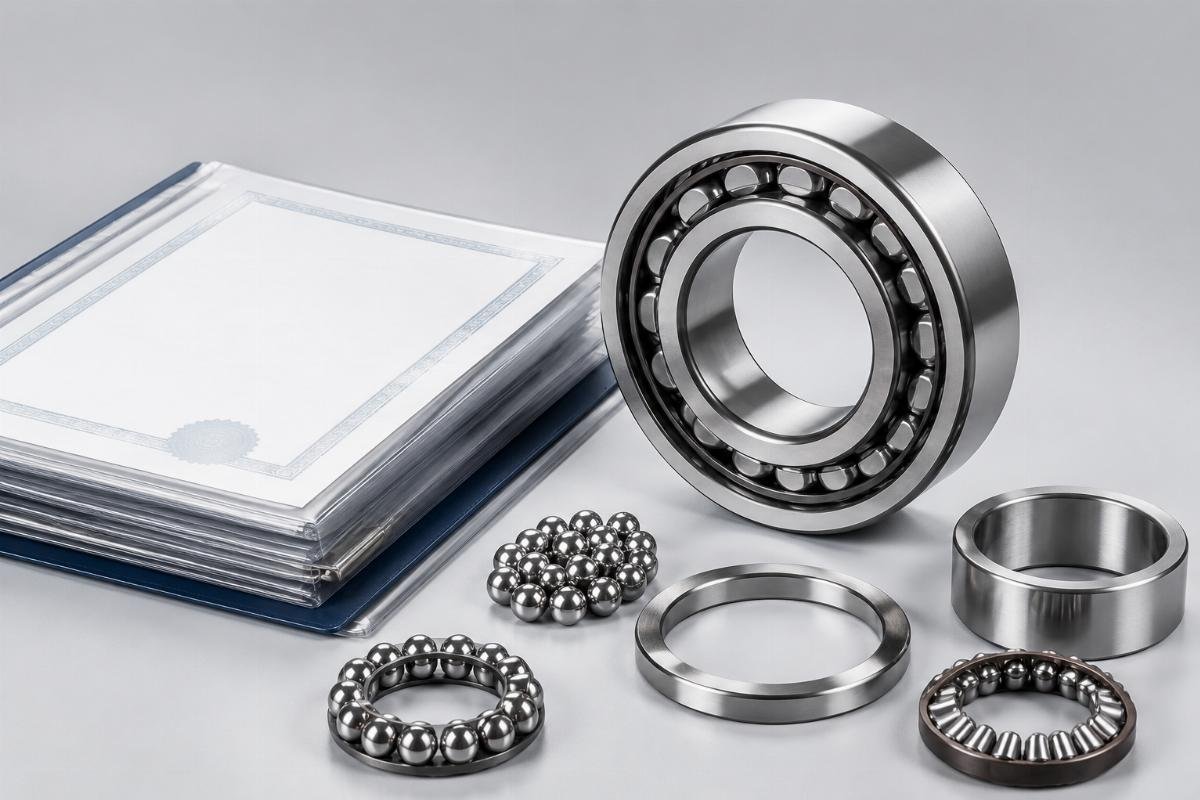
Technical support directly impacts your total cost of ownership and production reliability. The right bearing supplier in China should function as an engineering partner, providing application-specific guidance that extends beyond basic product specifications to optimize performance and prevent failures.
| Support Capability | Generic Supplier | Engineering Partner |
|---|---|---|
| Application Expertise | Provides standard catalog data only | Offers load calculation and selection guidance based on operating conditions |
| Failure Analysis | Blames installation or operating conditions | Conducts comprehensive root cause analysis with detailed engineering reports |
| Custom Solutions | Only offers standard products | Develops modified designs for unique applications (clearance adjustments, special seals, material upgrades) |
| Post-Sale Support | Minimal follow-up after delivery | Provides installation supervision and performance monitoring recommendations |
| Industry Knowledge | General bearing expertise | Specialized experience in your specific sector (wind energy, mining, marine, etc.) |
Our work with a European wind energy OEM exemplifies the value of application-specific technical support. They needed to qualify a new supplier for gearbox bearings requiring precision grade P5 and material certification to meet their extended turbine design life. Our engineering team provided material selection guidance based on fatigue load calculations, specialized heat treatment recommendations for enhanced durability, and a streamlined sample qualification cycle that met their aggressive development timeline. The order of 22330 CC/W33 spherical roller bearings we supplied now forms the critical link in their turbine drivetrain, validated through extensive endurance testing [NEED_CITE: wind energy bearing life validation standards per IEC 61400].
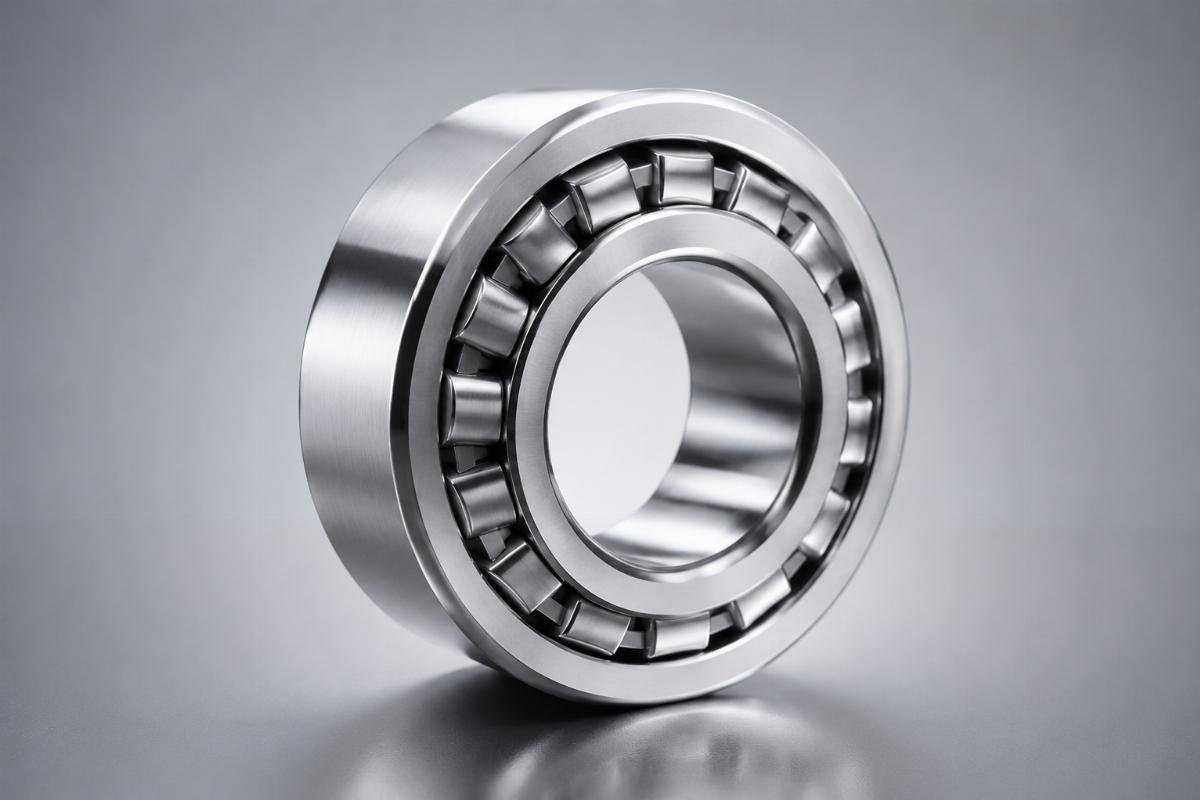
When evaluating a bearing supplier in China, assess their engineering team’s credentials including lubrication specialists and application engineers. Review their approach to bearing life prediction and load rating verification. Confirm their capabilities for material testing, metallurgical analysis, and root cause determination. Establish clear service level agreements for technical inquiries and emergency support.
Which Industry-Specific Criteria Matter Most?
Industrial bearings perform in vastly different operating environments, demanding specialized verification criteria. A one-size-fits-all approach to supplier qualification fails to address the unique challenges of sectors like wind energy, marine, and mining—where bearing performance directly impacts safety, environmental compliance, and bottom-line profitability.
| Industry Sector | Critical Verification Criteria | Specialized Requirements |
|---|---|---|
| Wind Energy | Material certification for main shaft bearings | Condition monitoring compatibility and extended design life validation [NEED_CITE: wind turbine bearing reliability standards] |
| Marine Applications | Classification society certifications (DNV, Lloyd’s) | Corrosion resistance testing and saltwater exposure validation |
| Mining Equipment | Performance data in harsh dust/moisture conditions | Large bore availability and specialized sealing solutions |
| Steel Mills | High-temperature operation validation | Continuous casting line compatibility and thermal stability testing |
For wind energy applications, verify that your bearing supplier in China can provide material certifications traceable to specific heat treatments designed for fatigue resistance. Marine applications require documentation of corrosion protection methods and validation through salt-spray testing per international standards. Mining equipment demands proof of performance in contaminated environments, with particular attention to sealing effectiveness and lubricant retention.
A Middle East steel mill recently faced production losses when bearings failed prematurely in their continuous casting line. The root cause traced back to inadequate high-temperature material specifications. Working with their engineering team, we specified bearings with enhanced thermal stability and implemented a monitoring protocol that extended service life substantially.
How to Confirm Batch Traceability Before Shipment?
Batch traceability is the single most reliable indicator of a legitimate bearing supplier in China. Without verifiable batch-level documentation, you have no defense against material substitution, unauthorized subcontracting, or outright counterfeiting.
Require the following documents before any shipment leaves the warehouse:
- Mill test certificates specifying furnace numbers and heat treatment parameters for each batch
- Batch-specific dimensional inspection reports linked to production records
- Certificate of origin with verifiable issuing authority
- Traceability codes that can be cross-referenced against the manufacturer’s global registry
As an authorized SKF bearing distributor with extensive industry experience, we maintain direct supply channels from SKF China and SKF global headquarters. Every shipment carries full batch traceability—batch numbers are verifiable against SKF’s global records, and certificates of origin accompany every order. We maintain deep stock of rare designations including large bore sizes, special precision and clearance combinations, ceramic and stainless variants, enabling rapid dispatch on scarce models that would otherwise require extended factory lead times. Our coverage spans the full SKF industrial range: precision classes P0/P6/P5/P4, clearance options C2/CN/C3/C4, all main bearing types (deep groove ball, tapered roller, spherical roller, cylindrical roller, thrust, self-aligning), sealed configurations (2RS/2Z), and split bearings.
When a Brazilian mining client received spherical rollers with batch numbers that didn’t match SKF’s system and seals that were slightly off-color, the consequences were immediate—equipment failure and extended downtime. By contrast, when we supply 22330 CC/W33 spherical roller bearings or 30220 tapered roller bearings, every unit traces back through SKF’s global batch traceability system, from the steel mill furnace to the warehouse pallet seal [NEED_CITE: SKF global batch traceability system documentation].
Conclusion
Verifying a bearing supplier in China requires forensic-level documentation review, not just certificate collection. Batch-specific traceability, independent testing, and application-specific engineering support form the foundation of reliable sourcing. Traditional verification methods fail against sophisticated counterfeiting operations that replicate entire quality management narratives. Prioritize suppliers who provide furnace-level material documentation, maintain rapid dispatch capabilities for critical replacements, and demonstrate deep technical expertise in your specific industry application.