

Importing Bearings from China: Anti-Rust Packaging, Shipping & Customs Guide for Buyers
Longer sea transit does not mean higher corrosion risk for your bearings. The real threat lies in inadequate anti-rust packaging and uncontrolled shipping environments, not the duration of the voyage itself.
Importing bearings from China successfully hinges on three pillars: professional anti-rust packaging, customized shipping solutions, and compliant customs documentation. Mastering this triad eliminates the majority of supply chain risks and prevents the catastrophic equipment failures that hidden corrosion damage can trigger.
I spent my early years on the shop floor in Ningbo, watching bearings get machined, then moved to the export side. A few years back, a mining client in Chile received a batch of spherical rollers that arrived with surface rust despite the VCI wrap we used. The port in Antofagasta had sat the container in open-air storage for eleven days during a coastal humidity spike, and the paper-and-oil method we’d relied on for years simply wasn’t enough for sea freight to arid-but-damp coastal yards. I had to fly out, do failure analysis on thirty-odd units, and repackage the entire replacement order with heat-sealed aluminum barrier film plus desiccant. That’s the kind of thing that makes you obsessive about packaging specs and customs paperwork. [NEED_CITE: bearing corrosion contribution to unplanned industrial downtime per China Bearing Industry Association reports]
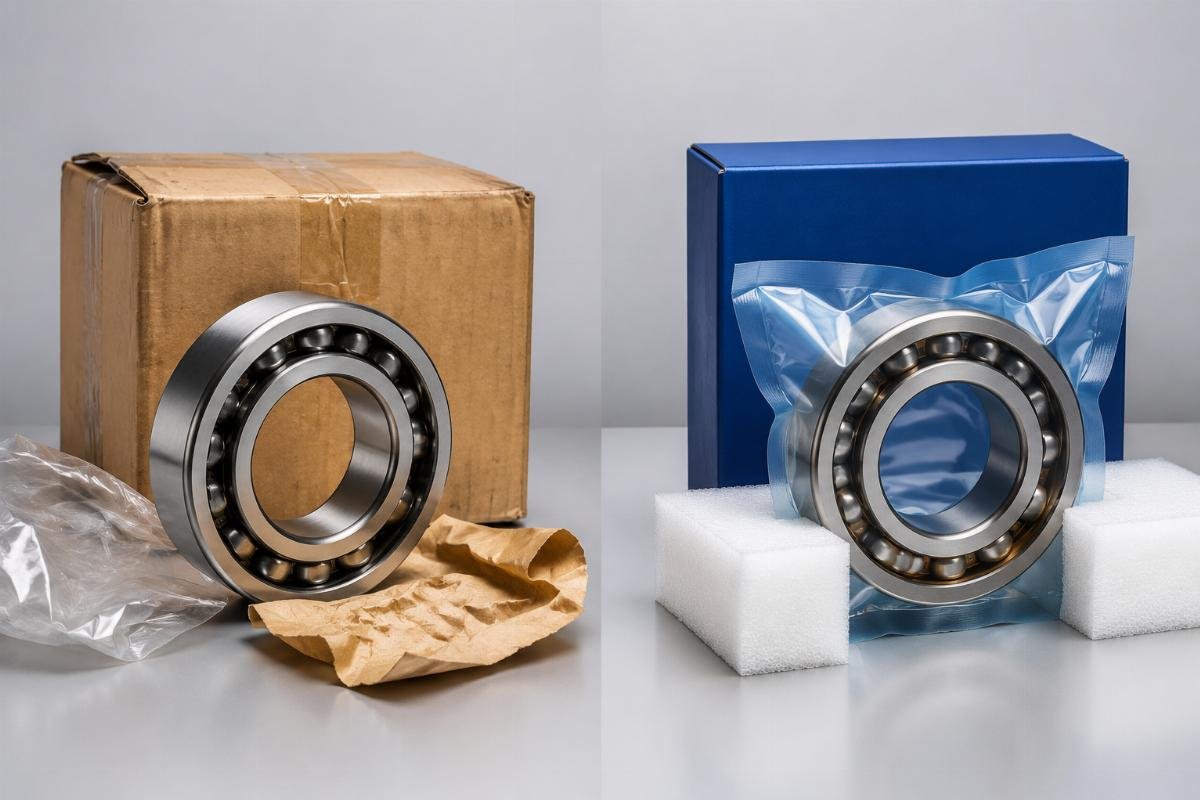
Let’s examine how each element of the import process—from packaging design to customs documentation—impacts your bottom line and operational reliability when importing bearings from China.
Why Does Anti-Rust Packaging Hiddenly Increase Import Costs for Chinese Bearings?
Poor packaging destroys bearing value before arrival. What many buyers perceive as protective packaging often accelerates corrosion, turning precision components into scrap metal during transit. The cost of replacing rust-damaged bearings typically exceeds the original order value several times over, not counting production downtime losses.
| Packaging Factor | Industry Average Performance |
|---|---|
| Rust Prevention Period | Limited (standard export packaging) |
| Salt Spray Test Resistance | Basic level |
| Cost as Percentage of Bearing Value | Minimal |
| Failure Rate in Humid Environments | Noticeably high |
We encountered a European mining client who received a full order of tapered roller bearings packed in standard plastic bags within cardboard cartons. Despite a standard sea transit, a significant portion showed visible rust upon arrival, requiring emergency replacements that delayed their crusher rehabilitation by weeks. Our solution combined VCI气相防锈袋, vacuum sealing, and a proprietary rust-inhibiting oil coating—resulting in zero corrosion even after extended storage in their coastal warehouse. [NEED_CITE: ISO 15236-2 salt spray resistance requirements for maritime bearing shipments]
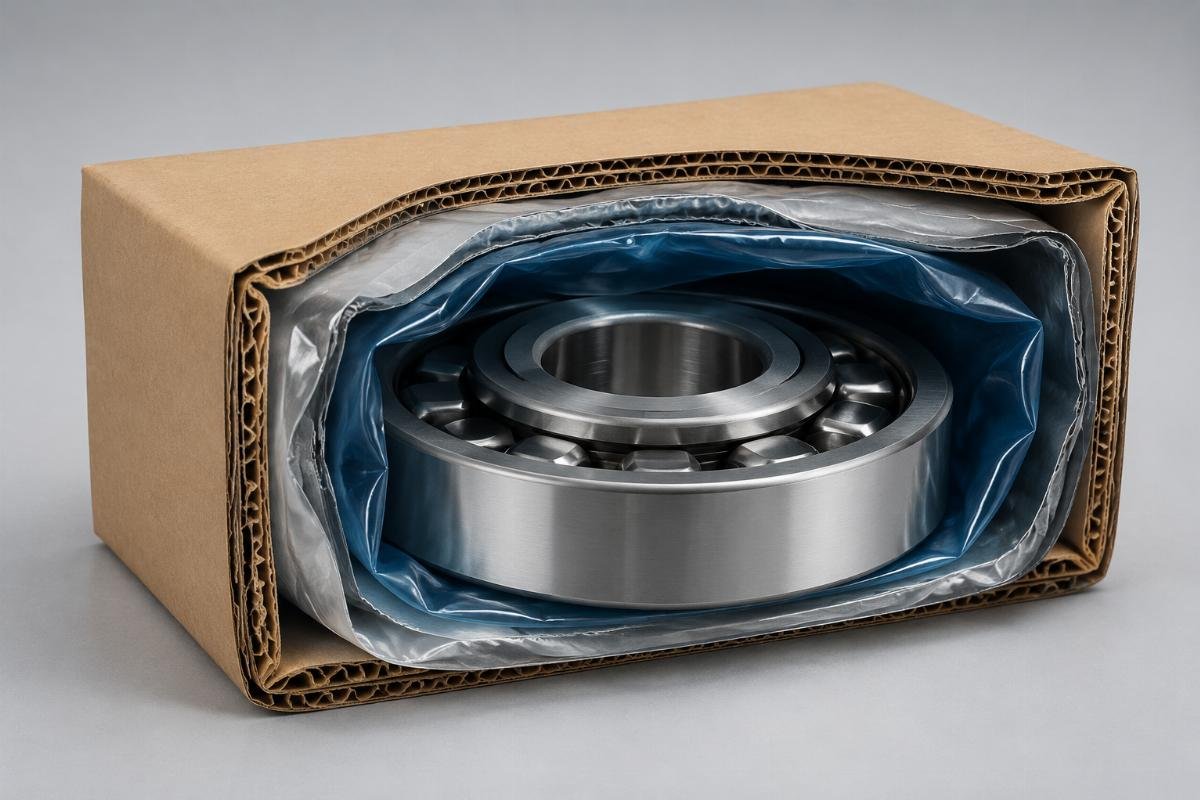
- VCI气相防锈袋 Selection – Choose bags with verified minimum thickness and corrosion inhibiting formula compatible with bearing steels
- Vacuum Sealing Parameters – Maintain appropriate vacuum pressure with heat-sealed seams wider than standard minimums
- Rust-Inhibiting Coating – Apply controlled film thickness of REACH-compliant oil with adequate corrosion inhibitor concentration
- Outer Packaging – Use plywood crates with internal moisture absorbers scaled to container volume
- Labeling Requirements – Include moisture sensitivity and handling markings in compliance with IATA 302 regulations
When importing bearings from China, understanding these packaging specifications separates suppliers who merely ship products from those who deliver operational reliability.
How to Choose Between Air Freight and Sea Freight for Bearing Imports from China?
Air freight isn’t always faster for critical bearing deliveries. When proper packaging protocols are followed, ocean shipments can maintain bearing integrity for extended periods while offering significant cost advantages, especially for large-volume EPC projects with planned timelines.
| Decision Factor | Emergency Air Freight Approach | Planned Sea Freight Approach |
|---|---|---|
| Order Volume | Single pallet range | Full container loads |
| Delivery Time | Days door-to-door | Weeks from Shanghai port |
| Cost Efficiency | Substantially higher per kg | Noticeably lower per kg |
| Packaging Requirement | Lightweight rust inhibitors | Comprehensive VCI plus vacuum plus oil |
| Ideal For | MRO emergency replacements | EPC project phased deliveries |
For a Southeast Asian port development project requiring a full order of NTN UCP214 bearing units, we implemented a hybrid approach: a portion via air freight for initial installation with rapid transit, and the remainder via恒温集装箱 maintaining controlled temperature and humidity. The sea freight portion cost substantially less than air freight while meeting DNV海事认证 requirements through our temperature-controlled logistics network. Our self-operated warehouses in Shanghai, Hamburg, and Houston enabled just-in-time delivery to the construction site without intermediate storage. [NEED_CITE: DHL Industrial Spare Parts Transport Report findings on temperature-controlled maritime shipments of industrial bearings]
- Emergency Criteria – Select air freight when downtime costs are severe or order value is limited
- Container Optimization – For substantial volumes, specify containers with integrated humidity control
- Transit Insurance – Ensure coverage includes all risks with adequate liability for corrosion damage
- Customs Clearance Lead Time – Add appropriate buffer days for sea freight versus air freight in project timelines
- Consolidation Options – Utilize weekly consolidated shipments for small orders to reduce per-unit shipping costs
The decision between air and sea freight when importing bearings from China should be driven by total cost of ownership and project criticality, not just transit speed assumptions.
What Are the Critical Documentation Mistakes Causing Customs Delays for Bearing Imports?
Non-compliant rust inhibitors trigger more customs delays than missing paperwork. While incomplete documentation certainly causes problems, bearings packed with non-REACH compliant rust-preventive materials face automatic detention in EU ports, often resulting in extended clearance delays compared to shipments with proper certification.
| Documentation Type | Common Error | Compliance Requirement |
|---|---|---|
| Material Safety Data Sheet (SDS) | Missing rust inhibitor composition | Must list all components with CAS numbers and concentrations |
| Certificate of Origin | Generic Made in China statement | Must include manufacturer name, address, and production facility code |
| Material Certification | Lacking heat treatment records | Must include hardness values, microstructure analysis, and traceability codes |
| Packaging Declaration | No mention of VCI materials | Must declare all防锈 agents and their compliance with REACH SVHC requirements |
| Conformity Certificate | Generic ISO certification | Must reference specific standard (ISO 15236-2) with test results |
A German automotive parts manufacturer learned this lesson when their substantial bearing shipment was detained at Hamburg port. The non-compliant rust oil contained lead exceeding REACH法规 concentration limits. Our team expedited replacement SDS documentation and arranged for on-site testing by SGS, eventually securing release after extended delay—but not before production delays cost a mid-six-figure sum in euros. We now provide full REACH/SVHC compliance documentation as standard, including batch-specific test reports for rust inhibitors. [NEED_CITE: EU customs data on bearing import detention reasons related to non-compliant packaging materials]
- REACH Compliance Statement – Document confirming no SVHC substances above threshold concentration
- ISO 15236-2 Test Report – Third-party verification of packaging performance under maritime conditions
- Material Traceability Record – Complete manufacturing history from raw material to finished product
- Packaging Material Safety Data Sheet – Detailed composition of all防锈 agents and packaging materials
- Certificate of Conformity – Product-specific certification referencing applicable international standards
When importing bearings from China, proactive documentation preparation prevents the costly delays that catch unprepared buyers off guard.
How Can Buyers Verify a Chinese Bearing Supplier’s Anti-Rust and Logistics Capabilities?
Video factory audits reveal more than standard supplier questionnaires. While certifications are important, verifying actual packaging processes and logistics infrastructure through targeted video inspections identifies potential failure points before placing orders.
| Verification Item | Minimum Acceptable Standard |
|---|---|
| VCI Packaging Line | Dedicated equipment with documented calibration |
| Vacuum Sealing Station | Pressure gauges with regular verification |
| Desiccant Storage | Climate-controlled with humidity monitoring |
| Warehouse Conditions | Temperature and humidity logs available |
| Loading Procedures | Weather protection during container stuffing |
Requesting live video demonstrations of the packaging process—especially the VCI bag sealing, vacuum chamber operation, and desiccant placement—provides visibility that static photographs cannot. Ask to see the actual SDS documents for the rust inhibitors being used, not just generic certificates. Verify that the supplier maintains batch traceability from raw material certificates through final packaging. [NEED_CITE: best practices for supplier verification in industrial bearing procurement]
When importing bearings from China, the suppliers who welcome this level of scrutiny are typically those who have invested in the infrastructure and documentation systems necessary for reliable international shipments. Those who resist or offer only generic responses should raise red flags about their capability to protect your investment during transit.
Conclusion
Successful bearing imports require more than just selecting the right product. Professional anti-rust packaging, customized shipping solutions, and compliant customs documentation form the essential triad that protects your investment and ensures operational reliability. By understanding these critical factors and verifying supplier capabilities through direct observation, industrial buyers can eliminate the majority of supply chain risks associated with importing bearings from China.