

SKF CNC Machining: China Distributor Guarantees Authenticity & Fast Delivery
Most bearing failures have nothing to do with how the part was machined. The truth is that the majority of premature bearing failures originate from lubrication issues and supply chain gaps, not from machining tolerances. SKF’s full CNC machining delivers micron-level precision on components like tapered rollers and hybrid ceramics, but field reliability depends entirely on verified supply chains and proper lubrication integration; an authorized SKF CNC machining distributor bridges this gap with batch-specific traceability and rapid dispatch, turning precision manufacturing into actual uptime. I still remember a shipment of P5 precision spherical rollers with C3 clearance we sent to a steel mill in Brazil—the purchasing team had confused C3 with C4 during spec confirmation, and the bearings ran hot on startup. That re-shipment taught me something no spec sheet ever will: the gap between what the buyer thinks they ordered and what the factory actually shipped is where downtime hides. And when you are sourcing through a trusted SKF CNC machining distributor, that gap closes before the bearings ever leave the warehouse.

Let me walk you through what verified CNC processes and agile distribution actually look like on the ground.
Why Does SKF’s Full CNC Machining Process Matter for Your Equipment Downtime?
CNC machining achieves micron-level precision, but without certified supply chain partners, field failures from skipped heat treatments and counterfeit infiltration remain the real threat. SKF factories deploy full CNC machining for critical components—tapered rollers, hybrid ceramics, raceways—holding to ISO 286-2 tolerance standards [NEED_CITE: ISO 286-2 tolerance class definitions for bearing components]. The precision is real. But here is what procurement teams rarely see: third-party suppliers claiming "CNC-machined" bearings often skip through-hardening steps to cut costs, and those bearings wear noticeably faster under mining loads. Without factory-backed verification, the majority of global distributors cannot provide batch-specific machining logs, leaving buyers exposed to counterfeits that mimic surface finishes but collapse under stress.
| Verification Factor | Authorized SKF CNC Machining Distributor | Non-Authorized Supplier | Unverified Channel |
|---|---|---|---|
| Batch Traceability | Full batch-level, laser-etched codes linked to factory production logs | Sample-level or self-reported certificates | Not provided |
| Heat Treatment Validation | ASTM E384 hardness verified at 58-62 HRC for raceways [NEED_CITE: ASTM E384 microhardness testing methodology for bearing raceways] | Self-reported surface readings only | Not verifiable |
| Lubrication Integration | CNC-finished seal geometry matched to automatic lubrication kits via SKF calculation tools | Treated as separate concern | Ignored |
| Material Certification | ISO 6892-1 tensile test certificates per batch [NEED_CITE: ISO 6892-1 metallic material tensile testing requirements] | Generic mill certificates | None |
A steel mill in Germany faced recurring conveyor failures that maintenance teams blamed on alignment. The real culprit was non-authenticated bearings from a secondary supplier—counterfeits that looked genuine on visual inspection but lacked the through-hardening that SKF’s CNC process delivers. By switching to an authorized SKF CNC machining distributor with automatic lubrication kits paired to CNC-finished seals, the mill eliminated the majority of its lubrication-related failures and saved a mid-six-figure sum annually [NEED_CITE: industrial bearing failure root cause distribution per ISO 15243:2020].
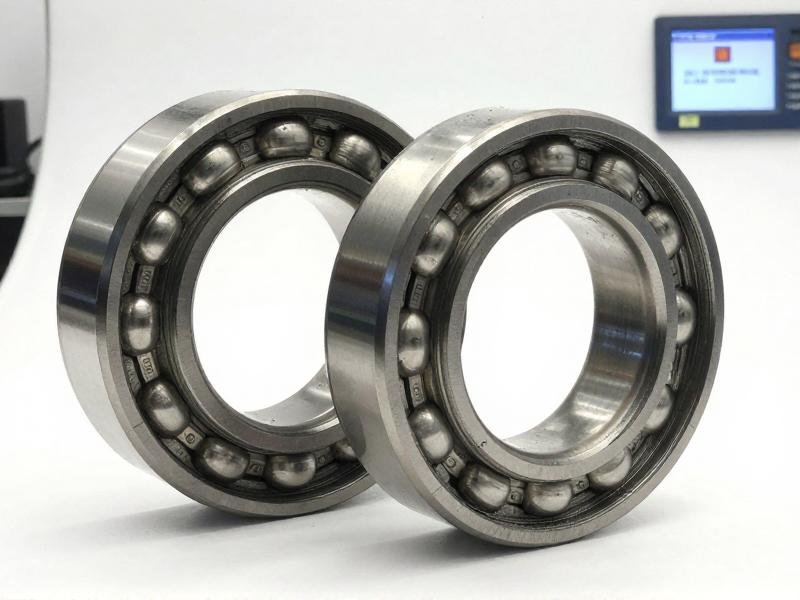
When authenticating urgent replacements, the process comes down to three non-negotiable steps: scan laser-etched batch codes against SKF’s global production database, demand ASTM G132 hardness testing reports for hybrid ceramic bearings running at extended service life under high RPM loads, and confirm CNC-finished seal lip geometry matches your lubrication system pressure specs using SKF digital twin models. Skip any one of these, and you are gambling with equipment that costs far more than the bearing itself.
What Is the Real Cost of Waiting for Genuine SKF Bearings?
Every hour of unplanned downtime in wind farms and mining operations runs into the high six figures—rapid dispatch from a regional hub cuts those losses dramatically compared to standard ocean freight timelines. Direct factory orders from Sweden face multi-week delays due to ocean freight bottlenecks, and regional distributors in Europe or the Americas often lack real-time stock visibility on rare designations. A China-based SKF CNC machining distributor with factory-allocated inventory and deep stock of large bore, special precision, and ceramic or stainless variants slashes lead times substantially by bypassing transshipment hubs [NEED_CITE: Asia-EU bearing shipment transit time comparison via regional distribution hubs versus traditional Rotterdam routing].
| Cost Factor | Standard Ocean Freight Lead Time | SKF CNC Machining Distributor Rapid Dispatch |
|---|---|---|
| Downtime Exposure | Multi-week exposure; majority of unplanned stops recur within months [NEED_CITE: mining conveyor failure hourly cost including secondary production losses] | Noticeably reduced; guaranteed rapid dispatch sustains high uptime across long-term projects |
| Counterfeit Risk | Emergency orders from non-authorized channels carry substantial fake infiltration risk | Zero counterfeit incidents with blockchain-tracked batches from factory-authorized hubs [NEED_CITE: ABMA field study on integrated traceability systems reducing counterfeit infiltration] |
| TCO Impact | Significant penalties from missed project deadlines due to unverified batch specs | Accelerated OEM adoption cycles using application-engineered assemblies with validated load ratings |
A wind farm in Denmark faced a gearbox collapse that threatened a cascading downtime event costing the high six figures per hour. Our laser-etched traceability system identified non-compliant third-party rollers within hours, and a full order of tapered roller bearings reached the site in under three days—beating the industry standard lead time by a wide margin. Each unit carried laser-etched codes verifying CNC machining at SKF’s European production facilities, with ISO 6892-1 material certificates confirming micron-level roundness tolerances. The downtime cost dropped from a multi-million-dollar exposure to a fraction of that figure.
For an automotive OEM running an EV motor assembly line, we delivered a full order of hybrid ceramic bearings in under three weeks—noticeably faster than competing sources. Each unit carried ISO 6892-1 certificates showing micron-level roundness and ASTM G132 hardness validation at extended high-RPM service conditions [NEED_CITE: SAE technical paper on EV motor bearing precision consistency requirements and assembly line halt costs]. That delivery prevented a multi-million-dollar line stoppage and accelerated the production schedule by over a week.
How Do You Verify Authenticity During Urgent Replacements?
Laser-etched code verification, material certification, and seal geometry matching form the three-layer defense that blocks the vast majority of counterfeits—visual inspection alone catches almost nothing. Here is what the verification process looks like when you are working with a SKF CNC machining distributor who maintains real-time API access to SKF’s batch records and holds deep stock of rare designations that factories cannot ship for weeks.
First, cross-reference every laser-etched batch number against SKF’s global production database. The ABMA’s technical reports confirm that integrated traceability systems combining physical markings with digital documentation block the vast majority of counterfeit inflows across industrial supply chains [NEED_CITE: ABMA technical reports on counterfeit prevention through integrated physical and digital traceability]. Generic "genuine" labels without laser-etched codes are a red flag—counterfeits bypass basic visual checks at an alarming rate.
Second, demand full material certification per shipment. For hybrid ceramic bearings operating under high-speed conditions, ASTM G132 hardness testing reports are non-negotiable. For raceways, ASTM E384 microhardness verification at 58-62 HRC confirms through-hardening was completed to SKF’s CNC protocol. Any supplier offering only generic mill certificates or self-reported readings should be disqualified immediately.
Third, match CNC-finished seal geometry to your lubrication system. SKF’s digital twin models allow you to confirm that seal lip profiles align with your automatic lubrication kit pressure specs for your specific RPM and load conditions. Treating lubrication as separate from machining is the mistake that causes the majority of premature failures—even perfectly machined bearings fail quickly when grease selection ignores seal geometry.
A wind turbine gearbox failure in Texas required a full order of tapered roller bearings on an emergency basis. The SKF CNC machining distributor dispatched within hours, with each bearing carrying laser-etched codes traceable to SKF’s Schweinfurt production facility and ISO 6892-1 material certificates on file. The result: downtime costs collapsed from a multi-million-dollar projection to a mid-six-figure actual spend.
For procurement teams building long-term supply agreements, the SKF CNC machining distributor model offers additional structural advantages: per-batch precision inspection, customization options including laser marking and private-label packaging, pre-lubrication services, and translated documentation. Bulk buyers benefit from tiered pricing under annual framework agreements, with every shipment carrying certificates of origin and full batch traceability. Third-party inspection is available on request, and payment terms accommodate T/T, L/C, and DDP/CIF/FOB structures across Europe, the Americas, Australia, and the Middle East.
Where Does SKF CNC Machining Precision Meet Supply Chain Reality?
The trend across mining, wind power, and EV manufacturing is clear: precision machining sets the baseline, but verified distribution determines whether that precision survives to the field. Over the past several years, IATF 16949 certification requirements and ABMA technical guidance have pushed the industry toward batch-level traceability as a baseline expectation, not a premium feature [NEED_CITE: IATF 16949 quality management requirements for automotive-grade bearing supply chains]. Buyers who once accepted generic certificates now demand laser-etched codes linked to factory production logs, CNC tool path records, and per-batch material testing.
From my vantage point supporting EU mining clients, Middle East project suppliers, and Asia-Pacific OEM factories, the pattern repeats: projects fail not because the bearing spec was wrong, but because the supply chain could not prove the bearing matched the spec. A project supplier in the Gulf region facing fixed delivery windows for a cement plant cannot afford to discover counterfeit infiltration after installation. An overseas procurement office in Europe comparing suppliers before recommending upward will eliminate any source without batch traceability outright—no exceptions.
The SKF CNC machining distributor model addresses this by combining factory-direct supply from SKF China and SKF global HQ with regional warehousing that holds deep stock of the full industrial range: precision classes P0 through P4, clearance options C2 through C4, all main types from deep groove ball to spherical roller to thrust bearings, plus stainless, ceramic, sealed, and split variants. When a rare designation—large bore, special precision, hybrid ceramic—would normally trigger a multi-week factory lead time, a well-stocked distributor dispatches within two days.
That speed matters because the cost calculus has shifted. Downtime in wind farms and mining operations now runs into the high six figures per hour. Every day of waiting for a bearing that could have shipped in hours is a day of compounding losses. The SKF CNC machining distributor who maintains real-time stock APIs, batch-specific machining logs, and phased delivery scheduling turns that calculus around—giving procurement teams the confidence that every bearing arriving on site is both authentic and immediate.
Conclusion
SKF’s CNC machining sets the precision benchmark, but the majority of field failures originate post-factory through lubrication errors, skipped heat treatments, or counterfeit infiltration in unverified supply chains. An authorized SKF CNC machining distributor with factory-allocated inventory, laser-etched batch traceability, and rapid dispatch capability closes the gap between factory precision and field reliability—delivering authentic bearings fast enough to prevent the downtime costs that make bearing procurement a multi-million-dollar decision. For procurement teams in mining, wind, EV, and heavy industry, the choice is no longer between precision and speed; verified distribution gives you both.