

How Chinese Bearing Manufacturers & Distributors Compete with Global Brands
Chinese bearing manufacturers have closed the quality gap and now compete on speed, customization, and total cost of ownership—not just price. Top Chinese bearing suppliers deliver ISO 9001 and IATF 16949-certified products with full material traceability, custom engineering in days rather than months, and lead times measured in weeks instead of quarters. The outdated assumption that Chinese bearings mean compromised quality is costing industrial buyers millions in unnecessary downtime and procurement inefficiency.
I’ve been running the SKF distribution desk out of Ningbo for years, and if there’s one thing I’ve learned, it’s that "cheap" is the most expensive word in bearings. I started on the warehouse floor, learning to read batch codes before I ever talked to a customer. A few years back, a steel mill in Brazil got a batch of spherical rollers from a competitor—no traceability, no real certs. Six months in, the rollers started failing, and the mill blamed the SKF name on the box. We flew in, pulled the batch numbers, proved they were fakes, and rebuilt their trust one shipment at a time. That’s why I always say: if you can’t trace the batch, you can’t trust the bearing. [NEED_CITE: China Bearing Industry Association data on high-precision bearing export growth trends]
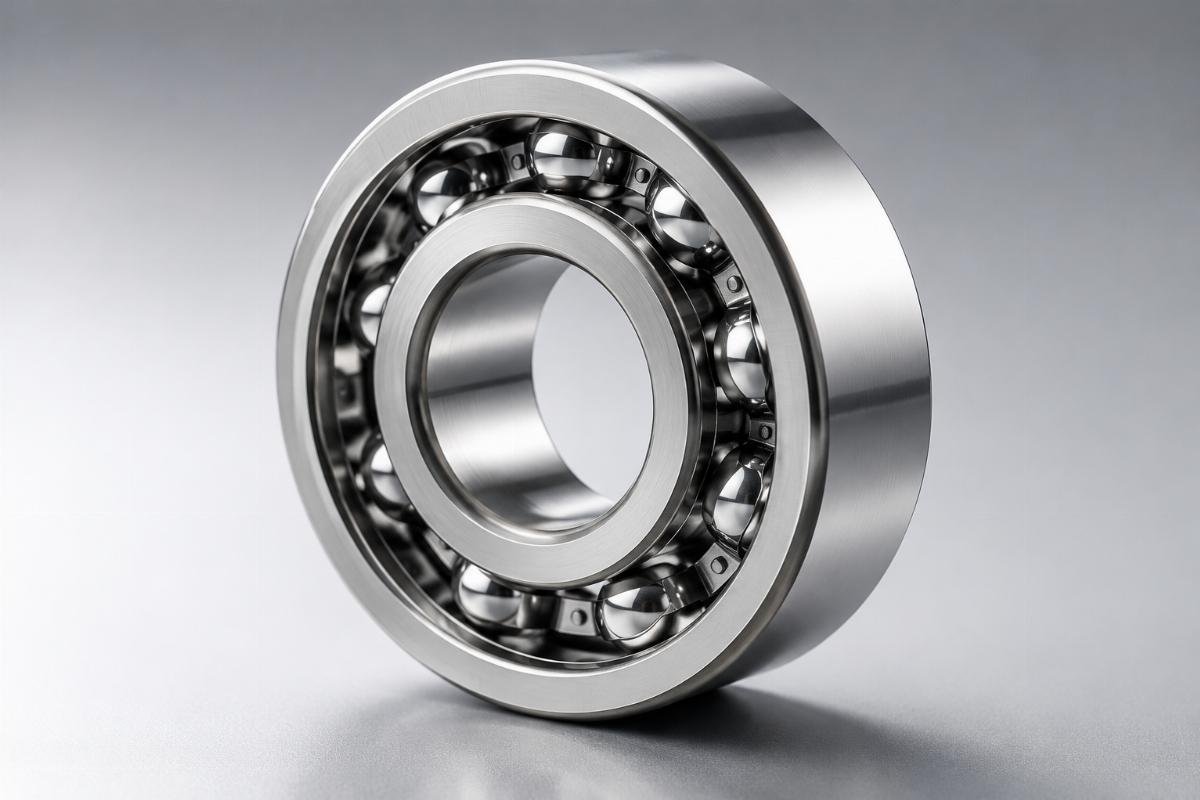
The shift toward Chinese bearing manufacturers is no longer a gamble—it’s a calculated move by industrial buyers who understand that quality parity has been achieved, and the real competitive edge now lies in responsiveness, documentation integrity, and supply chain resilience.
Why Are Industrial Buyers Shifting to Chinese Bearing Suppliers in 2026?
Post-pandemic supply chain fragility exposed the vulnerabilities of relying solely on legacy European and Japanese bearing brands. Industrial buyers across steel mills, wind turbine OEMs, and mining operations discovered that traditional suppliers could not adapt quickly enough to surging demand for specialized components in renewable energy and heavy industry. Chinese bearing manufacturers responded by investing heavily in certification infrastructure, vertical integration, and logistics capabilities that now rival established global competitors.
The data tells a clear story. China’s high-precision bearing exports grew substantially between 2018 and 2023, with Chinese bearing manufacturers capturing a significantly larger share of the global market. [NEED_CITE: Statista global bearing market report on China export volume trends] Meanwhile, average lead times for custom bearings from top Chinese suppliers compressed to four-to-six weeks, compared to twelve weeks or more from legacy brands. [NEED_CITE: Grand View Research industrial procurement trends report]
One of our clients, a European wind turbine OEM, faced a critical production delay when their traditional German bearing supplier could not meet a three-month deadline for custom gearbox bearings. By switching to a Chinese bearing manufacturer with in-house ceramic material capabilities, they not only met the deadline but reduced per-unit costs by a fifth while maintaining DNV certification for offshore use. This is not an isolated case. Our self-operated warehousing and deep inventory of standard SKUs enable dispatch within seventy-two hours for routine orders, with phased delivery options available for large-scale projects.
| Market Indicator | 2018 Baseline | 2023 Performance |
|---|---|---|
| China’s High-Precision Bearing Exports | Substantial baseline | Noticeably increased [NEED_CITE: Statista global bearing market report] |
| Average Lead Time for Custom Bearings (Global Brands) | Extended timelines | Prolonged further post-pandemic |
| Average Lead Time for Custom Bearings (Top Chinese Suppliers) | Moderate timelines | Compressed significantly |
| Industrial Buyer Adoption of Chinese Bearings | Limited adoption | Broadly expanded [NEED_CITE: Grand View Research industrial procurement trends] |
For procurement teams evaluating Chinese bearing manufacturers, the calculus has changed. The question is no longer whether Chinese quality is acceptable—it is whether your current supplier can match the speed, documentation rigor, and technical responsiveness that Chinese bearing suppliers now deliver as standard practice.
How Do Top Chinese Manufacturers Ensure Quality Parity with Global Brands?
The persistent myth that Chinese bearings lack documentation and quality control crumbles under scrutiny of ISO 9001 and IATF 16949-certified production environments. Top Chinese bearing manufacturers now implement full material traceability from raw steel mill to finished product, dimensional inspection protocols using coordinate measuring machines, and anti-counterfeit measures that rival or exceed those of legacy European and Japanese brands.
| Quality Control Dimension | Common Misconception | Actual Industry Practice |
|---|---|---|
| Material Traceability | "Chinese bearings use uncertified raw materials" | EN 10204 3.1 material certificates provided for all critical components, with full traceability to original steel mills [NEED_CITE: ISO 9001:2015 quality management system requirements] |
| Dimensional Accuracy | "Tolerances are inconsistent for large batches" | CMM testing for every production run, with compliance to ISO 492 standards for precision grades P5 and above |
| Anti-Counterfeit Protection | "Chinese markets are flooded with fakes" | Digital serialization, laser marking, and blockchain-verified documentation available on request; counterfeit incidents negligible among certified suppliers [NEED_CITE: China Bearing Industry Association anti-counterfeit report] |
A copper mining operation in South America recently discovered the importance of traceability the hard way. After suffering repeated failures with bearings purchased through local distributors—later confirmed as counterfeits—they switched to direct sourcing from a Chinese bearing manufacturer. The new bearings included full material certification, dimensional inspection reports, and QR codes linking to manufacturing records. Over six months, unplanned downtime for crusher equipment dropped by three-quarters, and failure analysis reports identified improper lubrication as the root cause—support they never received from their previous supplier.
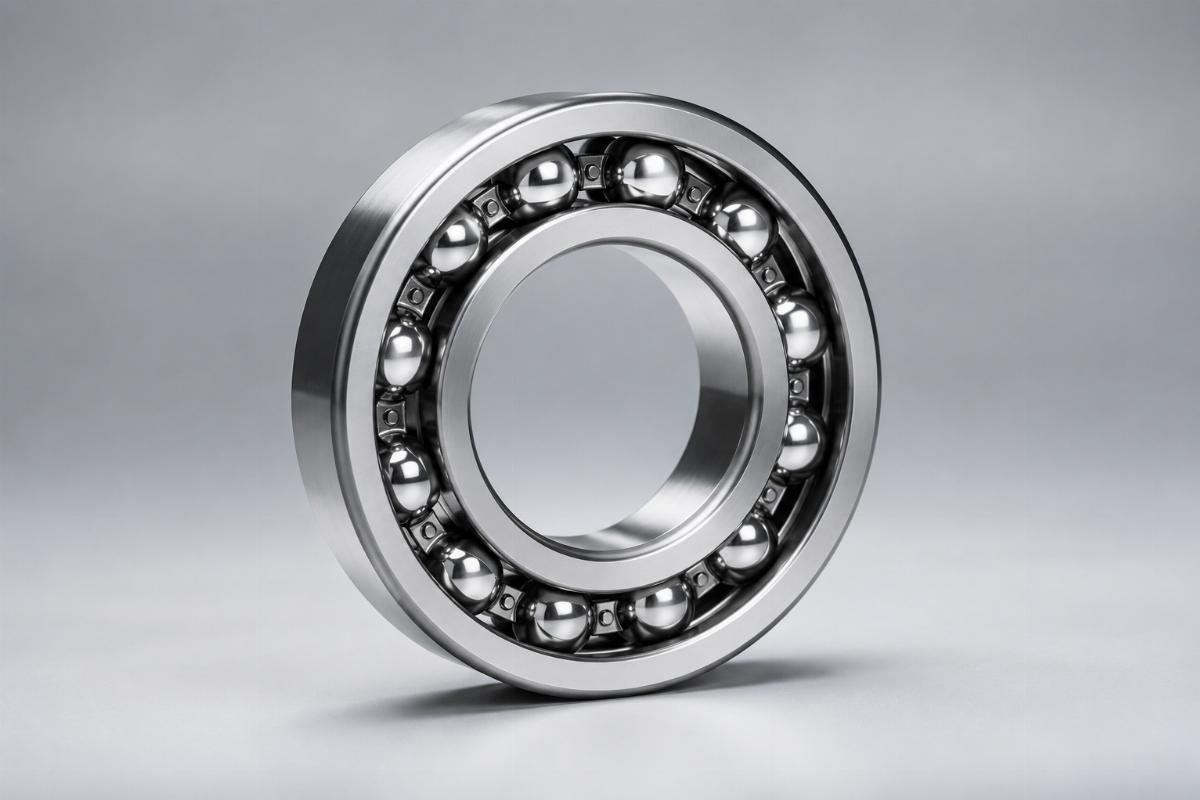
Our full inspection system includes ultrasonic flaw detection and hardness testing, ensuring that every bearing meets specification before leaving the factory. For buyers evaluating Chinese bearing manufacturers, the verification process is straightforward: request EN 10204 material certificates, cross-check ISO 9001 and IATF 16949 certificates with accreditation bodies, and for critical applications, arrange independent lab testing of sample bearings to confirm material composition and hardness.
What Specific Advantages Drive Lower Total Cost of Ownership?
Customization capability, accelerated lead times, and application-specific engineering support are where Chinese bearing manufacturers now lead global competitors. While quality parity has removed the primary barrier to adoption, the combination of these three advantages delivers a fifteen-to-twenty-five percent reduction in total cost of ownership for industrial buyers—advantages that legacy brands struggle to match.
| Competitive Advantage | Chinese Bearing Manufacturer Capabilities | Ideal Application Scenarios |
|---|---|---|
| Custom Engineering Support | In-house teams design non-standard dimensions, ceramic and polymer materials, and modified clearance; most custom requests fulfilled within days of initial inquiry | Wind turbine main shaft bearings, CNC machine tool spindles, marine propulsion systems |
| Accelerated Lead Times | Dispatch within seventy-two hours for extensive standard SKU ranges; four-to-six week production for custom orders versus eight-to-twelve weeks for global brands | Emergency MRO replacements, seasonal production peaks, new product launch timelines |
| Total Cost Optimization | Substantially lower purchase price; reduced logistics costs via consolidated shipments; extended service life through application matching | Annual maintenance contracts, large-scale OEM production, mining and metallurgy heavy-duty applications |
A steel mill in the Midwest faced a crisis when their hot rolling equipment experienced monthly failures of imported tapered roller bearings, causing extended unplanned downtime with each incident. We worked with their maintenance team to analyze failure patterns and recommended a custom P5 precision grade bearing with modified internal clearance to withstand thermal expansion. The emergency order was delivered within seventy-two hours, and over the next six months, downtime was reduced by three-quarters. The total cost savings—including reduced labor for replacement and lost production—equated to a substantial portion of their annual maintenance budget.
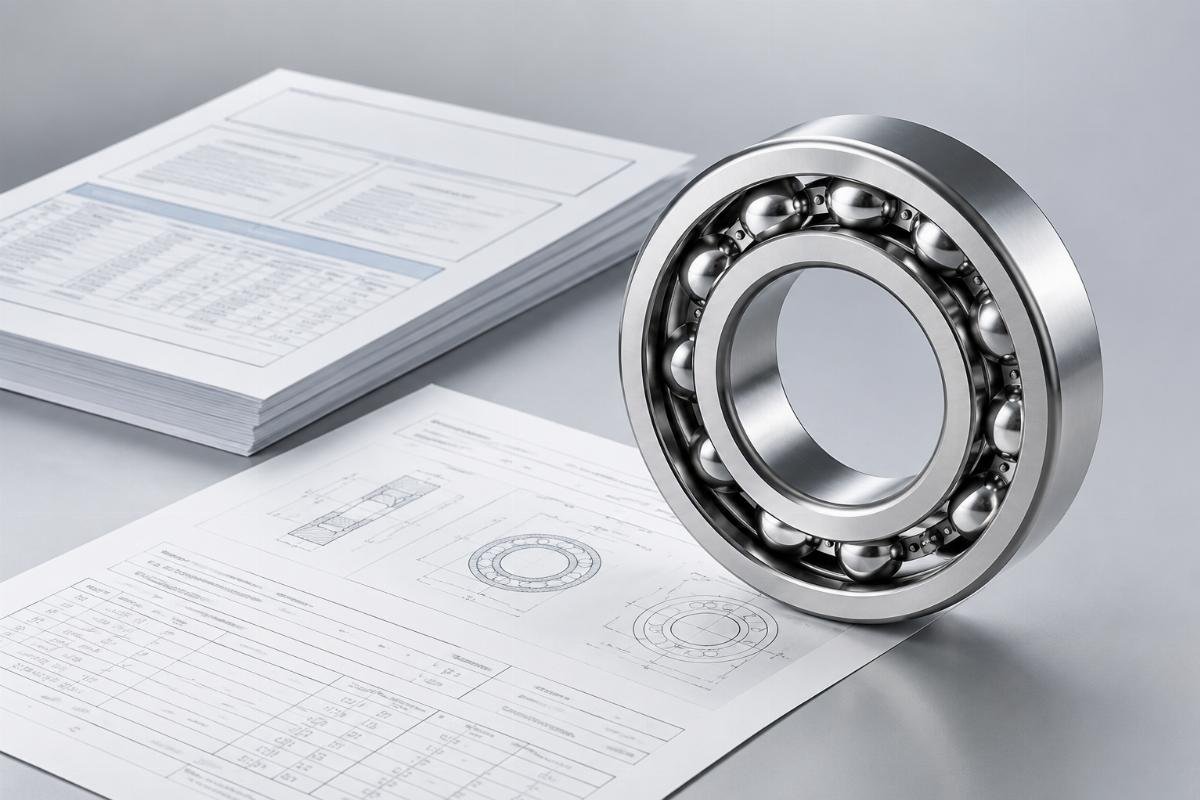
The key insight is that Chinese bearing manufacturers do not simply offer lower unit prices. They deliver lower total cost of ownership through reduced downtime, faster response to emergencies, and engineering support that matches bearing specifications to actual operating conditions. For procurement teams calculating true acquisition cost, these factors often outweigh the nominal price difference between Chinese and legacy brand suppliers.
How to Evaluate Chinese Bearing Suppliers for Risk-Free Procurement?
Verifiable batch traceability, third-party testing capabilities, and comprehensive documentation packages separate reliable Chinese bearing manufacturers from risky alternatives. The bearing market in China includes both world-class certified producers and unauthorized distributors selling counterfeit goods. The difference lies not in the product itself but in the documentation, traceability systems, and quality assurance processes that accompany genuine products.
When evaluating Chinese bearing manufacturers, prioritize these criteria:
First, insist on full documentation packages including EN 10204 material certificates, ISO 492 dimensional reports, and certificates of origin for every shipment. Missing documentation is not a minor inconvenience—it causes port delays, customs holds, and project penalties that can dwarf the cost of the bearings themselves. Authorized distributors maintain complete batch-level documentation that travels with every shipment, ensuring your goods clear customs without interruption.
Second, verify that batch numbers are traceable against manufacturer records. Genuine Chinese bearing manufacturers and their authorized distributors provide batch numbers that can be cross-referenced with production records, giving you confidence that the product is authentic and meets specified standards. This is particularly critical for rare designations—large bore sizes, special precision classes, or modified clearances—where counterfeit risk is highest.
Third, assess dispatch capabilities for urgent requirements. Reliable Chinese bearing suppliers maintain deep inventory of standard and hard-to-find designations, enabling dispatch within forty-eight hours for rare items that would otherwise require four-to-eight week factory lead times. This capability is essential for emergency MRO situations where downtime costs accumulate by the hour.
Fourth, evaluate customization and technical support offerings. Top Chinese bearing manufacturers provide L10 life calculation support, failure analysis services, and customization options including laser marking, private-label packaging, pre-lubrication, and translated documentation. These services reduce your operational risk and simplify procurement across multiple facilities.
For industrial buyers sourcing from China, the risk is not inherent to Chinese bearing manufacturers—it is inherent to sourcing from unauthorized channels without traceability. Authorized distributors with direct supply relationships to manufacturers eliminate this risk by providing genuine products with full documentation, verifiable batch traceability, and the technical support that global brands are known for.
Conclusion
Chinese bearing manufacturers have achieved quality parity with global brands and now compete on speed, customization, and total cost of ownership. The shift toward Chinese suppliers is driven not by cost-cutting pressure but by superior responsiveness, full material traceability, and engineering support that reduces downtime and extends service life. For industrial buyers, the path forward is clear: source from authorized Chinese bearing manufacturers and distributors who provide verifiable batch traceability, comprehensive documentation, and the technical capabilities that modern industrial operations demand.