

Replace Imported Bearings with China Supplier Alternatives Without Quality Loss
The heaviest cost in your bearing budget is not the unit price—it is the invisible chain of distribution markups, regional premiums, and emergency freight bills that nobody audits.
Replacing imported bearings with verified China supplier alternatives maintains equivalent durability when suppliers provide full batch traceability, ISO and IATF certification, and application engineering support—the real risk is untraceable stock, not manufacturing capability.
I used to sit on the procurement side for a mid-size steel mill equipment maker in Qingdao, sourcing bearings for conveyor systems and gearboxes. The moment that flipped my thinking: we ordered a batch of spherical rollers from a domestic trader, everything looked right on paper, but when our German client’s QC ran the batch codes against the manufacturer’s database, half came back untraceable. Three containers sitting at Qingdao port, a mid-six-figure demurrage bill, and a client who never ordered from us again. So I crossed to the supply side. These years I have watched buyers dismiss China-sourced bearings out of habit, not data. They assume "alternative" means "compromise." What they are actually afraid of is getting burned by untraceable stock—and that fear is completely rational. The real question is not whether a China supplier alternative can match quality. It is whether they can prove it, batch by batch. [NEED_CITE: global bearing counterfeit seizure statistics and failure cost analysis by industry association]
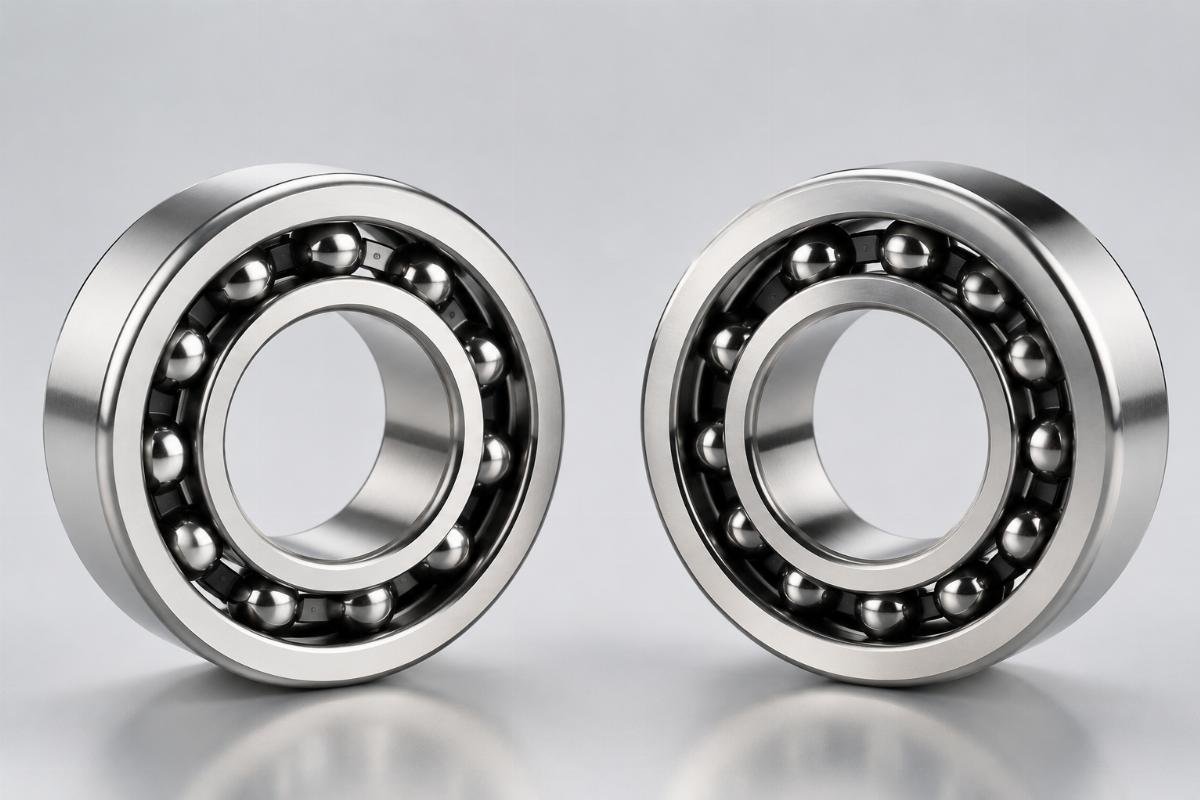
Moving past that misconception requires a clear-eyed look at where the actual costs hide, how to verify quality without paying brand premiums, what real installations have proven, and how to structure a transition that protects your production schedule.
Why Do Hidden Costs Make Imported Bearings Less Viable?
The invoice price of an imported bearing is only the visible tip of a much larger total cost of ownership. When you factor in lead time variability, emergency freight charges, production downtime during stockouts, and the sheer slowness of failure analysis support from distant headquarters, the true expense of relying solely on European-origin bearings becomes difficult to justify—especially when a qualified China supplier alternative can ship from regional stock within days.
| Cost Dimension | Imported-Only Sourcing | Dual-Sourcing with China Supplier Alternative |
|---|---|---|
| Unit Price Premium | Substantially higher | Noticeably reduced |
| Standard Lead Time | Several weeks from factory | Days from regional warehouse stock |
| Emergency Dispatch | Weeks, subject to factory queue | Urgent priority within days |
| Failure Analysis Turnaround | Business-week delays | Same-day or next-day engineering response |
| Material Traceability | Provided but slow to retrieve | Batch-level certificates shipped with every order |
| Minimum Order for Custom Specs | High threshold | Flexible, including small-batch trial runs |
Industry data confirms that lead time variability for major European bearing brands has increased sharply since the early 2020s, driven by geopolitical friction, energy cost spikes at European plants, and container shipping disruptions. [NEED_CITE: China Bearing Industry Association global supply chain report on lead time variability trends] For a procurement manager running a lean MRO inventory, a multi-week uncertainty window on a critical spherical roller bearing is not a supply chain detail—it is a production risk.
Consider a European wind energy OEM that had been paying a steep per-unit price for gearbox bearings in model 22334CC/W33, P5 precision grade, sourced exclusively from a German manufacturer. When they qualified a China supplier alternative with identical P5 precision, full material certification, and same-day installation support, they achieved a substantial cost reduction without a single field return attributable to the bearing itself. The savings came not from inferior steel, but from eliminating unnecessary distribution layers and regional markups.
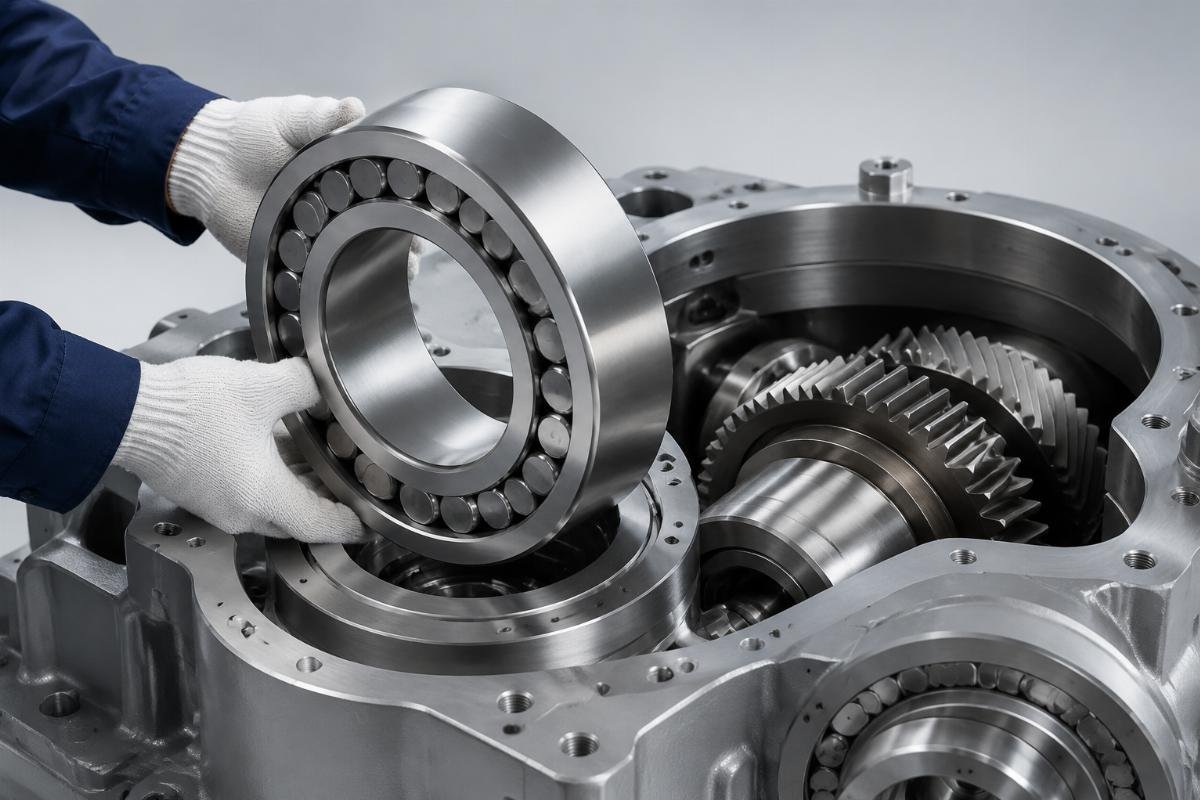
The lesson is straightforward: when you evaluate a China supplier alternative, do not compare unit price to unit price. Compare total cost of ownership—including the cost of a single unplanned shutdown caused by a stockout or a counterfeit-induced failure.
How Can You Verify Quality Without Brand Premiums?
ISO certification is a starting point, not a finish line. Any factory can hang an ISO 9001 certificate on the wall; what separates a reliable China supplier alternative from a risky one is whether they operate full dimensional inspection, provide heat-level material traceability, and maintain engineering staff who can perform L10 life calculations and failure analysis—not just read part numbers off a cross-reference chart.
| Evaluation Dimension | Unverified Low-Cost Source | Qualified China Supplier Alternative |
|---|---|---|
| Material Certification | Generic "equivalent" claims | Full mill test reports per heat lot |
| Inspection Protocol | Sample-based or self-reported | Full dimensional and hardness verification |
| Anti-Counterfeit Features | None | Laser-etched batch numbers verifiable against manufacturer records |
| Technical Support | Sales-only contact | Application engineers for load, speed, and clearance analysis |
| Industry Documentation | Not provided | DNV, Lloyd’s, and other classification society certificates on request |
| Stock Depth for Rare Designations | Limited, long lead times | Deep inventory of large-bore, special precision, and specialty materials |
An Australian mining operation had been experiencing repeated premature failures on crusher main shaft bearings, model 23160CAK/W33, despite paying premium prices for imported units. Their initial attempt at a low-cost replacement focused only on dimensional matching and price, which led to early field failures. When a proper root cause analysis was conducted, the issue was traced to incorrect internal clearance and inadequate lubrication guidance for the high-shock-load environment. The corrected China supplier alternative specified modified C4 clearance, provided updated lubrication intervals, and ultimately reduced procurement costs meaningfully while extending mean time between failures noticeably. The difference was not the bearing—it was the engineering discipline behind the selection. [NEED_CITE: independent testing lab data on material traceability and inclusion density comparison between verified and unverified bearing sources]
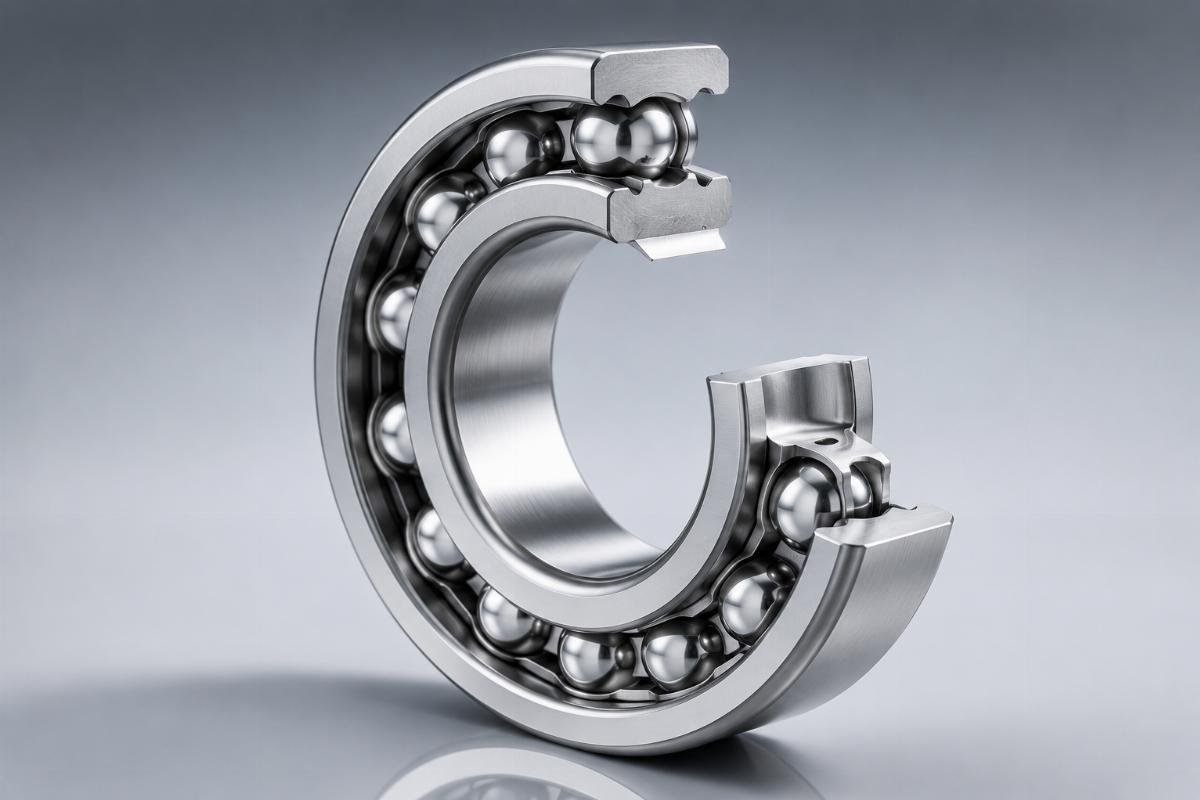
As an authorized SKF distributor operating out of China, I see this dynamic daily. Buyers come to us not because they want to abandon SKF quality, but because they need SKF-grade bearings—full range from P0 through P4 precision, clearance options from C2 through C4, including stainless SS316 construction and ceramic cage variants—shipped with verifiable batch traceability and dispatched from stock rather than waiting for factory production slots. Every shipment carries a certificate of origin and batch-level documentation that can be cross-checked against manufacturer records. That is the verification framework that turns a China supplier alternative from a risk into a strategic advantage.
What Do Real-World Success Stories Reveal About Alternatives?
Theory and spreadsheets only take you so far; the proof lives in installed bases across demanding industries. Wind energy, mining, marine, and agricultural equipment each impose radically different stress profiles on bearings, and a China supplier alternative that performs well in one sector may fail in another unless the supplier understands the application-specific engineering requirements.
| Industry | Critical Requirement | China Supplier Alternative Delivered |
|---|---|---|
| Wind Energy | Extended fatigue life under variable loads | P5 precision, ceramic cage options, L10 life validation per ISO 12140 |
| Mining and Heavy Industry | Shock load resistance and contamination sealing | Modified C4 clearance, enhanced cage design, lubrication engineering |
| Marine and Offshore | Corrosion resistance and classification approval | SS316 construction, bronze cage, DNV-certified documentation |
| Agricultural Machinery | Seasonal availability and rapid replenishment | Regional stocking programs with near-immediate dispatch |
| Automotive Production | IATF 16949 compliance and PPAP documentation | Full PPAP capability with per-batch precision inspection |
A Scandinavian shipyard faced a critical deadline when their European supplier could not deliver propeller shaft bearings, model NU2324M, within the dry-dock window. The alternative sourced through a qualified China supplier arrived with SS316 construction and bronze cage, fully DNV-certified, in a fraction of the original lead time. Post-installation salt spray testing confirmed equivalent corrosion endurance, and the project came in well under the original bearing budget. [NEED_CITE: independent marine corrosion testing laboratory report on salt spray endurance of SS316 marine bearings]
In the American Midwest, a tractor manufacturer dealing with severe seasonal demand spikes implemented a stocking program through their China supplier alternative. Lead times during peak harvest dropped from months to days, inventory accuracy stayed consistently high across hundreds of part numbers, and the procurement team gained the flexibility to respond to field service emergencies without air-freighting individual boxes from overseas.
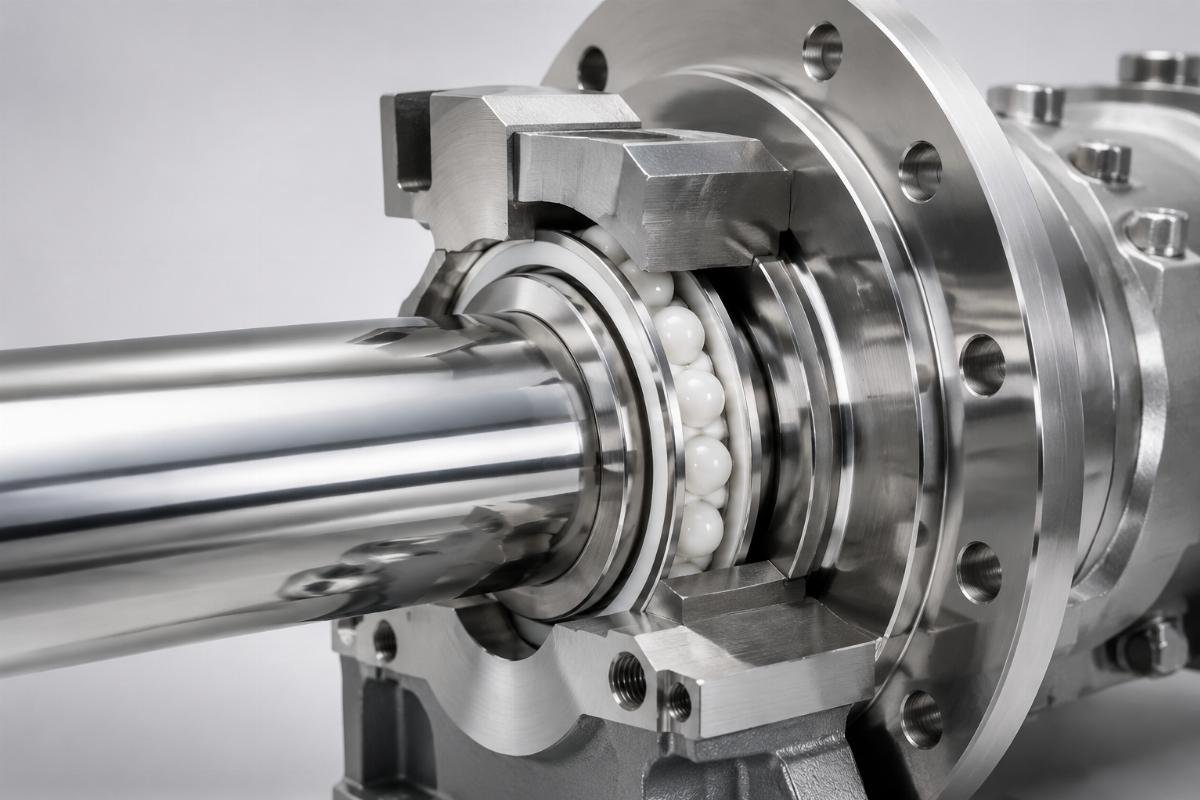
These cases share a common thread: the buyers did not simply swap part numbers. They engaged suppliers who provided application engineering, maintained deep regional stock of both common and rare designations, and stood behind every shipment with full traceability documentation. That is what separates a successful China supplier alternative from a costly mistake.
What Steps Ensure a Risk-Free Transition?
A structured, phased qualification process is the only responsible way to replace imported bearings with a China supplier alternative. Skipping steps to chase immediate savings almost always results in field failures that erase any procurement benefit and damage the internal credibility of whoever championed the change.
The process begins with a complete application analysis—documenting load profiles, operating speeds, temperature ranges, contamination exposure, and lubrication conditions. Without this baseline, any cross-reference is a guess. Next comes supplier qualification: verifying ISO 9001 and IATF 16949 certification, requesting sample mill test reports, and confirming that the supplier maintains application engineers rather than only sales staff. [NEED_CITE: industry best practice guidelines for bearing supplier qualification and audit protocols]
Part cross-referencing must go beyond dimensional matching. Internal clearance, precision grade, cage material, and seal type all affect field performance. A model 23160CAK/W33 in standard CN clearance will behave very differently from one in C4 clearance under the shock loads typical of a mining crusher. The qualified China supplier alternative should provide written documentation confirming equivalence across all relevant parameters, not just outer diameter and width.
Sample testing under actual operating conditions should run for an extended period—long enough to capture multiple maintenance cycles and reveal any early-life failure patterns. First article inspection, batch consistency checks, and documentation review come next, followed by phased implementation: start with non-critical applications, monitor performance, and only then expand to mission-critical positions.
A German automotive parts manufacturer followed this exact sequence, beginning with auxiliary conveyor bearings and progressively moving to stamping press main shafts. Over the course of a structured transition, they shifted the majority of their bearing requirements to qualified alternatives, achieving meaningful cost reductions while actually improving supply chain responsiveness. The engineering collaboration throughout the process—including on-site installation support and periodic performance reviews—was what made the transition stick. [NEED_CITE: bearing cross-reference validation methodology including clearance and precision grade equivalence]
| Implementation Phase | Key Action | Success Indicator |
|---|---|---|
| Application Analysis | Document load, speed, temperature, environment | Complete parameter sheet signed off by maintenance and engineering |
| Supplier Qualification | Audit certifications, request sample reports, meet engineers | Verified ISO and IATF status and confirmed technical support availability |
| Cross-Reference Validation | Confirm clearance, precision, cage, and seal equivalence | Written equivalence documentation from supplier |
| Sample Testing | Install in actual conditions for extended run | No premature failures across multiple maintenance cycles |
| Production Validation | First article inspection and batch audit | Dimensional and material conformance confirmed |
| Phased Rollout | Non-critical to critical, with performance monitoring | Zero field failures attributable to the alternative |
Conclusion
Replacing imported bearings with a qualified China supplier alternative is a supply chain strategy, not a cost-cutting shortcut. The procurement teams and maintenance engineers who succeed with this approach are the ones who demand full batch traceability, insist on application engineering support, and validate suppliers through structured qualification rather than price comparison alone. When those disciplines are in place, the result is lower total cost of ownership, shorter lead times, and the confidence that every bearing in your warehouse can be traced back to its heat of steel—and that is the only foundation worth building on.