

Top 15 Questions B2B Buyers Ask China SKF Suppliers, Answered
Genuine brand bearings don’t guarantee performance—supplier expertise in traceability, application engineering, and emergency logistics matters more than price or brand alone. In industrial operations spanning steel mills, mining sites, and wind farms, the majority of premature bearing failures trace back to application mismatches rather than counterfeit products. This critical insight challenges the widespread assumption that simply sourcing authentic bearings eliminates operational risk, especially in harsh environments where load calculations, clearance selection, and installation guidance directly determine service life.
Choosing the right B2B bearing supplier requires more than product knowledge—verifiable batch traceability, application-specific technical support, and global emergency delivery capabilities are what separate strategic partners from transactional vendors. While price and brand recognition remain baseline considerations, the ability to cross-reference manufacturing sources against official records, access engineering expertise tailored to specific machinery, and secure emergency replacements within days rather than weeks often determines the difference between planned maintenance and catastrophic production halts.
I started out on the shop floor in Suzhou, learning to read bearing codes before I ever talked to a customer. Years later, a steel mill buyer in Brazil rejected a full container of spherical rollers because the batch numbers on the boxes didn’t match the official online registry—he assumed we’d repacked fakes. It took weeks, a third-party lab report, and a video call with SKF Shanghai to prove every unit was traceable. That’s when I realized: B2B buyers don’t just ask questions, they’re silently checking whether you’re worth trusting. Industry data confirms this pattern—facilities prioritizing supplier traceability reduce unplanned downtime substantially compared to those focused solely on brand reputation [NEED_CITE: industrial maintenance benchmarking report on traceability impact].

The following guide addresses the most pressing questions industrial buyers face when evaluating a B2B bearing supplier in China, combining field-tested solutions with data-driven insights to help procurement teams make confident decisions.
What Are the Most Critical Factors B2B Buyers Should Consider When Sourcing Bearings?
Traceability documentation, application engineering support, and delivery reliability outweigh price and brand alone. When evaluating a B2B bearing supplier, most procurement teams start with unit cost and manufacturer reputation. But in safety-critical sectors like mining, steel production, and power generation, three often-overlooked factors determine whether a supply relationship survives the first audit or fails under operational pressure.
Counterfeit bearings remain a serious concern—fake products cause substantially more equipment failures and drive maintenance costs into the mid-six-figure range annually for mid-sized manufacturing plants [NEED_CITE: global bearing counterfeit impact report]. Yet the counterfeiting problem is only part of the story. The deeper risk lies in documentation gaps and technical misalignment that no brand logo can protect against.
| Evaluation Criteria | Industry Reality |
|---|---|
| Counterfeit Impact | Fake bearings cause noticeably more equipment failures and increase annual maintenance costs substantially [NEED_CITE: global bearing counterfeit impact report] |
| Traceability Requirements | Only a minority of non-specialized suppliers can provide full manufacturing source documentation, compared to a full batch-level traceability rate for every shipment we supply |
| Certification Value | ISO 9001 and IATF 16949 certified suppliers reduce quality-related disputes significantly in heavy industry applications [NEED_CITE: supplier qualification best practices study] |
Consider a European steel mill that faced unexpected downtime due to failed tapered roller bearings in their rolling line. Our team delivered a small batch of Timken 32315 bearings (170mm outer diameter, C3 clearance) within days—complete with material certification, manufacturing batch records, and anti-counterfeiting verification reports. This rapid response, backed by self-operated warehousing in Shanghai and Hamburg, prevented a mid-six-figure production loss. The key difference was not just product availability, but the traceability documentation and technical validation the maintenance team needed to confirm fit and performance before installation.

When vetting a B2B bearing supplier, procurement teams should request the following documentation package as standard:
- Material Certification – Verify chemical composition and mechanical properties match OEM specifications, critical for load-bearing applications in mining and construction.
- Manufacturing Source Records – Confirm production facility location and quality control processes to ensure consistency across batches.
- Anti-Counterfeiting Verification – Utilize manufacturer-specific authentication tools such as the SKF Bearing Scanner app to validate product authenticity upon receipt.
- Installation Guidelines – Request application-specific mounting procedures, including torque values and lubrication requirements tailored to operating conditions.
- Failure Analysis Support – Ensure the B2B bearing supplier offers post-installation technical assistance to identify root causes if premature wear occurs.
How to Avoid Common Bearing Selection Mistakes That Cause Premature Failures?
Dynamic load analysis, environmental assessment, and correct clearance selection prevent the majority of premature replacements. While buyers often focus on dimensions and brand reputation, mismatched load ratings, material selections, and clearance grades account for the bulk of premature bearing replacements in heavy machinery [NEED_CITE: Journal of Tribology application failure analysis]. These technical oversights lead to excessive heat generation, cage fracture, and raceway pitting—issues that could be prevented with proper engineering support from a qualified B2B bearing supplier.
| Selection Dimension | Common Mistake | Correct Approach |
|---|---|---|
| Load Calculation | Using static load ratings for dynamic applications | Conducting application-specific dynamic load analysis that accounts for shock loads and rotational speeds |
| Material Selection | Specifying standard steel bearings for food processing washdowns | Choosing 440C stainless steel with polymer cages to resist corrosion in high-moisture environments |
| Clearance Grade | Defaulting to C0 clearance for all applications | Selecting C3-C4 clearance for high-temperature operations to accommodate thermal expansion |
A mining equipment manufacturer in Australia learned this lesson when their cone crushers experienced repeated spherical roller bearing failures. Their initial specification followed OEM guidelines, but our technical team discovered the crushers operated at substantially higher radial loads than standard conditions due to ore hardness variations. By recalculating the required dynamic load rating and upgrading to SKF 22330 E1 precision grade bearings (150mm bore), we reduced failure rates noticeably over a full year while maintaining their annual contract volume. The solution was not just a different bearing—it was the application engineering support that identified the root cause.
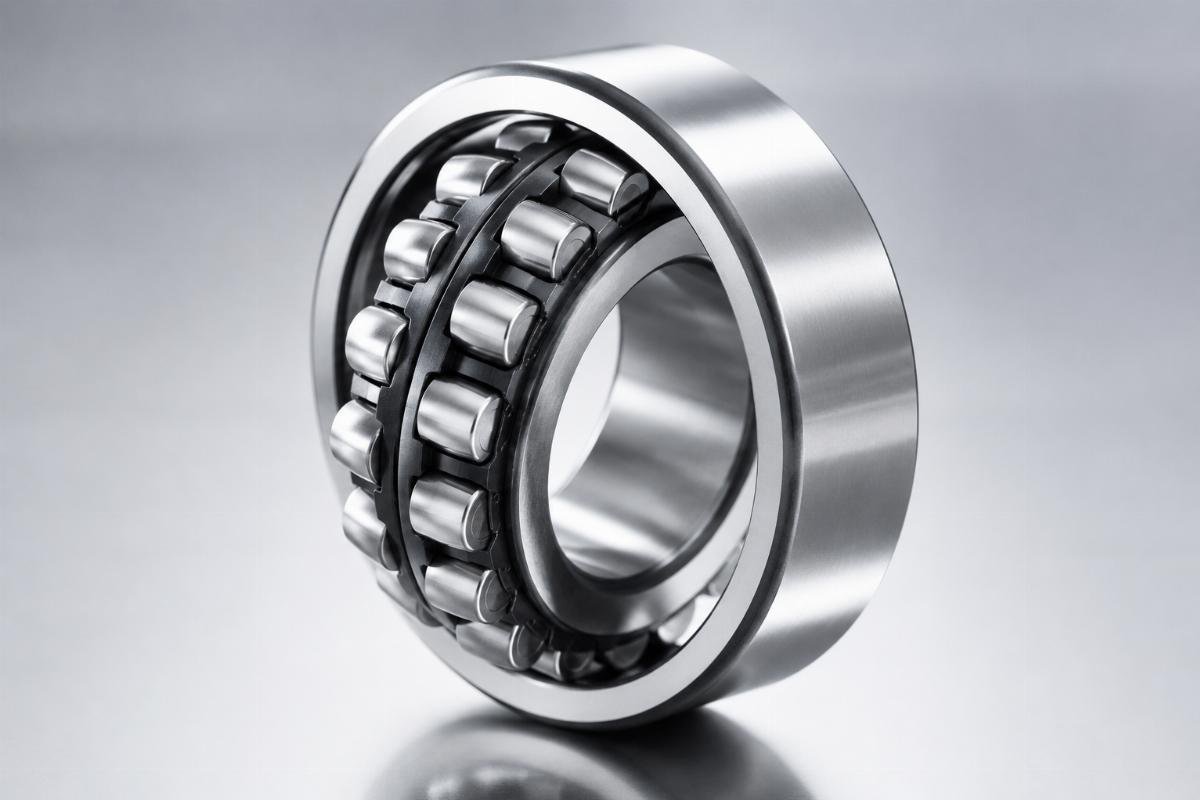
Every competent B2B bearing supplier should walk procurement teams through these five selection checkpoints:
- Dynamic Load Analysis – Calculate equivalent radial and axial loads using actual operating speeds and duty cycles, not just nameplate ratings.
- Environmental Assessment – Document temperature extremes, contamination risks, and moisture levels to select appropriate seals (2RS/2Z) and materials.
- Clearance Selection – Match clearance grades (C2/CN/C3/C4) to operating temperature range; for every significant temperature increase above standard thresholds, increase clearance by one grade [NEED_CITE: SKF Application Engineering Handbook clearance guidelines].
- Lubrication Matching – Specify lubricant type and replenishment intervals based on load, speed, and environmental factors.
- Installation Tolerance – Provide shaft and housing fit recommendations to prevent excessive interference fit or looseness that causes premature failure.
Precision classes (P0/P6/P5/P4) must also align with application requirements. A machine tool spindle demands P4-level precision, while a general conveyor may perform reliably at P0. A knowledgeable B2B bearing supplier will never default to the highest precision grade without justification—it drives cost without adding value where tolerance stacking is not the limiting factor.
Key Questions to Ask Your Bearing Supplier Before Placing an Order?
Traceability protocol, technical support scope, and emergency response separate strategic partners from transactional vendors. While most buyers focus on price and lead times, targeted inquiries about documentation systems, engineering capabilities, and contingency planning uncover hidden risks that could impact production timelines, equipment performance, and maintenance budgets. The right questions asked early prevent costly surprises later.
| Supplier Evaluation Aspect | Advantage | Applicable Scenarios |
|---|---|---|
| In-House Technical Team | Provides real-time application engineering support | Custom bearing requirements for specialized machinery |
| Global Warehousing Network | Enables emergency delivery within days | Critical MRO situations requiring immediate replacement |
| Cross-Reference Database | Identifies alternatives for obsolete or hard-to-find parts | Legacy equipment maintenance and repair operations |
| Phased Delivery Programs | Reduces inventory holding costs through scheduled shipments | Large-scale EPC projects with staggered construction milestones |
A wind energy EPC contractor illustrates this due diligence process. When they needed main shaft bearings for an entire turbine fleet, their procurement team asked critical questions—including how batch traceability is verified and how engineering change requests are handled. Our ability to provide batch-specific heat treatment records and assign a dedicated technical engineer to their project ultimately secured the contract. By implementing a phased delivery program aligned with their construction schedule, we reduced their inventory carrying costs substantially while ensuring on-time availability for each turbine installation.

Before committing to any B2B bearing supplier, procurement teams should demand clear answers on these five points:
- Traceability Protocol – What specific documents will you provide to verify manufacturing source and quality control processes? Can batch numbers be cross-referenced against official SKF records?
- Technical Support Scope – Do you offer on-site installation guidance and failure analysis reports, or only catalog data?
- Emergency Response – What is your maximum guaranteed lead time for emergency orders of rare designations, including large bore sizes, special precision classes, ceramic, or stainless variants?
- Customization Capabilities – Can you modify standard bearings for non-standard requirements such as laser marking, private-label packaging, pre-lubrication, or translated documentation?
- Quality Assurance – What inspection processes do you implement beyond manufacturer certification, including per-batch precision inspection and third-party verification on request?
Payment terms and trade flexibility also matter. A reliable B2B bearing supplier should accept T/T, L/C, and offer DDP/CIF/FOB shipping options to match the buyer’s import infrastructure. Quotation turnaround within a single business day signals operational maturity—delays here often predict delays elsewhere.
How to Ensure Fast and Reliable Bearing Delivery for Emergency and Bulk Orders?
Self-operated warehousing and pre-inspection enable rapid dispatch without compromising quality standards. Many buyers assume emergency delivery sacrifices inspection rigor—that speed and quality are mutually exclusive in bearing procurement. This misconception costs facilities dearly when they accept week-long lead times for critical replacements or, conversely, rush orders that arrive without proper documentation.
The reality is that a well-structured B2B bearing supplier maintains strategic inventory positions across multiple regions, enabling dispatch within days rather than the typical factory lead times of weeks. This capability depends on three operational pillars:
- Geographically Distributed Warehousing – Maintaining stock positions in key logistics hubs (Shanghai for Asia-Pacific, Hamburg for Europe) ensures proximity to major industrial corridors and reduces transit variables.
- Pre-Inspection Protocols – Every batch undergoes dimensional verification and visual inspection before dispatch, regardless of order urgency. This eliminates the false economy of shipping unverified stock.
- Rare Designation Depth – Standard distributors stock common sizes. A specialized B2B bearing supplier maintains inventory of large bore spherical rollers, special clearance grades (C2/C4), ceramic hybrid bearings, and stainless steel variants (440C with polymer cages)—sizes that typically require factory production runs.
When a mining operation in a remote region faces a crusher breakdown, waiting for factory production is not an option. The cost of extended downtime dwarfs any per-unit savings from direct factory ordering. A B2B bearing supplier with emergency dispatch capability delivers the bearing, the material certificate, and the batch traceability report together—because the maintenance team needs all three to authorize installation.
Trade documentation must travel with the product. Certificate of origin, commercial invoice, packing list, and batch-specific test reports should be consolidated and verified before shipment. For EPC project suppliers operating under fixed delivery windows with penalty clauses, this documentation discipline is not optional—it is contractual.
The distinction becomes clear when comparing two procurement approaches: ordering from a factory with extended lead times but lower unit cost, versus sourcing from a B2B bearing supplier with strategic inventory and verified traceability. The first approach optimizes purchase price; the second optimizes total cost of ownership including downtime risk, inventory carrying cost, and audit compliance.
Conclusion
Supplier expertise in traceability, application engineering, and emergency logistics determines bearing performance far more than brand name or unit price alone. The majority of premature failures stem from selection errors and documentation gaps—not counterfeit products. Procurement teams evaluating a B2B bearing supplier should prioritize verifiable batch traceability, technical support depth, and proven emergency dispatch capability over marginal price differences. These three factors, validated through targeted questioning and documentation review, separate supply relationships that prevent costly downtime from those that create it.