

China Bearing Supplier Fixes Conveyor Failures for Plant
Most conveyor bearing failures have nothing to do with lubrication schedules or brand origin — they stem from clearance specs that ignore thermal expansion curves and seals that let contaminants through.
Custom-engineered bearings from a China bearing supplier with integrated failure analysis capability can eliminate recurring conveyor breakdowns and cut unplanned downtime significantly, while maintaining full batch traceability and meeting international quality certifications. The real problem is not where the bearing is made; it is whether the supplier asks why the last unit died before quoting the next one.
I spent years crawling under conveyor galleries in Chilean copper mines, grease up to my elbows, swapping out spherical roller bearings that kept seizing every few months. The plant maintenance guys blamed the lubrication schedule; the local distributor blamed the operating temperature. Neither was wrong, but neither had the full picture — the seals were ingesting fine copper dust through the labyrinth gaps, and the original clearance spec was wrong for that thermal profile. Moving to the sales side didn’t change much: buyers still order replacement bearings by part number alone, nobody asking why the last batch died. Conveyor failures account for a substantial share of unplanned manufacturing downtime across heavy industries [NEED_CITE: conveyor failure contribution to unplanned downtime per Industry Maintenance Association]. I started pulling failed units apart before quoting anything, photographing raceway spalling, checking batch traceability against manufacturer records. Failure analysis first, then the right bearing.
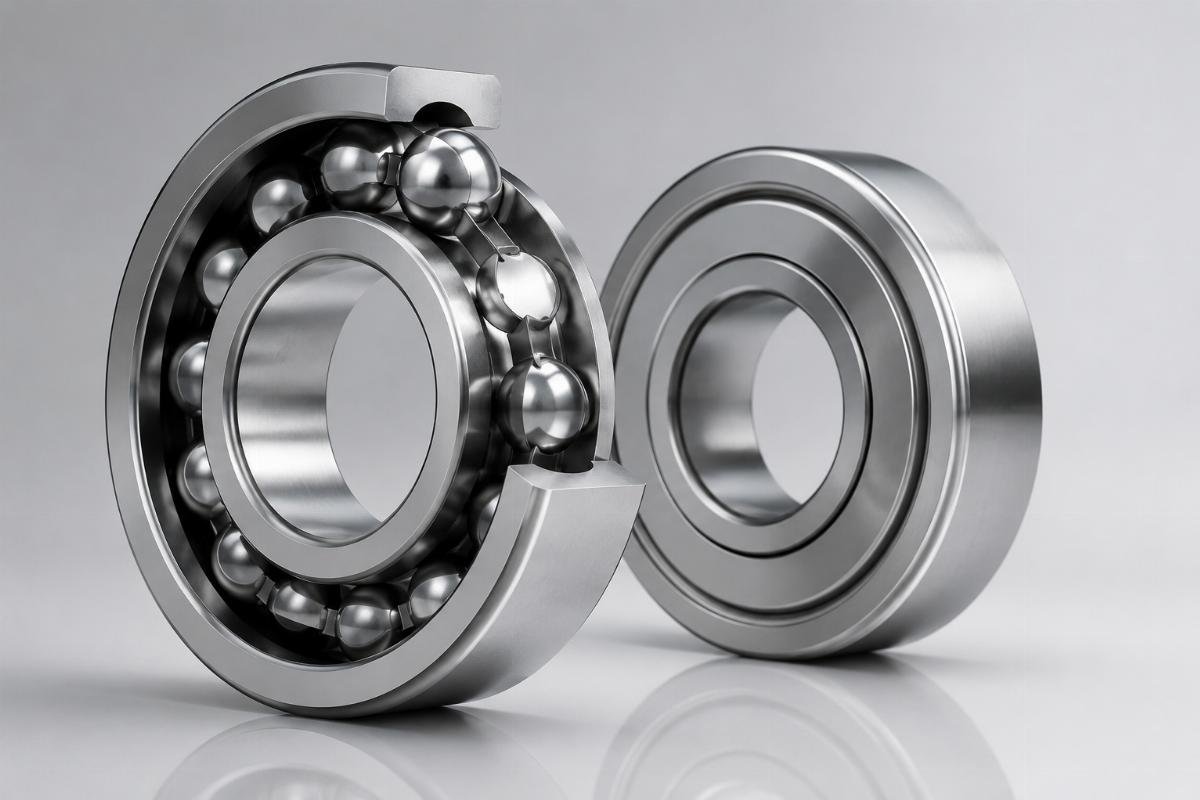
That field-level habit of dissecting failures before recommending parts is what separates a China bearing supplier who solves problems from one who just fills purchase orders.
Why Do Standard Bearings Keep Failing on Conveyor Systems?
Off-the-shelf bearings are engineered for average conditions, not the thermal, contamination, and load realities of your specific conveyor line. The mismatch between generic catalogue specs and actual operating parameters is the single largest driver of premature conveyor bearing failure — and it has nothing to do with whether the bearing carries a European or Asian brand name.
Most maintenance teams assume bearing failure is a lubrication problem. In practice, the dominant root causes tell a different story.
| Failure Mode | Typical Share of Conveyor Bearing Failures |
|---|---|
| Misalignment | Largest single category |
| Contamination ingress | Second largest category |
| Inadequate or degraded lubrication | Significant contributor |
| Overloading beyond design capacity | Notable but less frequent |
[NEED_CITE: root cause distribution for conveyor bearing failures per industry maintenance data]
Contamination deserves special attention because it is the most misunderstood. Fine particulate matter — iron ore dust, copper concentrate, cement kiln powder — bypasses standard labyrinth seals and embeds itself in the raceway, creating three-body abrasion that no amount of regreasing can fix. The seal structure, not the grease type, determines whether the bearing survives in a dusty environment.
Thermal expansion is the other silent killer. A conveyor running through a sintering plant or a hot-rolling mill experiences temperature swings that change internal clearance dynamically. A bearing specified with tight clearance for room-temperature precision will preload itself into seizure once the shaft and housing expand under operating heat. This is exactly what happened at a Southeast Asian steel mill, where monthly conveyor failures were costing the plant a mid-six-figure sum per event in lost production alone.
Our team conducted onsite failure analysis and found that the original C2 clearance bearings — perfectly fine for a machine tool spindle — were completely wrong for a conveyor operating at sustained elevated temperatures. The thermal expansion curve consumed the internal clearance, leaving zero running play and generating destructive heat. The fix was straightforward once the root cause was visible: switch to C4 clearance to accommodate thermal growth, and upgrade to stainless steel cages for corrosion resistance in the mill’s humid environment. The monthly failure cycle stopped entirely.

The lesson is simple: a China bearing supplier who starts the conversation by asking for your temperature profile and contamination level — rather than quoting a catalogue number — is the one who will actually solve your problem.
How Did Failure Analysis Solve a Copper Mine’s Chronic Conveyor Breakdowns?
When a South American copper mine faced conveyor bearings dying every six weeks in a dusty, high-moisture environment, the answer was not more frequent replacement — it was a completely rethought bearing specification built around the actual failure mechanism.
The mine’s main ore conveyor was consuming standard cylindrical roller bearings at an alarming rate. Each unit cost a significant sum and lasted roughly a month and a half before contamination and moisture destroyed the raceways. The maintenance team was caught in a reactive loop: order, install, fail, repeat.
Our approach began with pulling the failed units apart. The post-mortem revealed two simultaneous attack vectors: fine copper dust had penetrated the standard seals, and washdown moisture was corroding the cage pockets. The original bearing design assumed a clean, indoor environment — a assumption that could not have been further from reality on an open-air mine conveyor.
The solution required a custom 630mm outer diameter cylindrical roller bearing with three critical modifications: a special lubrication system designed for contaminated environments, enhanced sealing to block both dust and water ingress, and cage material compatible with frequent chemical washdowns.
The timeline mattered as much as the engineering. The mine could not afford a multi-month development cycle while their conveyor ate bearings every few weeks. An emergency prototype was produced and delivered in five days. After successful field validation under actual operating conditions, a full bulk order was completed and shipped within two weeks.
The results were decisive: service life extended from roughly six weeks to over half a year, and total cost of ownership dropped by a substantial margin — well within the range that custom solutions typically deliver in heavy industry [NEED_CITE: TCO reduction range for custom bearing solutions in heavy industry applications].
| Aspect | Standard Replacement Approach | Custom Engineered Solution |
|---|---|---|
| Seal Design | Standard labyrinth | Enhanced multi-lip with dust and water exclusion |
| Lubrication | Generic grease fill | Special system for contaminated environments |
| Prototype Lead Time | Catalogue selection only | Days from analysis to physical prototype |
| Service Life | Weeks before failure | Multiple seasons of continuous operation |
| Total Cost Impact | Repeated purchase and downtime | Substantially reduced lifecycle cost |

This case illustrates a pattern I have seen repeatedly across Latin American mining operations: the instinct is to blame the bearing brand or the maintenance crew, when the real issue is that nobody matched the bearing’s internal geometry and sealing architecture to the environment it actually lives in. A China bearing supplier with failure analysis capability can reverse-engineer the problem from the dead unit and design a replacement that addresses the root cause, not just the symptom.
What Should Maintenance Managers Verify Before Choosing a Custom Bearing Supplier?
Engineering depth, quality traceability, and delivery flexibility matter far more than the country stamped on the shipping label. When evaluating a China bearing supplier for custom conveyor solutions, the right questions have nothing to do with price-per-unit and everything to do with whether the supplier can prove what they are selling and deliver it when you need it.
The first verification point is engineering capability. Can the supplier’s team conduct independent failure analysis, or do they simply forward your samples to a third-party lab? Do they have in-house application engineers who understand clearance selection, seal architecture, and material compatibility — or do they rely on catalogue recommendations? The difference shows up immediately in the quality of their initial technical response.
The second point is quality traceability. Every batch should be traceable back to the original manufacturer’s production records. For SKF products distributed through authorized channels, this means batch numbers verifiable against manufacturer records, with certificates of origin and inspection reports accompanying each shipment. Anti-counterfeiting verification is not optional in today’s market — counterfeit bearings are a documented and growing problem in global industrial supply chains [NEED_CITE: counterfeit bearing prevalence in industrial supply chains].
| Supplier Capability | Basic Offering | Comprehensive Provider |
|---|---|---|
| Engineering Support | Catalogue reference only | Dedicated application engineers with failure analysis |
| Quality Certification | Generic statement | ISO 9001 / IATF 16949 with material traceability |
| Batch Verification | Self-reported | Verifiable against manufacturer records |
| Prototype Capability | Not available | Single-unit prototypes from raw stock |
| Custom Lead Time | Months | Days to low weeks for modified specs |
| Documentation | Commercial invoice only | Full inspection reports, certificates of origin per batch |
[NEED_CITE: international quality certification requirements for industrial bearing suppliers]
The third point is delivery flexibility. A port expansion project in Southeast Asia required a large volume of custom bearings with phased delivery over an eight-week window, DNV certification, and complete inspection documentation per batch. The supplier coordinated production across facilities in China and Europe to meet the phased schedule despite regional supply chain disruptions. That kind of logistical coordination — not just manufacturing speed — is what separates a strategic supplier from a transactional vendor.
For maintenance managers, the practical checklist is:
- Request a sample failure analysis report from the supplier’s own files — if they cannot produce one, they do not do the work.
- Ask for batch traceability documentation on a recent shipment — if the supplier hesitates, walk away.
- Test their prototype speed with a small urgent order before committing to a large framework agreement.
- Verify that their quality certifications are current and scope-appropriate, not just decorative certificates on a website.
A China bearing supplier who passes all four checks will earn a long-term partnership; one who fails any of them is a liability waiting to happen.
How to Implement Custom Bearings for Sustained Conveyor Reliability?
Even a perfectly engineered custom bearing will underperform — or fail — if the installation procedure and ongoing monitoring protocol are not matched to the new specification. Implementation is where good engineering meets or breaks operational reality.
The process starts with comprehensive data collection before the first custom bearing is even designed. Belt speed, material weight, operating temperature range, ambient humidity, contamination type and concentration, washdown frequency and chemistry — every parameter feeds the engineering team’s specification decisions. Skipping this step and guessing based on "similar applications" is how you end up with another failure cycle.
A food processing facility provides a clear example. The plant was experiencing repeated bearing failures on conveyors subject to frequent washdown procedures. Standard seals were allowing water and cleaning chemicals to ingress despite a rigorous maintenance schedule. The failure analysis revealed that the washdown chemistry and pressure were overcoming the original seal design — a problem that more frequent regreasing could not solve.
The solution specified custom bearings with triple-lip seals and full stainless steel components, resistant to both moisture and the alkaline cleaning agents used in food processing sanitation. But the bearing specification was only half the answer. Detailed installation guidance — including specific torque values, alignment tolerances, and lubricant compatibility with the plant’s cleaning agents — was provided alongside the hardware. Post-installation, a condition monitoring program was established with regular vibration analysis and temperature tracking.
The result was a dramatic reduction in bearing-related downtime over the following months, transforming the conveyor from a chronic maintenance burden into a reliable production asset.
| Implementation Phase | Critical Success Factor |
|---|---|
| Data Collection | Complete operating parameters documented before design begins |
| Specification Matching | Clearance, material, and sealing matched to identified failure modes |
| Installation | Torque, alignment, and lubrication executed to custom specifications |
| Condition Monitoring | Vibration and temperature tracking on defined intervals |
| Performance Review | Structured evaluation at defined milestones with adjustment protocol |

[NEED_CITE: best practices for custom bearing installation and condition monitoring in conveyor applications]
The key insight from this and similar cases is that a China bearing supplier’s responsibility does not end at the shipping dock. The suppliers who deliver lasting results are the ones who stay engaged through installation support and performance verification — because a custom bearing that is installed incorrectly or monitored inadequately will fail just as surely as a standard bearing that was wrong for the application from the start.
Conclusion
Conveyor bearing failures are engineering problems, not procurement problems — and they require a China bearing supplier who thinks like an engineer first and a vendor second. Clearance mismatches, seal inadequacy, and contamination ingress are the real culprits behind most chronic breakdowns, and they can only be solved through failure analysis, custom specification, and disciplined implementation. The suppliers who invest in root-cause diagnostics, maintain verifiable batch traceability, and support their products through installation and monitoring will consistently outperform those who compete on catalogue price alone.