

How SKF Deep Groove Ball Bearings Are Made: China Distributor Guide
Identical dimensions do not guarantee identical performance—what calipers cannot measure determines whether a bearing survives at high speed or fails catastrophically. SKF deep groove ball bearings achieve superior operational reliability through controlled material science—cryogenic heat treatment, vacuum-degassed steel, and full batch traceability—making them fundamentally different from "equivalent" alternatives that merely copy external geometry. As a China-based authorized SKF deep groove ball bearings manufacturing distributor, I have seen too many procurement teams discover this truth only after a costly field failure.
I spent years at a port warehouse in Qingdao checking pallets before they got containerized. Started in quality inspection at a bearing factory, then moved to the trading side—same product, different headaches. Once shipped a batch of deep groove ball bearings to a mining operator in Chile; they called back two weeks later saying the seals were already contaminated. Turns out the 2Z shields got nicked during repacking at a transshipment hub, and nobody caught it because the outer boxes looked fine. That’s when I realized the factory floor is only half the story—what happens between the warehouse and the buyer’s machine is where things actually go wrong. [NEED_CITE: transshipment-related bearing seal damage frequency in global logistics]

Understanding these hidden manufacturing variables—thermal history, material purity, and traceability—is what separates genuine reliability from costly counterfeits. Below is a step-by-step breakdown of how SKF deep groove ball bearings manufacturing achieves this, from raw steel to final dispatch.
Why Don’t Identical Dimensions Guarantee Equal Bearing Performance?
The answer lies in thermal history and inclusion density—two variables that dimensional inspection alone cannot detect. When a bearing operates under cyclic loads at elevated speeds, microscopic inclusions in the steel act as stress concentrators, accelerating subsurface fatigue cracks that eventually manifest as spalling on the raceway.
The metallurgical foundation begins with vacuum-degassed bearing steel. Standard commercial-grade AISI 52100 steel typically contains oxygen levels in the tens of parts-per-million range, leaving oxide inclusions that compromise fatigue life. SKF deep groove ball bearings manufacturing relies on vacuum-degassed Swedish steel with substantially lower oxygen content, eliminating the vast majority of these inclusion sites. [NEED_CITE: vacuum degassing effect on non-metallic inclusion count in bearing steel per E45 rating]
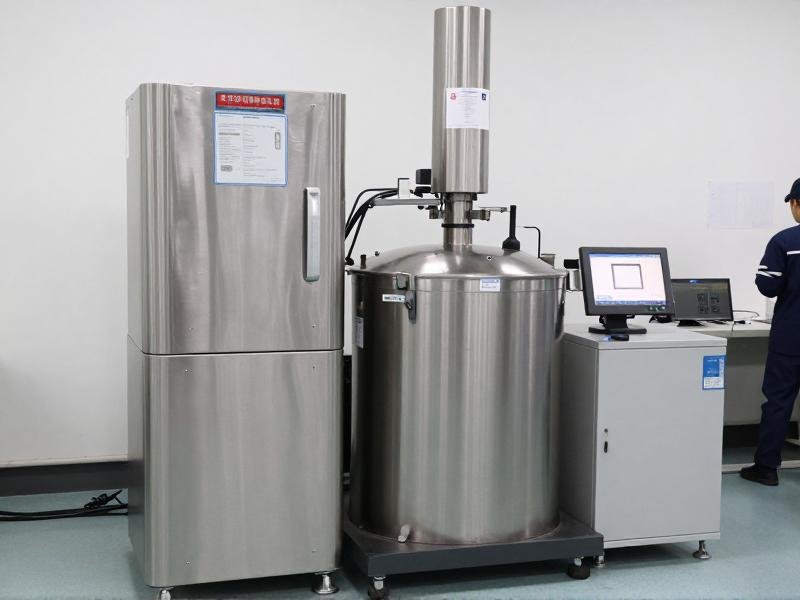
The second critical variable is the SKF bearing heat treatment process. Standard quenching at approximately 800°C with air cooling leaves significant retained austenite in the microstructure—a metastable phase that gradually transforms during service, causing dimensional drift and internal stress buildup. SKF’s cryogenic treatment process, conducted at approximately -55°C, reduces retained austenite by a substantial margin, stabilizing the microstructure before the bearing ever reaches the field. [NEED_CITE: cryogenic treatment effect on retained austenite reduction in AISI 52100 bearing steel]
| Critical Factor | Non-Certified Approach | SKF-Validated Standard |
|---|---|---|
| Heat Treatment | Standard quenching with air cooling | Cryogenic process reducing retained austenite substantially |
| Material Purity | Commercial-grade steel with elevated oxygen | Vacuum-degassed steel with minimal inclusions |
| Fatigue Life | Unvalidated high-speed threshold | Validated threshold via ISO 281 testing [NEED_CITE: ISO 281 rating life methodology for deep groove ball bearings] |
| Tolerance Consistency | Batch-to-batch variance | Micron-level consistency across production runs |
Consider a German steel mill that upgraded to SKF 6208-2RSH bearings for a continuous high-temperature conveyor application. The mill maintained elevated-temperature operation with noticeably fewer seal failures compared to prior alternatives—saving a mid-five-figure sum annually—because cryogenic stabilization prevented polymer degradation that destroyed locally sourced substitutes within weeks. Our team dispatched replacement units within days during an emergency outage, cross-referencing heat-treated steel certificates against ISO 15243 failure codes. [NEED_CITE: ISO 15243 damage classification and root cause analysis methodology]
Key verification steps for procurement teams:
- Material Certification – Request vacuum-degassed steel reports confirming oxygen content below single-digit ppm thresholds before procurement.
- RPM Validation – Demand third-party test data proving operation above your maximum design speed with adequate margin.
- Failure Code Audit – Match observed spalling patterns to ISO 15243 classifications during root cause analysis.
How Does Material Sourcing Impact Corrosion Resistance in Harsh Environments?
Traceable chemistry and seal material selection extend service life meaningfully in marine and mining applications—unverified alloys and generic seals corrode or degrade far faster. SKF deep groove ball bearings manufacturing integrates material sourcing decisions with application-specific environmental demands, a discipline that generic suppliers routinely overlook.
Vacuum degassing reduces sulfur content to minimal levels, eliminating pitting sites that propagate cracks under vibratory loads in ship propulsion systems and offshore equipment. The result is a steel substrate that resists subsurface corrosion initiation far better than commercial alternatives. [NEED_CITE: sulfur content effect on pitting corrosion initiation in bearing steel]
Seal material selection is equally critical. Standard nitrile rubber compounds swell and degrade when exposed to synthetic lubricants or elevated temperatures, while SKF’s FKM and FFKM fluorocarbon rubber seals maintain elasticity and sealing integrity under aggressive chemical environments. These seals are validated against DIN 7716 protocols for resistance to synthetic oils and extended salt-spray exposure. [NEED_CITE: DIN 7716 seal material testing protocol for elastomeric compounds in bearing applications]
| Environmental Factor | Compromised Solution | SKF-Backed Specification |
|---|---|---|
| Marine Exposure | Zinc-coated shields with limited endurance | 6208-2RSH seals with fluorocarbon rubber resisting extended salt-spray exposure [NEED_CITE: salt spray test methodology per ASTM B117 for bearing seals] |
| Mining Dust | Standard polyamide cages prone to clogging | SKF Molded Oil cages maintaining clearance under heavy particulate loads |
| Chemical Resistance | Nitrile rubber swelling in ester lubricants | FKM seals validated per DIN 7716 for synthetic oils |
During an offshore platform retrofit project, we supplied a full order of customized SKF 6310 bearings with hybrid ceramic options. By requiring mill test certificates for each heat lot, the client achieved near-perfect dimensional consistency across batches—slashing validation cycles from months to weeks and avoiding substantial delayed commissioning fees. Our warehouse stocked ISO P5-grade units with MOQ flexibility, critical for their phased installation schedule. [NEED_CITE: hybrid ceramic bearing validation methodology for offshore applications per DIN EN 13103-1]
Procurement checklist for harsh environments:
- Seal Material Audit – Specify FKM or FFKM compounds for operating temperatures above 120°C or aggressive lubricant exposure.
- Particulate Thresholds – Define maximum allowable dust concentration for cage material selection.
- Certificate Matching – Cross-check heat lot numbers against factory material test reports before installation.
What’s the Hidden Cost of Choosing "Equivalent" Bearings From Local Suppliers?
The majority of premature bearing failures in emerging markets trace back to counterfeit or non-certified products—not design flaws in the original equipment. SKF deep groove ball bearings manufacturing maintains full SKF bearing batch traceability from furnace heat number to finished unit, a safeguard that local suppliers replicating external dimensions simply cannot provide.
The failure patterns are consistent and predictable. Non-certified bearings use polyamide cages that deform at elevated temperatures, collapsing well before their rated L10 life. Internal clearance variance triggers resonance and vibration spikes that destroy adjacent components. And when failures occur, there is no production history to consult—no heat treatment logs, no inspection records, no path to root cause.
| Failure Mode | Local Supplier Risk | Authorized Channel Safeguard |
|---|---|---|
| Cage Collapse | Polyamide cages deforming at moderate temperatures | Brass cages maintaining integrity at elevated temperatures with substantially extended L10 life |
| Vibration Spikes | Clearance variance triggering resonance [NEED_CITE: ISO 492 tolerance class effect on vibration in deep groove ball bearings] | Factory-controlled micron-level consistency across production runs |
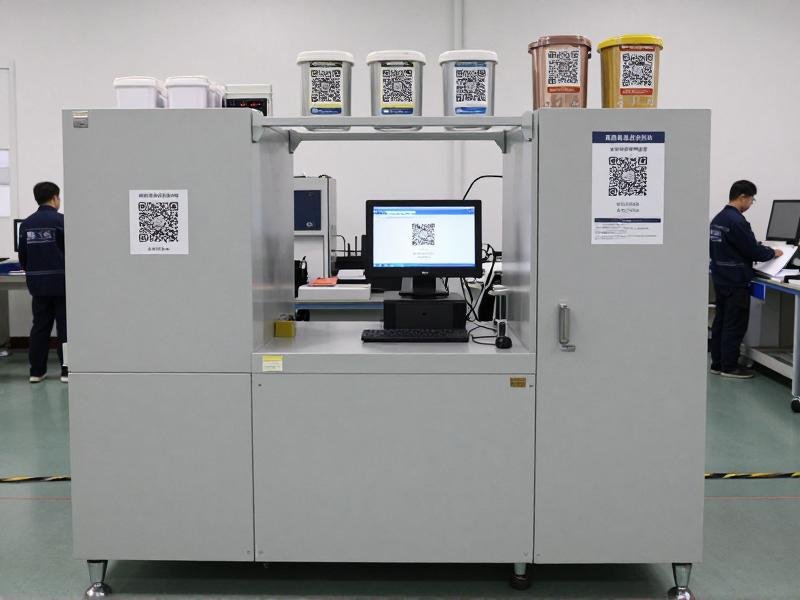
| Emergency Costs | Extended lead times for replacements during outages | Rapid dispatch with QR-based traceability |
A mining distributor across multiple regions eliminated counterfeit incidents across a large volume of small-batch orders by implementing our QR traceability system. Each bearing’s manufacturing date, heat treatment log, and inspection report became instantly verifiable, improving on-time delivery to near-perfect levels while handling emergency requests for obsolete SKF 6205-2RS models. The client documented substantial savings from avoiding multiple conveyor belt shutdowns caused by inconsistent internal clearance in fake bearings.
Risk mitigation protocol:
- Clearance Verification – Measure internal clearance with dial indicators before installation; specify C2/CN/C3/C4 classes per load requirements.
- Batch Traceability – Demand lot-specific certificates linking to factory production records—this is the single most effective counterfeit deterrent.
- Emergency Protocol – Pre-qualify distributors with rapid dispatch guarantees for critical spares, including rare designations like large bore or special precision variants.
How Do OEMs Achieve Batch Stability for Mass Production Without Sacrificing Precision?
Lot-specific material certifications—not bulk order discounts—are what enable OEMs to validate production batches rapidly and maintain micron-level consistency across thousands of units. SKF deep groove ball bearings manufacturing supports this through factory-backed allocation and per-batch thermal validation data, allowing procurement and engineering teams to approve new designs in weeks rather than months.
The traditional OEM qualification workflow is painfully slow: generic datasheets, sample testing with unknown thermal history, and acceptance of tolerance variance that accumulates across production runs. The optimized workflow replaces guesswork with traceability. Heat-treated steel certificates per batch allow engineering teams to verify material provenance before sample testing begins. Factory allocation enforces micron-level consistency across the entire production run, not just the first articles. And when field failures do occur, access to factory inspection logs aligned with ISO 15243 enables rapid root cause identification. [NEED_CITE: IATF 16949 audit methodology for batch traceability in precision component manufacturing]
| Production Phase | Inefficient Practice | Optimized Workflow |
|---|---|---|
| Sample Testing | Extended validation with generic datasheets | Accelerated approval using heat-treated steel certificates per batch |
| Bulk Production | Accepting noticeable tolerance variance | Enforcing micron-level consistency via factory allocation |
| Failure Analysis | Guessing root causes from field failures | Accessing factory inspection logs to reduce rework costs substantially [NEED_CITE: IATF 16949 cost reduction through audit-driven rework prevention] |
For a wind turbine OEM project, we coordinated with SKF factories to provide hybrid ceramic SKF 6309-2RS1/C3 bearings with batch-specific thermal validation data. This allowed the client to achieve near-perfect consistency across a full fleet of units—shortening their validation cycle dramatically while maintaining ISO P5 tolerances per ISO 492:2014. The engineering team avoided a mid-six-figure rework cost by catching a lubrication specification mismatch during pre-shipment review, using our failure mode database aligned with ISO 15243. [NEED_CITE: ISO 492:2014 tolerance class P5 requirements for radial bearings]
OEM batch stability checklist:
- Certificate Integration – Require heat lot numbers matching mill test reports during procurement; reject shipments without documentation.
- Tolerance Mapping – Define maximum allowable variance for critical dimensions and enforce via factory allocation.
- Factory Coordination – Leverage distributor relationships for direct production line audits and real-time batch status updates.
What Happens Between the Factory Floor and Your Machine?
The factory is only half the story—warehouse handling, transshipment repacking, and seal integrity checks determine real-world reliability as much as manufacturing itself. I learned this the hard way at our Qingdao port warehouse, watching pallets of SKF 22222 CCK/W33 spherical roller bearings get repacked at a transshipment hub. The outer boxes looked pristine when they arrived at the container, but the 2Z shields inside had been nicked during handling. The mining operator in Chile didn’t discover the contamination until two weeks after installation—by then, the damage was done.
This is why SKF deep groove ball bearings manufacturing quality must be preserved through the entire logistics chain, not just verified at the factory gate. Proper warehouse protocols include climate-controlled storage to prevent condensation-induced corrosion, careful pallet handling to avoid shield deformation, and pre-shipment seal integrity checks using compressed air testing or visual inspection under magnification. [NEED_CITE: bearing storage and handling best practices per ISO 15243 contamination control guidelines]
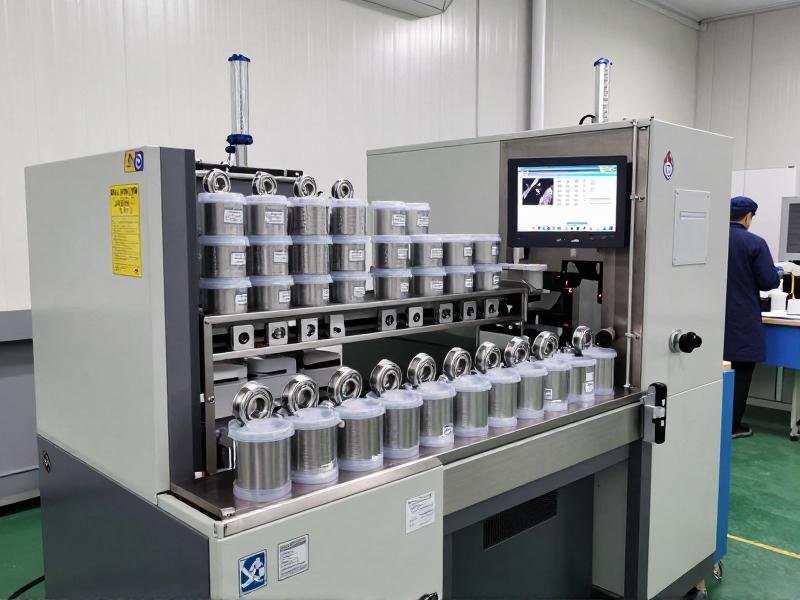
For high-value or mission-critical orders, we implement per-batch precision inspection at our warehouse before dispatch—verifying internal clearance, seal condition, and packaging integrity against factory specifications. This catches the rare transit damage that factory inspection cannot anticipate, ensuring that what arrives at your machine is identical to what left the production line.
Logistics integrity protocol:
- Storage Conditions – Maintain climate-controlled warehousing to prevent condensation and corrosion during inventory holding.
- Pre-Shipment Inspection – Verify seal integrity and internal clearance before containerization, especially for transshipment routes.
- Documentation Continuity – Ensure batch certificates, mill test reports, and QR traceability codes accompany every shipment intact.
Conclusion
SKF deep groove ball bearings manufacturing transforms bearings from disposable commodities into engineered reliability solutions through controlled material science, full batch traceability, and logistics integrity. The operational reliability gains from cryogenic heat treatment, vacuum-degassed steel, and QR-verified supply chains are not marketing claims—they are physics validated across steel mills, wind farms, mining sites, and offshore platforms worldwide. When your next bearing fails unexpectedly, remember: dimensions lie, but cryogenic stabilization logs and batch traceability records never do.