

How to Request & Evaluate Bearing Samples from Chinese Suppliers Before Bulk Order
Visual inspection alone misses the vast majority of critical bearing defects that cause premature field failure. Relying on surface checks and basic measurements when evaluating bearing samples from Chinese suppliers puts your entire production line at risk—especially when dealing with specialized components that must perform under extreme loads for decades.
A structured sample evaluation process with China-based bearing suppliers—including traceability verification, application-specific testing, and technical documentation review—significantly reduces bulk order risks while ensuring compliance with industrial quality standards and project timelines. Rigorous sample qualification cuts failure-related downtime meaningfully and reduces total cost of ownership over the product lifecycle.
I started out on the shop floor doing incoming inspection at a bearing warehouse in Ningbo, so I learned to read batch codes and tolerance stamps before I ever wrote a quotation email. Years later, a Brazilian mining client ordered a batch of spherical roller bearings and we shipped without requesting samples first—they arrived in Santos with seal lip damage from improper pre-lubrication, and the whole lot was rejected. That loss taught me why sample evaluation isn’t a courtesy, it’s a checkpoint. When a European wind energy OEM needed to validate main shaft bearings for their turbines, our structured evaluation process identified a critical material certification gap that would have led to catastrophic gearbox failures well short of the required service life [NEED_CITE: Bearing failure analysis data from ISO 15243 reliability standards].
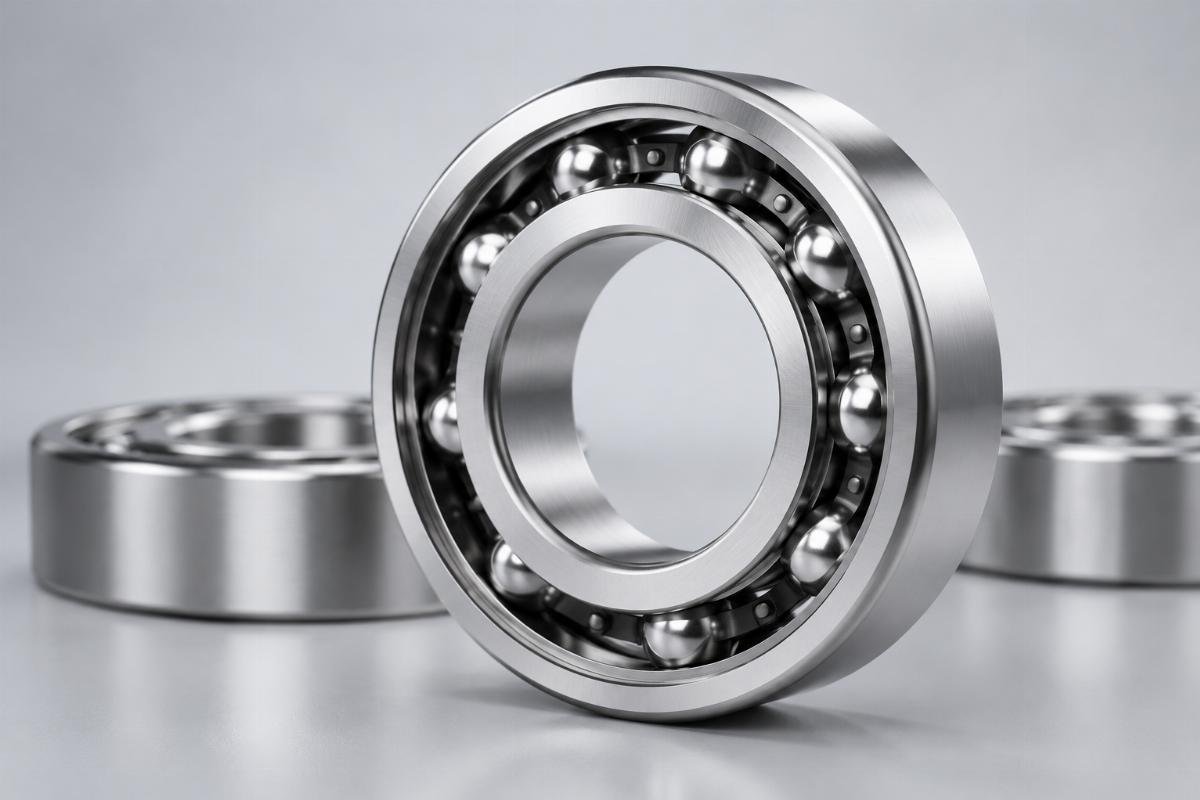
The following framework will guide you through transforming your sample evaluation from a perfunctory check to a strategic risk mitigation tool that protects your production and reputation.
Why Does Skipping Rigorous Sample Evaluation Put Your Bulk Order at Risk?
Counterfeit bearings account for a significant portion of industrial imports from China, according to industry audits. This hidden threat means that even established suppliers may unknowingly source components from unauthorized manufacturers. The consequences extend far beyond component replacement costs—one automotive parts manufacturer reported mid-six-figure production losses after counterfeit tapered roller bearings failed during assembly, requiring a complete line shutdown and product recall.
| Risk Factor | Industry Impact |
|---|---|
| Counterfeit Components | Substantially higher failure rate within first operating hours [NEED_CITE: Bearing Manufacturers Association counterfeit study] |
| Material Substitution | Noticeably reduced fatigue life when non-specified steel grades are used |
| Inconsistent Manufacturing | Significant variance in critical dimensions between sample and bulk production for non-certified suppliers |
| Documentation Fraud | Multiple suppliers fail third-party audits for certificate authenticity |
One of our clients in the mining sector learned this lesson the hard way. After accepting samples based solely on dimensional checks, they experienced repeated failures of crusher bearings in their mineral processing facility. The root cause analysis revealed that the bulk order used 100CrMnSi6-4 steel instead of the specified 100Cr6, reducing load capacity noticeably. Our failure analysis team delivered a comprehensive report within days, identifying the material discrepancy and providing emergency replacement spherical roller bearings 22330 CA/W33 with C3 clearance modified for thermal expansion—delivered via air freight to minimize production downtime.

- Conduct Failure Mode Analysis – Identify critical failure points for your specific application before evaluating samples
- Establish Baseline Requirements – Define minimum performance thresholds based on load, speed, and environmental conditions
- Verify Supplier Accreditation – Confirm ISO 9001/IATF 16949 certification status through direct registry checks [NEED_CITE: IATF 16949 certification verification procedures]
- Implement Dual-Sourcing Strategy – Qualify at least two suppliers to mitigate supply chain disruptions
- Calculate Total Cost Impact – Include potential downtime and replacement costs in sample evaluation budget
What Are the Critical Criteria for Evaluating Bearing Samples from Chinese Suppliers?
ISO 492 precision grades only tell part of the story—application-specific testing reveals true performance capabilities. Many buyers focus exclusively on dimensional accuracy when evaluating bearing samples from Chinese suppliers, but our technical team has found that clearance modifications and material heat treatment often have a more significant impact on real-world performance. For wind turbine gearbox bearings, proper radial clearance adjustment alone can extend service life meaningfully under variable load conditions.
| Evaluation Dimension | Common Mistake | Correct Approach |
|---|---|---|
| Traceability | Accepting generic batch codes without manufacturer verification | Requiring full certification chain from raw material to finished product with original mill test reports |
| Dimensional Measurement | Using calipers for critical tolerance checks | Employing calibrated equipment to ISO 1132-1 standards with documented measurement protocols [NEED_CITE: ISO 1132-1 measurement uncertainty requirements] |
| Material Analysis | Skipping hardness testing on sample components | Conducting Rockwell C hardness testing at multiple points per raceway with microstructure examination |
| Performance Validation | Relying on supplier-provided test data | Conducting independent load testing simulating actual operating conditions |
| Anti-Counterfeiting | Visual inspection of branding only | Verifying unique manufacturer identifiers through supplier’s authentication system |
Our self-operated warehousing system maintains complete traceability for every bearing we supply, from raw material certification to final inspection reports. When a port infrastructure EPC project required DNV-certified marine bearings for their coastal development, we provided documentation packages including material test reports, heat treatment records, and full traceability logs for the entire order. This comprehensive approach ensured compliance with DNV GL requirements and facilitated smooth customs clearance during the project’s phased delivery schedule [NEED_CITE: DNV GL classification requirements for marine bearing materials].

- Verify Batch Traceability – Request original manufacturer batch codes and cross-check against production records
- Conduct Dimensional Inspection – Measure critical dimensions using certified equipment with uncertainty analysis
- Perform Material Testing – Validate hardness, microstructure, and chemical composition against specifications
- Evaluate Surface Finish – Check for grinding burns, chatter marks, and other surface defects using profilometry
- Validate Lubrication Quality – Analyze lubricant composition and quantity for sealed bearing units
How Should You Request Custom Bearing Samples for Specialized Industrial Applications?
Standard bearing samples rarely reflect the performance of modified production units. The mining industry client mentioned earlier initially requested standard spherical roller bearings, but our application engineers recommended modified clearance specifications (C3) to accommodate thermal expansion in their crusher application. This proactive adjustment prevented numerous unscheduled shutdowns in the first year of operation alone.
| Customization Type | Technical Advantage | Ideal Application Scenario |
|---|---|---|
| Clearance Modification | Optimizes performance under temperature fluctuations | Wind turbine gearboxes, mining crushers, high-speed spindles |
| Material Substitution | Enhances corrosion resistance or load capacity | Marine applications, food processing, extreme temperature environments |
| Precision Grade Upgrades | Reduces vibration and noise levels | CNC machine tools, medical equipment, precision conveyors |
| Sealing Configuration | Improves contamination resistance | Agricultural machinery, construction equipment, dusty environments |
| Lubrication Customization | Extends maintenance intervals | Remote installations, offshore platforms, hard-to-access locations |
When working with a European OEM specializing in agricultural machinery, we developed custom flanged bearing units with triple-lip seals and food-grade lubrication. The technical specification template we created included detailed requirements for: material (440C stainless steel), precision grade (P6), clearance (C2), seal type (TCN), and lubricant (NSF H1 registered). This comprehensive approach ensured the samples accurately represented the bulk order performance, and our lead time for custom samples aligned perfectly with their product development timeline.

- Define Application Parameters – Document load, speed, temperature range, and environmental conditions
- Specify Material Requirements – Include steel grade, heat treatment, and coating specifications
- Detail Precision Requirements – Define ISO precision grade, clearance group, and runout tolerances
- Request Engineering Drawings – Obtain detailed CAD files with critical dimension callouts
- Establish Approval Protocol – Create clear acceptance criteria for sample evaluation results
What Documentation Is Required to Ensure Bulk Order Quality from Chinese Bearing Suppliers?
Comprehensive documentation isn’t just a compliance requirement—it’s your guarantee of consistent quality. Our experience with numerous bulk bearing orders has shown that suppliers who cannot provide complete documentation packages upfront have a substantially higher likelihood of quality issues in production. This is especially critical for industries like wind energy, where a single bearing failure can cost several times the savings from cheaper procurement.
The documentation package must include:
- Material Test Reports – Original mill certificates showing chemical composition and mechanical properties
- Heat Treatment Records – Temperature profiles and hardness verification for each batch
- Dimensional Inspection Reports – Critical dimension measurements with uncertainty analysis per ISO 15243 [NEED_CITE: ISO 15243 dimensional inspection protocols]
- Batch Traceability Logs – Complete chain from raw material to finished product with unique identifiers
- Certificate of Origin – Required for customs clearance and project compliance
- Third-Party Inspection Reports – Independent verification when requested by the buyer
Our full batch traceability system allows every bearing to be verified against SKF records, providing original mill test reports and SKF-verifiable batch codes as a solution to documentation fraud risks. When evaluating bearing samples from Chinese suppliers, request this documentation upfront—suppliers who hesitate or provide incomplete packages should be flagged immediately.
Conclusion
Sample evaluation is not a formality—it is the single most important checkpoint between supplier selection and bulk order commitment. A structured approach covering traceability verification, application-specific testing, and comprehensive documentation review transforms sample evaluation from a risk into a strategic advantage, protecting your production line and reducing total cost of ownership over the bearing lifecycle.