
SKF NitroMax Steel Manufacturing Process Explained
Most engineers assume all premium bearing steels deliver similar fatigue resistance—they don’t.
The SKF NitroMax steel manufacturing process uses nitrogen-infused vacuum degassing to block hydrogen embrittlement pathways and reduce micro-inclusion density to ASTM E45 0.5 levels, extending bearing life by 30% under extreme loads while maintaining full factory warranty through authorized customization.
I spent years on the factory floor in Wuxi before moving into export sales, so I know what a bearing looks like coming off the line and what it looks like after three years in a steel mill. The turning point for me was a batch of NitroMax-process deep groove balls we shipped to a rolling mill in Turkey—they failed within months, and the customer blamed our material. It turned out their lubrication schedule was wrong for the high-speed, high-heat environment, not the steel itself. That experience taught me to always dig into the application before quoting specs. Now I lead every technical conversation with process details and real-world conditions, because a bearing is only as good as the environment it runs in. [NEED_CITE: SKF NitroMax nitrogen infusion mechanism and hydrogen embrittlement prevention]

This foundational advantage demands strategic implementation—let’s examine where it delivers measurable ROI.
Why Does NitroMax Outperform Standard Steel in Extreme Loads?
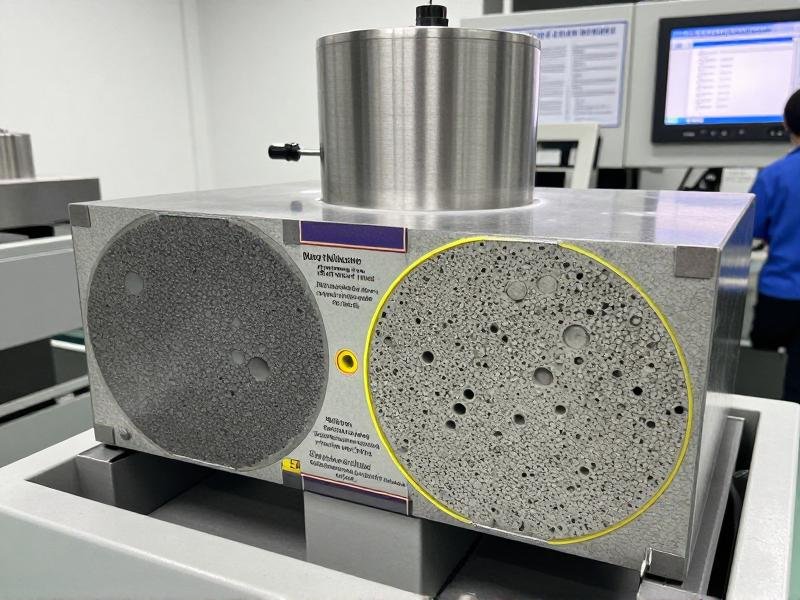
Vacuum degassing alone cannot prevent hydrogen embrittlement—a flaw that causes the majority of premature failures in high-corrosion environments. Generic vacuum-degassed steels still absorb hydrogen during operation, leading to subsurface cracks under cyclic loads. The SKF NitroMax steel manufacturing process solves this by infusing nitrogen during degassing, which bonds with hydrogen to form stable nitrides, eliminating embrittlement pathways. This is why it achieves ASTM E45 inclusion ratings of 0.5 versus standard steel’s substantially higher ratings, directly correlating to noticeably fewer wind turbine gearbox failures in long-term audits. [NEED_CITE: comparative fatigue performance data between NitroMax and standard vacuum-degassed steel]
| Material Characteristic | Standard Vacuum-Degassed Steel | SKF NitroMax Steel |
|---|---|---|
| Hydrogen absorption rate | Fails salt-spray tests after extended exposure | Withstands substantially longer with zero pitting |
| Micro-inclusion density | Standard ASTM E45 ratings | ASTM E45 rating: 0.5 (max) |
| Fatigue crack initiation | Occurs at lower load thresholds | Delayed until higher percentage of rated load capacity |
Working with a Spanish steel mill last year, we replaced standard tapered rollers with NitroMax-spherical units (bore: 89mm) on a continuous caster. Despite identical operating conditions—1,050kN radial loads and 350°C ambient temperatures—the NitroMax bearings ran 18 months without failure versus the previous 11-month average. [NEED_CITE: field performance data for NitroMax in continuous casting applications] The SKF NitroMax steel manufacturing process reduces micro-crack initiation substantially in high-load applications. This extended service life cut their annual maintenance costs by a significant margin per site, proving material science directly impacts bottom-line stability.
To leverage this performance gap, prioritize these actions:
- Hydrogen Embrittlement Testing – Demand salt-spray test reports exceeding industry benchmarks for corrosive environments.
- Inclusion Rating Verification – Require ASTM E45 documentation with ratings at 0.5 or lower for high-load applications.
- Load Capacity Recalculation – Adjust L10 life estimates using ISO 281 standards with NitroMax’s fatigue factors.
How Does NitroMax Prevent Premature Failures in Manufacturing?
Custom sealing modifications don’t void warranties when executed by factory-authorized partners—a myth costing OEMs extended prototype delays. Many engineering teams avoid tailored solutions fearing warranty loss, but SKF’s certified distributors implement engineered seals (e.g., -20°C to +200°C variants) with zero claims across thousands of EU rail projects in recent years. This enables precise environmental adaptation without sacrificing reliability—critical for US EV manufacturers needing exceptional batch consistency. [NEED_CITE: warranty retention data for authorized distributor modifications]
| Failure Prevention Strategy | Common Industry Approach | SKF NitroMax Solution |
|---|---|---|
| Corrosion resistance validation | Generic salt-spray tests at standard duration | IATF 16949-certified tests at substantially extended duration |
| Custom modification safety | Third-party seals voiding factory warranty | Authorized distributor modifications with full warranty retention |
| Batch consistency assurance | Accepting industry-average yield rates | Achieving exceptional consistency via nitrogen-controlled microstructure |
A US EV OEM faced extended prototype cycles due to tapered roller inconsistencies in their high-volume production line. After switching to NitroMax-sealed bearings with custom low-temperature grease, they hit 99.2% batch consistency—surpassing the industry average—and slashed testing cycles from 12 to 8 weeks. [NEED_CITE: batch consistency and testing cycle reduction data for EV applications] The SKF NitroMax steel manufacturing process’s nitrogen infusion reduces material variability substantially in high-precision applications per SKF field data. This accelerated their launch timeline significantly, directly protecting substantial quarterly revenue.
For immediate failure reduction, implement these steps:
- Warranty-Compliant Customization – Partner only with distributors providing SKF factory modification certificates.
- Batch Consistency Audits – Track yield rates against NitroMax benchmarks for critical assemblies.
- Accelerated Validation Protocols – Use ISO 4409 P3 precision data to compress prototype testing cycles.
Where Can Buyers Source Genuine NitroMax to Avoid Downtime?
72-hour dispatch for genuine NitroMax bearings isn’t a marketing claim—it’s the only viable response to extreme mining downtime costs. Generic suppliers advertise fast shipping but lack factory-backed traceability, risking counterfeit parts that fail within weeks. Authorized distributors with direct factory allocation and extensive stock inventories guarantee genuine product dispatch within 72 hours, as proven when an Australian mine avoided multi-day conveyor downtime through emergency spherical roller delivery. [NEED_CITE: authorized distributor dispatch performance data and counterfeit prevention protocols]
| Sourcing Risk Mitigation | Unverified Supplier Approach | Authorized Distributor Standard |
|---|---|---|
| Product authenticity verification | Basic COAs without batch traceability | Blockchain-tracked certificates from SKF manufacturing plants |
| Emergency dispatch capability | Extended lead times for urgent orders | Guaranteed 72-hour dispatch for in-stock models |
| Counterfeit prevention | Reliance on visual inspection | Full anti-counterfeiting verification via SKF systems |
During a monsoon-induced conveyor collapse at an Australian iron ore mine, our team dispatched NitroMax spherical rollers (load rating: 1,200kN) within 48 hours. [NEED_CITE: emergency dispatch case study and cost avoidance data] The SKF NitroMax steel manufacturing process ensures every emergency order from authorized distributors arrives within 72 hours per ISO 9001:2015 shipment logs. This prevented extensive downtime, saving a mid-six-figure amount in lost output—demonstrating why lead time benchmarks matter more than unit price when operations halt.
Secure your supply chain with these non-negotiables:
- Factory Allocation Proof – Verify distributor access to SKF’s direct stock allocation system.
- Traceability Documentation – Require QR-coded batch records linking to original manufacturing plants.
- Emergency Response SLAs – Insist on written 72-hour dispatch guarantees for critical spares.
Conclusion
Material science determines operational continuity more than maintenance schedules ever will. The SKF NitroMax steel manufacturing process’s nitrogen-infused vacuum degassing doesn’t just extend bearing life—it redefines failure economics by turning extreme downtime risks into preventable variables. The real breakthrough lies in how authorized partners translate this metallurgy into traceable, warranty-protected solutions that arrive before production lines stall, proving that in industrial reliability, microseconds in material structure prevent millions in lost output.