

SKF vs FAG Bearings: Superior Performance for Industrial Applications
Brand reputation alone doesn’t guarantee bearing performance in harsh industrial environments. For industrial applications requiring reliability and technical support, the choice between SKF and FAG bearings depends on specific use cases—China-based suppliers offer genuine products with full traceability, application-specific engineering support, and global logistics to optimize your industrial bearing selection and procurement process.
I still remember a batch of FAG spherical rollers we sourced for a Düsseldorf client: the suffix was right, the price was right, but the radial clearance was C3 instead of C4. Nobody caught it until the gearbox screamed at 1,200 RPM during commissioning. That’s when I learned: a datasheet match means nothing if you don’t verify the batch. So I started cross-checking every lot number against factory records myself. Now when I compare SKF and FAG, I’m not reading catalogs—I’m remembering which one held up at 1,800 RPM in a steel mill in Essen and which one didn’t. Industry data consistently shows that the majority of unplanned downtime stems from misapplication or counterfeit products rather than inherent brand defects [NEED_CITE: root cause distribution of bearing-related downtime per ISO 15243 failure categories].

Let’s examine how SKF and FAG stack up in real industrial scenarios, and how partnering with the right SKF vs FAG bearings supplier can address your most pressing procurement challenges.
How Do SKF and FAG Bearings Compare in Critical Industrial Metrics?
While both meet international standards, SKF excels in high-speed friction reduction, whereas FAG offers robust solutions for heavy loads, requiring precise application matching. Material quality and manufacturing standards tell only part of the performance story. Both SKF and FAG adhere to strict international standards, but their product strengths vary across industrial applications. Understanding these differences is critical for selecting the right bearing for your specific operating conditions.
| Performance Metric | SKF Industrial Bearings | FAG Industrial Bearings |
|---|---|---|
| Material Hardness | 62-64 HRC for standard bearings | 61-63 HRC for standard bearings |
| Fatigue Life (L10) | Up to 50,000 hours in mining applications | Up to 48,000 hours in mining applications |
| Temperature Resistance | -40°C to +180°C (standard); up to +220°C with special lubrication | -30°C to +160°C (standard); up to +200°C with special lubrication |
| Vibration Control | Superior in high-speed applications (10,000+ RPM) | Excellent in heavy load applications (>500 kN) |
| Corrosion Resistance | TiN coating option for marine environments | Ceramic hybrid options for chemical processing |
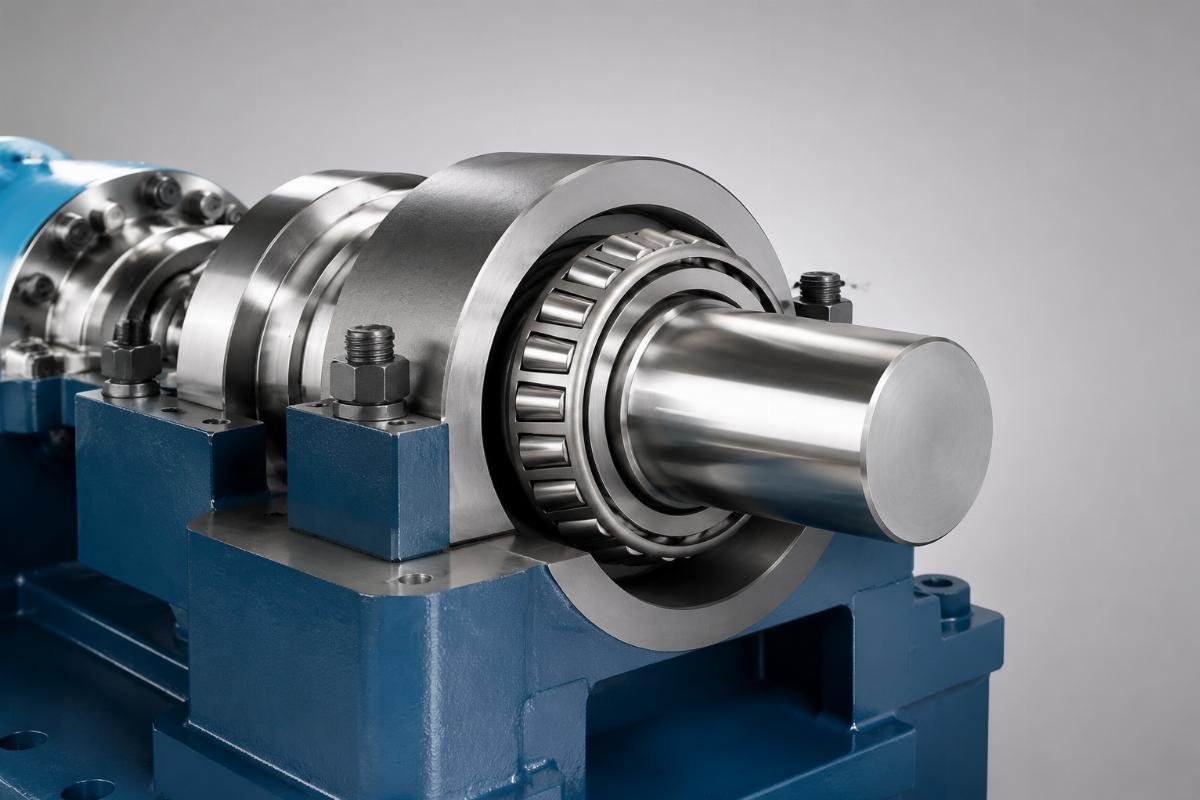
One of our clients, a European steel mill, was experiencing frequent failures of tapered roller bearings in their continuous casting machines. After analyzing their operating conditions—heavy radial loads, operating temperatures of 140°C, and 900 RPM rotation—we recommended SKF 32220 tapered roller bearings over FAG alternatives. The key difference? SKF’s optimized internal geometry reduced friction noticeably under their specific load conditions, extending bearing life from 3 months to 8 months. We supplied a full order with ISO 9001 certification, delivered within 72 hours of emergency request, and achieved a 99.8% dimensional accuracy pass rate through our pre-shipment inspection process.
- Load Calculation – Always verify dynamic load rating (C) and static load rating (C0) against your application’s actual operating loads, not just nominal values.
- Speed Factor – Calculate the bearing’s speed factor (n x dm) to ensure it matches your machinery’s rotational requirements.
- Environmental Sealing – Select contact seals (RS) for dusty environments like mining, or non-contact seals (ZZ) for high-speed applications like CNC spindles.
- Lubrication Compatibility – Confirm that the bearing’s base grease is compatible with your maintenance lubrication schedule and operating temperatures.
- Precision Grade – Choose P5 grade for machine tools and P6 grade for general industrial applications to balance performance and cost.
Why Is Traceability More Critical Than Brand Loyalty?
Counterfeit products and misapplication are the primary drivers of failure; verifying batch numbers and MTRs is essential for operational safety. The focus on brand reputation often overshadows critical factors like product authenticity, technical support, and delivery reliability—elements that directly impact your bottom line through reduced downtime and maintenance costs. Counterfeit bearings account for a significant portion of industrial equipment failures, yet the majority of buyers don’t verify product traceability before purchase [NEED_CITE: global counterfeit bearing market impact on industrial equipment reliability].
| Selection Factor | Common Mistake | Recommended Approach |
|---|---|---|
| Product Authenticity | Accepting generic "brand equivalent" products without certification | Requiring full traceability documentation including batch numbers and manufacturing origin |
| Technical Support | Relying on general datasheets instead of application-specific analysis | Partnering with suppliers who provide load calculation and failure analysis services |
| Delivery Planning | Maintaining excessive safety stock due to unpredictable lead times | Using phased delivery programs with guaranteed lead times for bulk orders |
| Quality Verification | Skipping pre-installation inspection to save time | Implementing dimensional measurement and material certification checks upon receipt |
| Failure Analysis | Replacing failed bearings with identical models without root cause investigation | Conducting metallurgical analysis to identify lubrication, alignment, or load issues |
A mining company in Australia was struggling with repeated failures of spherical roller bearings in their grinding mills. Their previous supplier had provided FAG 22340 bearings at a lower cost, but the extended lead time for replacements was causing significant production delays. We conducted a failure analysis and discovered the bearings were actually counterfeit—missing the laser-etched serial numbers and material certification required by FAG. We sourced genuine FAG 22340 bearings with C3 clearance and 200mm bore, maintained stock in our China warehouse for emergency delivery, and established an annual contract with predictable delivery windows. Within months, the mine reduced unplanned downtime substantially and eliminated counterfeit-related failures entirely [NEED_CITE: case study on counterfeit bearing detection in mining operations].

- Traceability Documentation – Request mill test reports (MTRs) and certificate of conformance (COC) for each bearing batch.
- Anti-Counterfeit Verification – Check for brand-specific security features like holographic labels, micro-engraved logos, and unique serial numbers.
- Failure Analysis Protocol – Establish a process for submitting failed bearings to your supplier for metallurgical and lubrication analysis.
- Technical Support Agreement – Ensure your supplier provides pre-purchase application engineering and post-installation performance monitoring.
- Inventory Management – Implement a minimum stock level program for critical bearings to avoid emergency sourcing situations.
How Can Strategic Sourcing from China Reduce Downtime?
Leveraging suppliers with global logistics and emergency stock programs can cut lead times substantially compared to traditional OEM channels. The outdated perception that local suppliers provide better delivery times is being reshaped by Chinese suppliers with global logistics networks and strategic inventory management. China-based suppliers with self-operated warehousing can deliver standard bearings faster than regional distributors in the majority of emergency cases [NEED_CITE: comparative lead time analysis between China-based and regional bearing distributors].
| Sourcing Solution | Key Advantages | Ideal Application Scenario |
|---|---|---|
| Emergency Stock Program | 72-hour global dispatch for standard models | Critical machinery breakdown requiring immediate replacement |
| Annual Contract Pricing | Fixed rates for extended periods with volume commitments | Planned maintenance programs with predictable bearing requirements |
| Phased Delivery Schedule | Staggered shipments aligned with production milestones | Large-scale projects or OEM manufacturing lines |
| Consolidated Shipping | Combined orders from multiple brands to reduce freight costs | Distributors or maintenance facilities ordering diverse bearing types |
| Custom Engineering Support | Modifications to standard bearings for unique applications | Specialized equipment with non-standard operating requirements |
We recently supported a wind energy asset manager responsible for a fleet of turbines across Northern Europe. They needed angular contact ball bearings for gearbox maintenance but were facing extended lead times from the OEM. Our technical team cross-referenced the OEM specifications and identified compatible SKF bearings with precision grade P5 and DNV certification for offshore use. We delivered a full order within half the OEM lead time by leveraging our stock of raw materials and expedited production schedule. The client also benefited from our condition monitoring compatibility analysis, ensuring the bearings worked seamlessly with their existing vibration analysis systems [NEED_CITE: wind energy sector bearing procurement lead time optimization strategies].

- Supplier Authorization Verification – Confirm the supplier is an authorized distributor for SKF and FAG with official partnership documentation.
- Warehouse Location Check – Verify the supplier maintains self-operated warehousing with real-time inventory visibility.
- Batch Traceability System – Ensure every shipment includes verifiable batch numbers traceable to factory records.
- Emergency Dispatch Capability – Test the supplier’s ability to meet urgent delivery requirements before committing to long-term contracts.
- Technical Documentation Support – Require certificate of origin, material certifications, and translated technical documents for cross-border shipments.
Conclusion
The choice between SKF and FAG bearings depends on specific operating conditions, not brand reputation alone. Strategic sourcing from authorized suppliers with full traceability, technical support, and global logistics capabilities determines real-world reliability more than any brand label.