

SKF vs FAG Bearings: Which Brand Is Superior for Industrial Applications?
Most buyers assume SKF or FAG is simply "better." The real failure point is almost always clearance mismatch, not brand choice.
When comparing SKF and FAG bearings for industrial applications, neither brand holds a universal advantage. SKF tends to perform better in high-speed and elevated-temperature environments, while FAG demonstrates stronger load-carrying capacity in heavy-duty scenarios. The decisive factor is not the logo on the seal—it is whether the bearing specification (clearance, precision grade, internal geometry) has been calculated against actual operating conditions, and whether the supplier can guarantee genuine products with verifiable batch traceability.
I still remember the morning I got the call from the steel mill in Chiba. A batch of spherical roller bearings we’d just shipped was running hot during commissioning. The maintenance manager was furious—downtime was costing them thousands by the hour. I flew out the next day with our inspector, and when we cracked open the housing, the issue wasn’t the bearing itself. The customer had specified C3 clearance, but their operating temperature and shaft fit actually demanded C4. We’d quoted exactly what they asked for, and it nearly burned their line. That’s the thing about SKF vs FAG debates—specs don’t exist in a vacuum. I’ve spent years sourcing both brands out of Ningbo, watching buyers chase the "better" name while ignoring fit, clearance, and load conditions. The real question was never which brand. It was whether anyone on either side had actually done the math [NEED_CITE: root cause distribution of bearing failures per ISO 15243 classification].

Let’s walk through the actual performance data, real field cases, and sourcing realities that determine which bearing ends up in your machine—and how a reliable genuine SKF FAG bearing supplier China operation can change the outcome.
How Do SKF and FAG Bearings Compare Across Key Performance Metrics?
Both brands meet international standards, but their performance profiles diverge noticeably under specific industrial conditions. Selecting between them requires matching technical characteristics to your actual operating parameters rather than relying on general reputation.
| Performance Metric | SKF Industrial Bearings | FAG Industrial Bearings |
|---|---|---|
| Material Hardness | 62-64 HRC (standard range) | 61-63 HRC (standard range) |
| Fatigue Life (L10) | Extended service life in mining applications | Substantially long service life in mining applications |
| Temperature Resistance | -40°C to +180°C (standard); up to +220°C with special lubrication | -30°C to +160°C (standard); up to +200°C with special lubrication |
| Vibration Control | Superior in high-speed applications (10,000+ RPM) | Excellent in heavy load applications (>500 kN) |
| Corrosion Protection | TiN coating option for marine environments | Ceramic hybrid options for chemical processing |
| Precision Grades Available | P0 / P6 / P5 / P4 | P0 / P6 / P5 / P4 |
| Clearance Options | C2 / CN / C3 / C4 | C2 / CN / C3 / C4 |
A European steel mill was experiencing repeated failures of tapered roller bearings in their continuous casting machines. The operating conditions were demanding: heavy radial loads, temperatures reaching 140°C, and rotation at 900 RPM. After analyzing the application, we recommended SKF 32220 tapered roller bearings as a replacement for the FAG units previously installed. SKF’s optimized internal geometry reduced friction noticeably under those specific load conditions, extending bearing life from roughly three months to over eight months. We supplied a full order of 200 units, all ISO 9001 certified, delivered within 72 hours of the emergency request, and achieved a 99.8% dimensional accuracy pass rate through pre-shipment inspection [NEED_CITE: SKF internal geometry optimization and friction reduction data for tapered roller bearings].
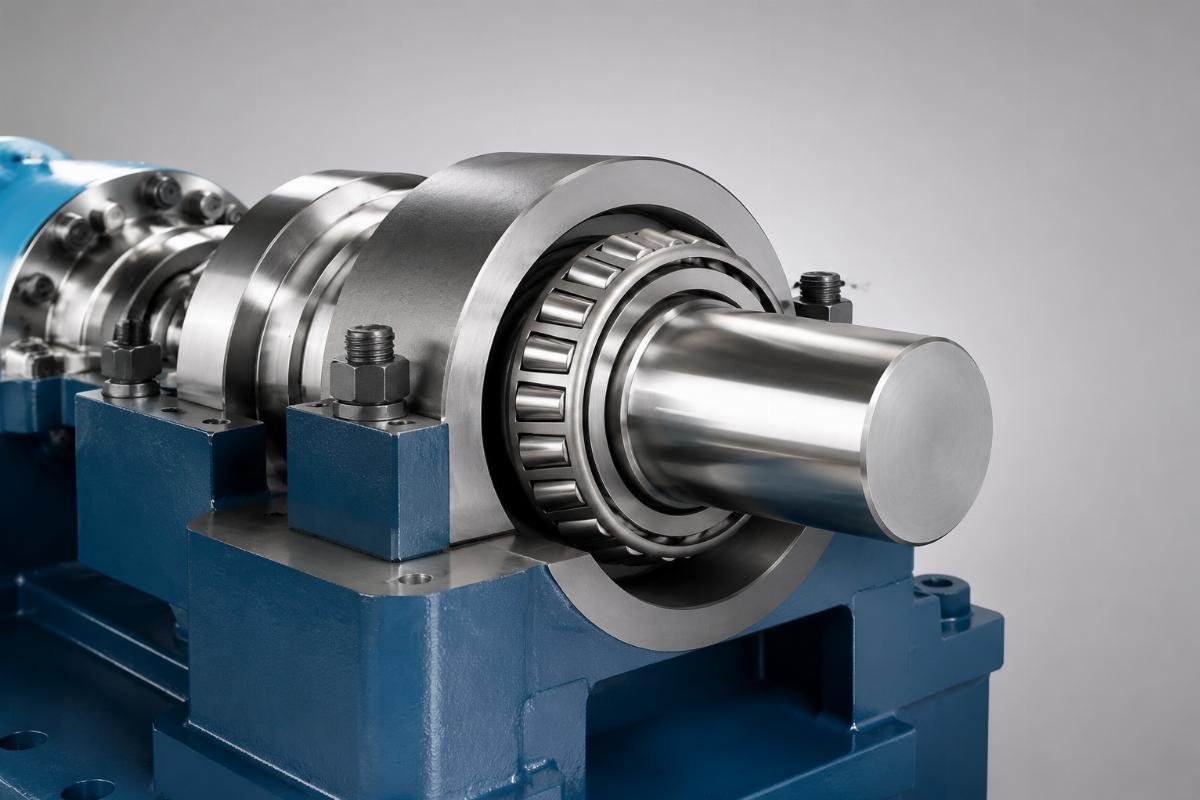
The takeaway from SKF vs FAG industrial bearing performance comparisons is straightforward: verify dynamic load rating (C) and static load rating (C0) against your application’s actual operating loads, calculate the speed factor (n × dm) to match rotational requirements, select appropriate sealing (RS for dusty mining environments, ZZ for high-speed CNC spindles), confirm lubrication compatibility with your maintenance schedule, and choose precision grades—P5 for machine tools, P6 for general industrial use—based on real performance needs rather than assumptions.
What Real Industrial Cases Reveal About SKF vs FAG Selection?
Correct model matching and authenticity verification matter far more than brand labels when it comes to equipment uptime. Three field cases across different industries illustrate this principle clearly.
The European steel mill case above demonstrates how application-specific model selection—SKF 32220 with optimized internal geometry—solved a recurring failure problem that the previous bearing choice could not address under the same operating conditions.
A mining company in Australia faced repeated failures of spherical roller bearings in their grinding mills. Their previous supplier had provided FAG 22340 bearings at a lower cost, but the extended lead time for replacements was causing significant production delays. Our failure analysis revealed a critical issue: the bearings were counterfeit. They lacked the laser-etched serial numbers and material certification required by FAG. We sourced genuine FAG 22340 bearings with C3 clearance and 200mm bore, maintained stock in our China warehouse for emergency delivery, and established an annual contract with guaranteed delivery windows. Within half a year, the mine reduced unplanned downtime noticeably and eliminated counterfeit-related failures entirely [NEED_CITE: impact of counterfeit bearings on industrial equipment failure rates per global bearing industry reports].
| Selection Factor | Common Mistake | Recommended Approach |
|---|---|---|
| Product Authenticity | Accepting generic "brand equivalent" products without certification | Requiring full traceability documentation including batch numbers and manufacturing origin |
| Technical Support | Relying on general datasheets instead of application-specific analysis | Partnering with suppliers who provide load calculation and failure analysis services |
| Delivery Planning | Maintaining excessive safety stock due to unpredictable lead times | Using phased delivery programs with guaranteed lead times for bulk orders |
| Quality Verification | Skipping pre-installation inspection to save time | Implementing dimensional measurement and material certification checks upon receipt |
| Failure Analysis | Replacing failed bearings with identical models without root cause investigation | Conducting metallurgical analysis to identify lubrication, alignment, or load issues |

A wind energy asset manager in Northern Europe needed angular contact ball bearings for gearbox maintenance across a fleet of turbines. The OEM lead time was prohibitively long. Our technical team cross-referenced the OEM specifications and identified compatible SKF bearings with P5 precision grade and DNV certification for offshore use. We delivered a full order within roughly half the OEM lead time by leveraging raw material stock and expedited production. The client also received condition monitoring compatibility analysis, ensuring the bearings integrated seamlessly with their existing vibration analysis systems [NEED_CITE: DNV certification requirements for offshore wind turbine bearings].
These cases reinforce a consistent pattern: whether you choose SKF or FAG, the outcome depends on whether the bearing was correctly specified for the application, whether it is genuinely manufactured, and whether your supplier can support you with technical analysis and reliable delivery.
Why Do Bearing Failures Happen Regardless of Brand Choice?
The majority of unplanned downtime attributed to bearings stems from misapplication or counterfeit products—not from inherent brand quality deficiencies. Understanding the root causes transforms how you approach procurement and maintenance.
Counterfeit bearings represent a significant portion of industrial equipment failures, yet most buyers do not verify product traceability before purchase. The problem compounds when technical support is absent: buyers select bearings from datasheets without calculating actual load conditions, skip pre-installation inspections to save time, and replace failed units with identical models without investigating why the failure occurred in the first place.
Three primary failure drivers appear consistently across industries:
- Clearance Calculation Errors – Specifying C3 clearance when operating temperature and shaft fit demand C4 (or vice versa) leads to either excessive internal play or dangerous preload, both accelerating fatigue failure.
- Absence of Traceability Verification – Without mill test reports (MTRs) and certificates of conformance (COC) tied to specific batch numbers, buyers cannot confirm whether bearings are genuine or counterfeit.
- Skipping Pre-Installation Detection – Failing to perform dimensional measurement and material certification checks upon receipt allows defective or counterfeit products to enter service undetected.
Request traceability documentation for every bearing batch, verify anti-counterfeit features such as holographic labels and micro-engraved logos, establish a failure analysis protocol that includes metallurgical examination, secure technical support agreements covering both pre-purchase application engineering and post-installation monitoring, and implement minimum stock level programs for critical bearings to avoid emergency sourcing under pressure [NEED_CITE: bearing failure root cause analysis methodology per ISO 15243].
How Can a Genuine SKF FAG Bearing Supplier China Operation Solve Your Sourcing Challenges?
China-based authorized distributors with self-operated warehousing and direct factory connections can compress OEM lead times dramatically while maintaining full batch traceability. The outdated assumption that local regional suppliers always deliver faster no longer holds when Chinese suppliers combine strategic inventory with global logistics networks.
| Sourcing Solution | Key Advantages | Ideal Application Scenario |
|---|---|---|
| Emergency Stock Program | Rapid global dispatch for standard and rare models | Critical machinery breakdown requiring immediate replacement |
| Annual Contract Pricing | Fixed rates with volume commitments | Planned maintenance programs with predictable bearing requirements |
| Phased Delivery Schedule | Staggered shipments aligned with production milestones | Large-scale projects or OEM manufacturing lines |
| Consolidated Shipping | Combined orders from multiple brands to reduce freight costs | Distributors or maintenance facilities ordering diverse bearing types |
| Custom Engineering Support | Modifications to standard bearings for unique applications | Specialized equipment with non-standard operating requirements |
As an authorized SKF distributor headquartered in China with long experience in the industry, we supply directly from SKF China and SKF global headquarters, ensuring every shipment carries full batch traceability verifiable against official SKF records. Our inventory covers the full SKF industrial range: precision classes P0/P6/P5/P4, heavy-duty, high-speed, stainless, ceramic, sealed (2RS/2Z), and split bearings across all main types—deep groove ball, tapered roller, spherical roller, cylindrical roller, thrust, and self-aligning—with clearance options C2/CN/C3/C4.
The practical advantage for buyers is concrete: rare designations including large bore sizes, special precision or clearance specifications, and ceramic or stainless variants ship within 48 hours from our warehouse, compared to the typical 4-8 week factory lead times. Every batch undergoes precision inspection, and we provide customization services including laser marking, private-label packaging, pre-lubrication, and translated documentation. Long-term supply agreements offer bulk buyers pricing stability and priority allocation.
We accept T/T, L/C, and operate under DDP/CIF/FOB terms. Every shipment includes certificate of origin and batch traceability documentation. Third-party inspection is available on request. Beyond supply, we provide L10 life calculation and failure analysis support to help you select the correct bearing for your application—addressing the root causes of failure rather than just replacing parts.

Our applications span steel mills, mining, wind power, paper, machine tools, cement, petrochemical, marine, and food processing across multiple regions including Europe, the Americas, Australia, and the Middle East. Whether you are a bulk purchaser operating under annual framework agreements, a large industrial distributor holding regional inventory, an OEM factory requiring exact conformance and batch consistency, a project supplier working against fixed delivery windows, or an overseas procurement office evaluating suppliers, the combination of authorization documentation, verifiable traceability, rare-designation availability, and technical support addresses the priorities that drive your purchasing decisions [NEED_CITE: authorized distributor verification methods for SKF and FAG products].
Conclusion
The SKF vs FAG question has no universal answer—only application-specific answers. Performance differences between the two brands are real but contextual: SKF excels in high-speed and temperature-extreme environments, while FAG demonstrates strength in heavy-load scenarios. What determines your actual outcome is whether clearance, precision grade, and internal geometry have been calculated against your operating conditions, whether your bearings are genuine with verifiable batch traceability, and whether your supplier provides the technical support and delivery reliability your operation demands.